
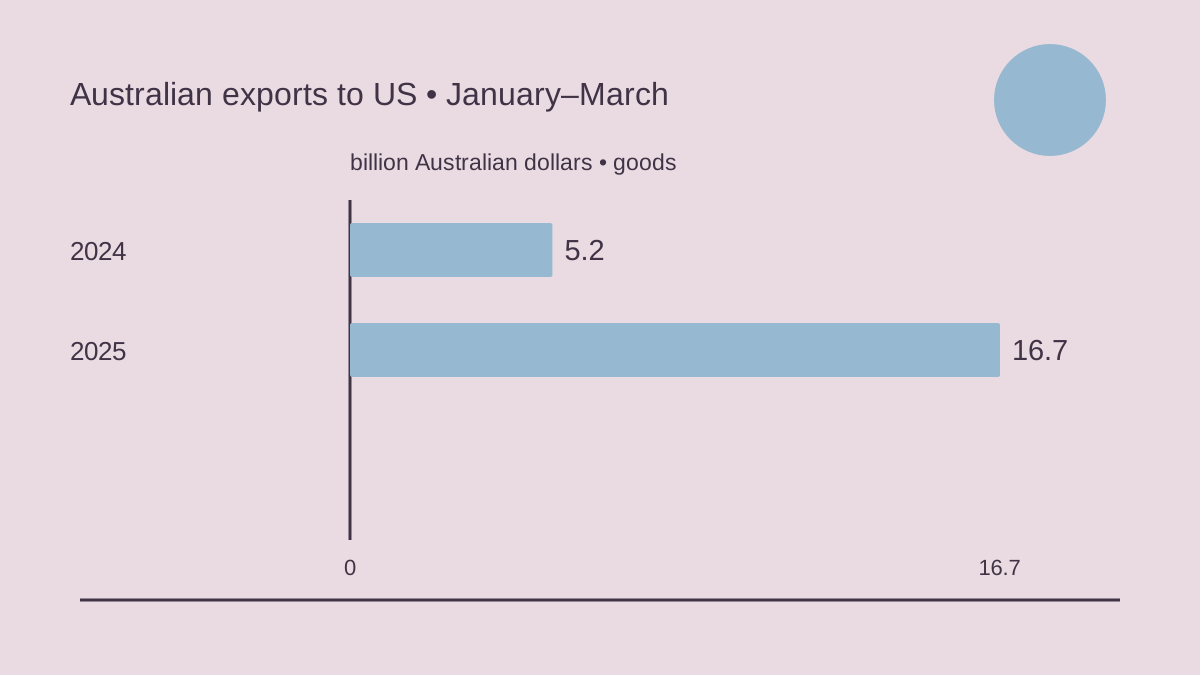
Australia’s goods exports to the United States reached A$16.7 billion in January–March 2025, against A$5.2 billion a year earlier. Reuters reported on 2 May that the bilateral balance switched from an A$6.2 billion deficit to an A$4.1 billion surplus. Analysts attributed much of the shift to US gold purchases ahead of potential tariffs and to cover futures positions. March’s national goods surplus was A$6.9 billion after seasonal adjustment. Exports increased 7.6%; imports fell 2.2%.
Gold and other commodities in the earlier releases
The Australian Bureau of Statistics’ 4 May 2023 release recorded March goods exports of A$51.277 billion, up 4.3% from February after seasonal adjustment. Metal ores and minerals increased 11.6% to A$16.937 billion, while rural goods rose 10.9% to A$6.702 billion. Non-monetary gold moved in the opposite direction, falling 6.0% to A$2.029 billion on an unadjusted basis. Goods imports increased 3.4% to A$35.896 billion, including a 14.1% rise in consumption goods. The release’s headline balance still covered goods and services together, unlike the goods-only figure used in March 2025.
April’s figures, published on 8 June 2023, showed declines across several export categories. Seasonally adjusted goods exports fell 7.0% to A$47.459 billion. Metal ores and minerals dropped 10.4% to A$15.084 billion, and coal, coke and briquettes fell 7.1% to A$9.769 billion. Unadjusted gold exports decreased 19.7% to A$1.629 billion. Rural exports also fell, by 9.3%. Imports nevertheless increased 1.1% to A$36.289 billion: capital goods rose 7.2% to A$9.056 billion, while consumption goods increased 0.7%. The declines in gold and ores therefore coincided with expanding purchases of imported capital goods.
Gold rebounded in May, according to the 6 July 2023 publication. Its unadjusted export value increased 77.1%, or A$1.256 billion, to A$2.885 billion. Total goods exports rose 5.0% to A$48.906 billion, while general merchandise increased 2.3%. Metal ores and minerals still declined 1.9% to A$14.613 billion, but coal exports increased 1.6% and other mineral fuels 3.4%. Goods imports rose 3.1% to A$37.164 billion. Within imports, consumption goods increased 7.7% to A$12.470 billion, whereas capital goods fell 2.9%. Gold’s increase thus accompanied a mixed pattern among other exports and import categories.
The 3 August 2023 release put June gold exports at A$2.971 billion, an unadjusted increase of 3.0%. Goods exports overall fell 2.4% to A$46.579 billion after seasonal adjustment. Ores and minerals increased 2.3%, but coal fell 6.5% to A$8.644 billion and other mineral fuels declined 8.9% to A$7.544 billion. Imports dropped more sharply, by 5.5% to A$35.006 billion. Consumption-goods imports fell 12.4%, intermediate and other merchandise goods 3.4%, and capital goods 1.1%. The monthly figures paired a smaller export total with a larger contraction in imported goods across those three broad categories.
July reversed the gold increase. The 7 September 2023 publication recorded an unadjusted fall of 31.9%, taking gold exports to A$2.022 billion. Seasonally adjusted goods exports decreased 2.2% to A$44.590 billion. Rural goods rose 7.7% to A$6.308 billion, but non-rural goods fell 1.4%; ores declined 0.7%, coal 3.1% and other mineral fuels 3.2%. Imports increased 2.9% to A$36.066 billion. Consumption goods rose 6.9%, and capital goods 4.2%, while intermediate and other merchandise goods declined 1.5%. Agricultural export growth therefore occurred alongside weaker mineral exports and higher imports of consumer and capital goods.
August brought another substantial gold movement in the 5 October 2023 release. Unadjusted exports nearly doubled, rising 96.7% to A$3.977 billion, an increase of A$1.955 billion. Total goods exports rose 4.5% to A$46.185 billion, but general merchandise increased only 0.1%. Ores and minerals grew 4.4%, while coal declined 7.5% and rural goods 2.6%. Imports fell 1.0% to A$35.805 billion. Capital-goods imports dropped 11.8%, whereas intermediate and other merchandise goods rose 7.2%. These figures separated the large gold increase from comparatively little change in general merchandise and opposing movements among major import groups.
A goods-only balance and contrasting import movements
The September release, published on 2 November 2023, used a goods-only headline balance. Its surplus fell A$3.375 billion to A$6.786 billion, with exports down 1.4% to A$45.623 billion and imports up 7.5% to A$38.836 billion. Gold exports fell 39.2% on an unadjusted basis to A$2.416 billion. General merchandise exports nevertheless increased 2.1%, including gains of 4.7% in ores and 3.5% in coal. Capital-goods imports increased 23.3% to A$10.204 billion, and intermediate and other merchandise imports rose 3.4%. The surplus narrowed despite growth in those two important mineral-export categories.
October’s surplus increased A$945 million to A$7.129 billion in the 7 December 2023 release. Goods exports edged up 0.4% to A$45.548 billion, while imports declined 1.9% to A$38.419 billion. Unadjusted gold exports increased 5.3% to A$2.543 billion. General merchandise grew just 0.1%; ores increased 2.3%, but coal fell 4.0% and other mineral fuels 4.6%. Capital-goods imports decreased 11.2% to A$9.135 billion, reversing their September increase within that publication’s comparison. Consumption-goods imports also declined, by 0.5%, while intermediate and other merchandise imports increased 1.4%. The overall import contraction accompanied only modest export growth.
A larger surplus expansion appeared in November’s figures, published on 11 January 2024. The goods balance increased A$3.777 billion to A$11.437 billion. Exports rose 1.7% to A$46.314 billion, while imports fell 7.9% to A$34.877 billion. Gold exports decreased 4.4% without seasonal adjustment, but general merchandise increased 2.1%. Ores grew 3.1%, coal 6.8% and other mineral fuels 3.2%. Import declines extended across consumption goods, down 14.0%, capital goods, down 2.8%, and intermediate and other merchandise goods, down 3.8%. The widening balance therefore coincided with lower gold exports and broad declines across the main import groups.
December’s balance moved differently, according to the 5 February 2024 publication. The goods surplus fell A$805 million to A$10.959 billion as imports increased 4.8% to A$36.165 billion, outpacing export growth of 1.8% to A$47.125 billion. Unadjusted gold exports increased 20.2% to A$2.920 billion. General merchandise rose 0.8%; other mineral fuels increased 6.7%, whereas ores fell 0.8% and coal 4.2%. Consumption-goods imports grew 9.8%, intermediate and other merchandise imports 4.5%, but capital goods declined 1.0%. Increased gold sales consequently appeared alongside a narrowing surplus and higher imports of consumer and intermediate goods.
The 2024 releases: gold, ores and imported goods
The 7 March 2024 release recorded January goods exports of A$47.511 billion, up 1.6%, and imports of A$36.483 billion, up 1.3%. The goods surplus increased A$284 million to A$11.027 billion. Gold exports rose 18.2% without seasonal adjustment to A$3.452 billion, while rural exports increased 7.6% and non-rural exports declined 0.5%. Ores increased 1.0%, but coal fell 0.7% and other mineral fuels 0.9%. Consumption-goods imports rose 5.2% and capital goods 5.9%; intermediate and other merchandise imports fell 5.1%. Imports combined gains in two categories with a decline in the third.
February’s figures in the 5 April 2024 publication showed a narrower goods surplus of A$7.280 billion, down A$2.778 billion. Exports declined 2.2% to A$45.520 billion, while imports increased 4.8% to A$38.239 billion. Unadjusted gold exports fell 21.9% to A$2.693 billion. Ores and minerals dropped 8.4% to A$14.600 billion, whereas coal rose 9.6% and other mineral fuels 4.1%. Rural exports fell 4.5%. On the import side, intermediate and other merchandise goods increased 9.5%, consumption goods 2.8%, and capital goods declined 0.7%. Rising fuel exports thus coincided with weaker ores and gold and greater imports overall.
March 2024’s figures, released on 2 May, showed little overall export growth: a 0.1% increase to A$44.911 billion. Imports grew 4.2% to A$39.887 billion, and the surplus narrowed A$1.567 billion to A$5.024 billion. Unadjusted gold exports edged up 1.3% to A$2.727 billion. Ores declined 0.6% and coal 7.5%, while other mineral fuels increased 5.7%. Rural exports rose 2.8%. Import growth extended across capital goods, up 8.0%, consumption goods, up 4.1%, and intermediate and other merchandise goods, also up 4.1%. The import increases exceeded the nearly unchanged aggregate export value.
The 6 June 2024 release recorded a different April combination. Goods exports fell 2.5% to A$43.320 billion, but imports declined 7.2% to A$36.772 billion, widening the surplus A$1.707 billion to A$6.548 billion. Gold exports rose 9.2% without seasonal adjustment to A$2.979 billion. General merchandise fell 3.3%, with ores down 4.3%, coal down 4.0% and other mineral fuels down 4.9%. Rural exports decreased 3.9%. Import reductions included intermediate and other merchandise goods, down 9.6%, capital goods, down 5.8%, and consumption goods, down 5.4%. The wider surplus accompanied falling exports of all three mineral categories.
May’s surplus narrowed A$254 million to A$5.773 billion, according to the 4 July 2024 publication. Goods exports increased 2.8% to A$43.979 billion, but imports rose 3.9% to A$38.206 billion. Unadjusted gold exports declined 0.6% to A$2.959 billion. Ores increased 6.3% to A$14.457 billion and other mineral fuels grew 1.7%, whereas coal fell 0.2%. Transport-equipment exports increased 72.0% to A$755 million. Rural exports declined 1.2%. Within imports, intermediate and other merchandise goods rose 6.6%, consumption goods 2.4% and capital goods 0.5%. Higher ores and transport-equipment exports coexisted with slightly lower gold sales and stronger aggregate imports.
June’s release, published on 1 August 2024, put the goods surplus at A$5.589 billion, an increase of A$537 million. Exports rose 1.7% to A$43.765 billion and imports increased 0.5% to A$38.176 billion. Gold exports grew 5.6% without seasonal adjustment to A$3.123 billion. Rural exports also increased 5.6%; ores rose 0.9%, coal 2.3% and other mineral fuels 2.9%. Transport-equipment exports, however, fell 37.4% to A$471 million. Capital-goods imports increased 3.0%, while consumption-goods imports fell 1.3%. Intermediate and other merchandise imports edged up 0.1%. Growth across the mineral export categories accompanied a much smaller overall import increase.
July’s figures in the 5 September 2024 publication showed exports increasing 0.7% to A$43.803 billion, while imports fell 0.8% to A$37.794 billion. The surplus rose A$584 million to A$6.009 billion. Unadjusted gold exports increased 2.7% to A$3.207 billion. Rural exports grew 6.0%, but non-rural exports declined 0.4%. Ores edged up 0.3%; coal fell 1.7% and other mineral fuels 4.5%. Imports of intermediate and other merchandise goods decreased 3.7%, although consumption goods rose 1.0% and capital goods 1.6%. The import total therefore declined despite increases in consumer and capital goods, alongside modest growth in exports overall.
A nearly unchanged balance followed in August’s figures, released on 3 October 2024. The goods surplus increased only A$8 million to A$5.644 billion. Exports fell 0.2% to A$43.227 billion, and imports also declined 0.2%, to A$37.582 billion. Gold exports decreased 3.4% without seasonal adjustment to A$3.097 billion. Rural exports fell 3.9%, while non-rural goods rose 0.8%. Coal increased 7.3%, but ores declined 0.5% and other mineral fuels 1.8%. Consumption-goods imports fell 4.2%, whereas capital goods rose 1.6% and intermediate and other merchandise goods 1.8%. Similar aggregate movements thus contained differing directions among both export and import categories.
September’s balance narrowed A$675 million to A$4.609 billion in the 7 November 2024 release. Exports fell 4.3% to A$40.827 billion and imports declined 3.1% to A$36.219 billion. Unadjusted gold exports decreased 21.2% to A$2.438 billion. Ores fell 2.8%, coal 9.3% and other mineral fuels 11.5%; rural exports nevertheless increased 5.4%. General merchandise declined 2.9%. Import reductions included capital goods, down 6.3%, and intermediate and other merchandise goods, down 4.6%. Consumption goods rose 0.8%. The narrowing surplus accompanied larger declines in exports than imports, with weaker gold and all three principal mineral categories.
The gold increases preceding March 2025
October’s gold increase was large. The 5 December 2024 publication recorded unadjusted exports of A$3.505 billion, up 43.8%, or A$1.067 billion. Total goods exports increased 3.6% to A$42.148 billion, while imports rose only 0.1% to A$36.195 billion. The surplus widened A$1.421 billion to A$5.953 billion. General merchandise exports grew 1.0%. Ores edged up 0.5%, other mineral fuels increased 15.4%, but coal declined 6.9%. Import categories also diverged: capital goods fell 2.1%, consumption goods increased 0.8%, and intermediate and other merchandise goods rose 1.7%. Gold rose alongside higher fuel exports and nearly unchanged imports.
November’s release, published on 9 January 2025, reported a goods surplus of A$7.079 billion, up A$1.409 billion. Exports increased 4.8% to A$43.816 billion, against import growth of 1.7% to A$36.737 billion. Unadjusted gold exports rose 10.3% to A$3.867 billion. Rural exports increased 18.1% to A$6.328 billion, while general merchandise grew 4.3%. Ores rose 4.0%, coal 1.5% and other mineral fuels 3.2%. Capital-goods imports increased 3.3%, intermediate and other merchandise goods 1.2%, but consumption goods fell 0.5%. Export gains therefore extended beyond gold to agriculture and each of those three mineral groups.
December’s figures, released on 6 February 2025, showed the goods surplus contracting A$1.707 billion to A$5.085 billion. Exports increased 1.1% to A$44.027 billion, while imports grew 5.9% to A$38.942 billion. Gold exports fell 22.4% without seasonal adjustment to A$3.001 billion. General merchandise exports increased 3.4%, including rural goods up 9.1%. Ores rose 3.8%, coal 0.8% and other mineral fuels 0.7%. Capital-goods imports increased 10.6%, consumption goods 3.6%, and intermediate and other merchandise goods 3.8%. The smaller surplus combined higher general merchandise exports with lower gold shipments and increases across the broad import categories.
January’s gold exports jumped 78.6%, or A$2.360 billion, to A$5.361 billion without seasonal adjustment in the 6 March 2025 release. Total goods exports grew 1.3% to A$44.532 billion, although general merchandise fell 4.3%. Rural exports increased 0.7%, but non-rural goods declined 5.3%. Ores fell 4.0%, coal 13.8% and other mineral fuels 4.9%. Imports decreased 0.3% to A$38.912 billion. Capital goods fell 7.7%, while intermediate and other merchandise goods rose 5.5%. The goods surplus increased A$696 million to A$5.620 billion. A large gold gain accompanied declining exports across those mineral categories and general merchandise overall.
The 3 April 2025 release put February’s goods surplus at A$2.968 billion, down A$2.188 billion. Exports fell 3.6% to A$42.313 billion, while imports increased 1.6% to A$39.345 billion. Unadjusted gold exports decreased 21.4% to A$4.214 billion. General merchandise declined 1.1%, with ores down 2.9% and coal down 6.7%; rural exports rose 4.4%. These are the February publication’s estimates: later releases revised earlier totals. They document the gold decline and narrower balance reported before March’s rebound became available.
- Capital-goods imports increased 3.6%.
- Consumption-goods imports increased 1.2%.
- Intermediate and other merchandise imports were unchanged in percentage terms.






Leave a comment