
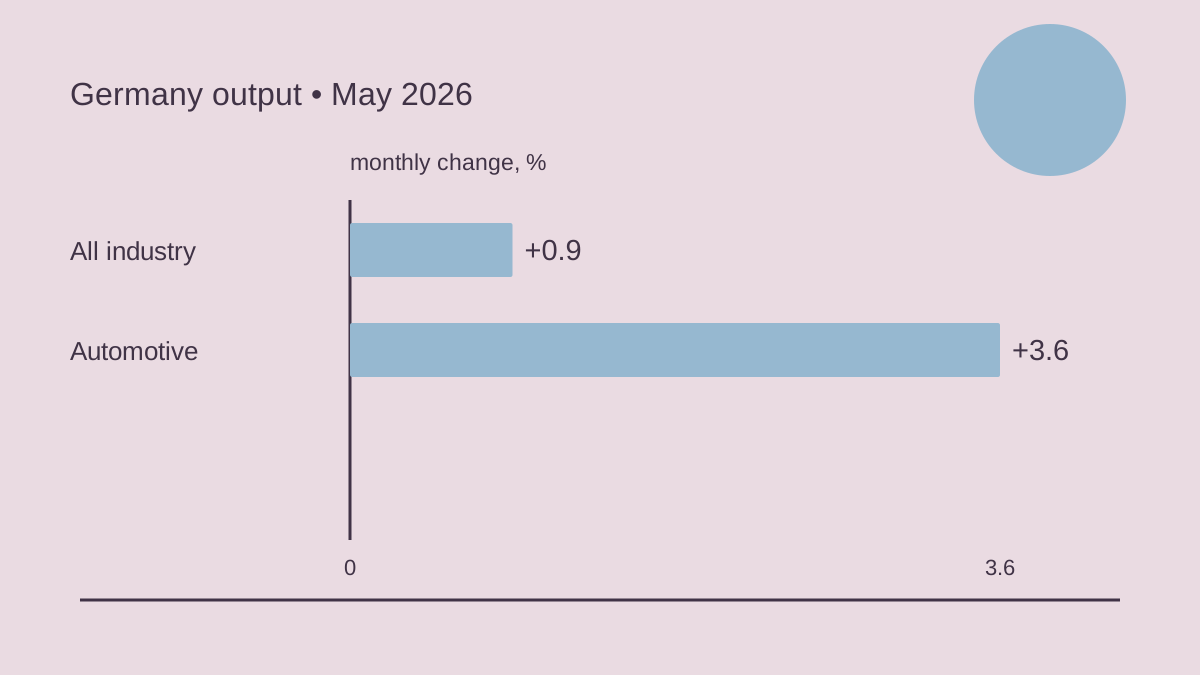
Germany's industrial output rose 0.9% in May 2026, exceeding the 0.2% increase forecast in a Reuters poll. Maria Martinez's 7 July report identified a 3.6% automotive increase. The March–May comparison with the preceding three months was much smaller: 0.1%. April's increase was revised to 0.2% from 0.4%, leaving a stronger latest month alongside a nearly flat three-month picture.
The earlier recovery and its reversals
The earlier monthly releases show how different branches contributed to successive gains and setbacks. In its 10 March 2025 report, the Federal Statistical Office, Destatis, recorded a 2.0% January increase in real output, adjusted for seasonal and calendar effects. Automotive production rose 6.4%, food production 7.5%, and machinery maintenance and assembly 15.6%, while fabricated metal products fell 7.7%. Despite the monthly rise, the November–January comparison was flat and output was 1.6% below January 2024 after calendar adjustment. December's monthly fall was revised from 2.4% to 1.5%.
February then brought a different sector balance. The 7 April 2025 publication recorded a 1.3% monthly decline, with construction down 3.2%, food production down 5.3% and energy production down 3.3%. Electrical-equipment output moved in the opposite direction, increasing 3.3%. Manufacturing excluding energy and construction fell 0.5%; capital goods edged up 0.2%, but consumer goods fell 3.0%. The December–February three-month comparison still showed a 0.1% increase. On the calendar-adjusted annual measure, however, overall output was 4.0% lower. Energy-intensive industrial production fell 0.6% from January and 4.0% year on year.
The 8 May 2025 release initially put March's increase at 3.0% and first-quarter growth against the previous quarter at 1.4%, the strongest quarterly increase since early 2022. Automobiles rose 8.1%, pharmaceuticals 19.6% and machinery 4.4%. Manufacturing excluding energy and construction increased 3.6%. Within that measure, both capital and consumer goods rose 4.9%, while intermediate goods gained 1.1%. Construction added 2.1%, whereas energy fell 1.8%. Overall output was still 0.2% below March 2024 on the calendar-adjusted annual comparison. These were the figures published in May, before subsequent monthly revisions.
April reversed part of that reported gain. The 6 June 2025 release showed a 1.4% monthly decline and revised March's increase to 2.3%. Pharmaceutical production fell 17.7%; machinery declined 2.4%. Food production, by contrast, rose 5.7%, and construction increased 1.4%. Manufacturing excluding energy and construction fell 1.9%, with capital goods down 2.3%, intermediate goods down 1.9% and consumer goods down 1.5%. The February–April three-month comparison remained positive at 0.5%, while the annual overall comparison was negative at 1.8%. Destatis also revised earlier data beginning with January 2024 in this release.
The first May 2025 estimate, published on 7 July, again showed a monthly increase: 1.2%. Energy production rose 10.8%, automotive output 4.9% and pharmaceuticals 10.0%. Construction fell 3.9%. Manufacturing excluding energy and construction rose 1.4%, but its product groups diverged: capital goods increased 4.1%, consumer goods 0.5%, and intermediate goods fell 2.1%. Overall output was 1.0% above May 2024, and the March–May three-month comparison increased 1.4%. Energy-intensive output fell 1.8% month on month and 4.8% year on year. April's overall decline was revised to 1.6% in that publication.
Revisions and the summer automotive swing
A substantial revision followed in the 7 August 2025 release. May's initially reported 1.2% increase became a 0.1% decline, following corrections to automotive establishments' data. June output fell 1.9% from May; the reported second-quarter decline was 1.0%. Destatis described June's overall level as the lowest since May 2020. Machinery output fell 5.3%, pharmaceuticals 11.0% and food production 6.3%. Energy increased 3.1%, and construction rose 0.7%. Manufacturing excluding those two branches contracted 2.8%. Consumer goods were particularly weak, falling 5.6%, compared with declines of 3.2% for capital goods and 0.6% for intermediate goods.
The next publication changed June's picture as well. On 8 September 2025, Destatis revised June's decline from 1.9% to 0.1%, citing corrected data from a large automotive enterprise and additional information. July output increased 1.3% month on month and 1.5% year on year. Machinery rose 9.5%, automobiles 2.3% and pharmaceuticals 8.4%; energy declined 4.5%. Manufacturing excluding energy and construction increased 2.2%, with capital goods up 3.0%. The May–July comparison with the preceding three months nevertheless remained slightly negative at 0.1%. Construction increased 0.3% from June, while energy-intensive production edged up 0.4%.
August's initial estimate brought another pronounced automotive movement. The 8 October 2025 report put overall output down 4.3% from July and automotive production down 18.5%. Destatis said annual holiday closures and production changeovers could partly explain the automotive decline. Machinery fell 6.2%, pharmaceuticals 10.3%, and computer, electronic and optical products 6.1%. Capital-goods production contracted 9.6%, consumer goods 4.7%, and intermediate goods 0.2%. Energy declined 0.5%, while construction rose 0.6%. The overall June–August three-month comparison fell 1.3%, and the calendar-adjusted annual decline was 3.9%. The initially published July increase remained 1.3%.
September's report showed an automotive rebound without a positive quarterly total. In the 6 November 2025 publication, September output rose 1.3% month on month, while the third quarter fell 0.8% from the second. Automotive production increased 12.3%; computer, electronic and optical products rose 5.1%. Machinery fell 1.1%. Capital goods rose 3.8%, compared with increases of 0.2% for both consumer and intermediate goods. Energy gained 1.3%, and construction fell 0.9%. August's overall fall was revised from 4.3% to 3.7%. The calendar-adjusted annual comparison for September remained negative, showing a 1.0% decline.
The year-end position
The 8 December 2025 release put October output up 1.8% from September and 0.8% from a year earlier. Construction grew 3.3%, machinery 2.8%, and computer, electronic and optical products 3.9%. Automotive output fell 1.3%, showing that a positive aggregate month did not require an automotive increase. Manufacturing excluding energy and construction rose 1.5%; capital and consumer goods each gained 2.1%, while intermediate goods increased 0.6%. Energy output rose 1.4%. The August–October three-month comparison was down 1.5%. September's initially reported increase of 1.3% was revised to 1.1% in this publication.
November initially added another increase. The 9 January 2026 release recorded a 0.8% monthly gain and revised October's rise to 2.0%. Automotive output increased 7.8%, machinery 3.2%, and machinery maintenance and assembly 10.5%. Energy fell 7.8%. Capital goods rose 4.9%, while intermediate and consumer goods declined 0.8% and 0.3%, respectively. The September–November three-month comparison grew 0.7%. Yet output over January–November remained 1.2% below the corresponding 2024 period. Energy-intensive industrial output over those eleven months was 17.7% below its corresponding 2021 level, despite the late-year increases in several manufacturing branches.
The full-year release on 6 February 2026 recorded a 1.1% fall in overall 2025 output. Manufacturing excluding energy and construction declined 1.3%, construction 1.7%, while energy rose 1.6%. Automotive production fell 1.7% over the year and machinery 2.6%. Energy-intensive production declined 2.6% and was 17.8% below 2021. December itself fell 1.9% month on month, with automotive output down 8.9% and machinery down 6.8%. Construction increased 3.0%. The fourth quarter nevertheless rose 0.9% from the third. November's monthly increase was revised from 0.8% to 0.2% in this release.
The first four months of 2026
January's first estimate, released on 9 March 2026, showed a 0.5% monthly fall and a 1.2% calendar-adjusted annual decline. Fabricated metal products fell 12.4%, pharmaceuticals 11.9%, and computer, electronic and optical products 6.8%. Energy production increased 10.3%; Destatis identified cold weather as a possible explanation. Construction rose 2.9% overall, although civil engineering fell 7.5%, potentially reflecting frost days. Manufacturing excluding energy and construction fell 2.5%. Consumer goods declined 4.2%, intermediate goods 2.6% and capital goods 1.6%. December's overall fall was revised to 1.0%, while the November–January three-month comparison rose 0.9%.
February's release on 9 April 2026 revised January's monthly change to zero and put February down 0.3%. The December–February three-month comparison fell 0.4%, while February's calendar-adjusted annual comparison was unchanged. Construction declined 1.2%, computer, electronic and optical products 3.9%, and pharmaceuticals 4.4%. Automotive output rose 1.7%. Manufacturing excluding energy and construction slipped 0.1%; consumer goods fell 1.5%, intermediate goods rose 0.4% and capital goods 0.1%. Energy production increased 0.3%. Energy-intensive industrial output rose 1.9% from January and 0.1% year on year, while its three-month comparison showed no change.
The 8 May 2026 publication put March down 0.7% month on month and the first quarter down 1.2% from the fourth quarter. Energy declined 4.0%, machinery 2.7%, while construction and automotive production each rose 1.9%. Manufacturing excluding energy and construction fell 0.9%. Capital goods contracted 1.6%, consumer goods 1.9%, but intermediate goods increased 0.8%. Energy-intensive production rose 1.2% in March and 2.1% over the quarter. Its calendar-adjusted annual comparison remained negative at 1.2%; the annual fall in overall output was 2.8%. February's monthly decline was revised to 0.5% in this release.
The April estimate published on 9 June 2026 was more positive. It put overall output up 0.4% month on month and revised March's decline to 0.1%. Construction increased 2.4%, chemical production 2.1% and fabricated metal products 1.6%. Automotive production fell 4.7%. Manufacturing excluding energy and construction was unchanged: intermediate goods rose 1.4%, consumer goods 1.9%, and capital goods fell 1.5%. Energy increased 0.2%. The February–April three-month comparison still declined 0.5%, and overall annual output fell 0.5%. Energy-intensive production rose 1.0% monthly and 2.6% in the three-month comparison. Earlier figures from January 2025 were also revised.
Orders and the influence of large contracts
The 9 March 2026 release put January real new orders down 11.1% month on month, but down only 0.4% when large orders were excluded. The November–January three-month comparison rose 7.4% overall and 1.5% excluding large orders. Fabricated metal products fell 39.4%, machinery 13.5%, and basic metals 15.1%, following fewer large contracts. Automotive orders instead increased 10.4%, and other transport equipment rose 9.2%. Domestic orders fell 16.2%, while foreign orders declined 7.1%. December's overall increase was revised to 6.4%, illustrating the high preceding-month comparison base.
February's order release on 8 April 2026 reported a 0.9% monthly increase overall and a larger 3.5% increase excluding large orders. Foreign demand rose 4.7%, including 6.7% from the euro area and 3.5% from elsewhere. Domestic orders fell 4.4%. Automotive orders increased 3.8%, textiles 45.2%, and basic metals 3.7%; other transport equipment fell 25.9%. Capital goods rose 0.2%, intermediate goods 1.4% and consumer goods 4.5%. The December–February three-month measure increased 2.0% overall but declined 0.8% excluding large orders. Real manufacturing turnover, a separate reported measure, fell 0.5% from January.
March's order estimate, published on 7 May 2026, showed a 5.0% monthly increase, or 5.1% excluding large orders. Destatis described the latter order level as the highest since February 2023. Electrical equipment rose 21.5%, machinery 6.9%, and computer, electronic and optical products 14.4%. Foreign orders increased 5.6%, with euro-area orders up 10.1%; domestic orders grew 4.0%. The quarter's overall orders nevertheless fell 4.1% against the preceding quarter, which had contained large contracts. Excluding large orders, the quarterly comparison increased 1.6%. February's overall monthly gain was revised to 1.4% in that release.
April then reversed part of March's reported increase. The 8 June 2026 release recorded a 3.8% monthly fall both overall and excluding large orders. Automotive orders declined 5.3%, electrical equipment 16.3% and machinery 7.4%. Foreign orders fell 4.2%, including an 11.1% decline from the euro area, whereas orders from outside it rose 0.8%. Domestic orders fell 2.9%. The February–April three-month comparison declined 3.1% overall but increased 3.5% excluding large contracts. March's monthly gain was revised to 4.5%. Real manufacturing turnover edged up 0.1%, with its calendar-adjusted annual comparison showing a 0.6% increase.
May’s order composition
The 6 July 2026 order release put May's monthly increase at 1.9% overall and 1.0% excluding large orders. Other transport equipment rose 85.0%, driven by large contracts; machinery gained 3.7% and electrical equipment 5.7%. Automotive orders fell 3.8%, and computer, electronic and optical products 7.8%. Foreign orders rose 2.2%, with euro-area orders up 11.2% and other destinations down 3.2%. Domestic orders rose 1.3%. The March–May three-month comparison fell 0.2% overall but increased 4.1% excluding large orders. April's overall decline was revised to 3.2%.
Automotive units and annual comparisons
The automotive association VDA's 2 June report used passenger-car units and annual comparisons rather than the seasonally adjusted monthly industrial index. It recorded 301,600 cars manufactured in May, down 18% year on year, noting two fewer working days. January–May production was approximately 1.724 million, down 5% and 19% below 2019. May car exports were 230,700 units, down 19%; the five-month export total declined 6%. Domestic incoming orders rose 2% annually, but foreign orders fell 16% and total orders 14%. These figures described the passenger-car industry's units, export flows and orders on their respective comparison bases.
Expectations and present conditions
The June survey from the ifo Institute, published on 24 June 2026, recorded a rise in its business-climate index from 85.0 to 85.6. Across the economy, companies assessed current conditions more positively and were less skeptical about the outlook. In manufacturing, however, the improvement came from expectations: assessments of the current situation slipped slightly, and incoming orders declined again. Services reported better current conditions with unchanged expectations. Trade improved on both measures. Construction expectations became less pessimistic, but current conditions were unchanged and companies continued to report a lack of orders.
The wider first-quarter economy
Destatis's detailed national accounts, released on 22 May 2026, recorded first-quarter GDP growth of 0.3% against the preceding quarter, adjusted for prices, seasons and calendar effects. Imports increased 0.1% and government consumption 1.1%. Investment in machinery and equipment fell 1.2%, and construction investment 2.5%. Manufacturing gross value added rose 0.7%, a national-accounts measure distinct from the physical production index. Employment was 45.6 million, down 157,000 year on year. These accounts reported the following different quarterly expenditure movements:
- Exports increased 3.3%.
- Household consumption was unchanged.
- Fixed investment declined 1.5%.


Leave a comment