
Bank Indonesia cut its benchmark rate by 25 basis points to 6% on 18 September 2024, its first reduction since February 2021. Reuters reported that only three of 33 economists had expected the move. Governor Perry Warjiyo cited low inflation and currency stability in supporting growth, alongside clearer Federal Reserve policy, lower Treasury yields and a softer dollar. Inflation in August was 2.12%. The bank would keep assessing room for further easing.
Pandemic easing and bank transmission
An earlier reduction came on 16 July 2020, when the board lowered the benchmark by 25 basis points to 4%. The deposit facility moved to 3.25% and the lending facility to 4.75%. Bank Indonesia described the decision as consistent with low projected inflation, maintained external stability and efforts to revive the economy during the pandemic. June consumer-price inflation had fallen to 1.96% annually. By 14 July, the bank reported additional liquidity injections of 633.24 trillion rupiah through quantitative easing, including around 155 trillion from reserve requirements and 462.4 trillion from monetary expansion.
On 19 November 2020, another 25-basis-point reduction took the benchmark to 3.75%, with deposit and lending facilities at 3% and 4.5%. The bank reported October annual inflation of 1.44% and attributed low price growth to weak domestic demand and adequate supply. Its forecast put 2020 headline inflation below the lower boundary of the 3% plus or minus one percentage point target corridor. Credit was also contracting: outstanding bank loans fell 0.47% annually in October, while deposits grew 12.12%. Bank Indonesia described financial intermediation as weak amid compressed demand and banks’ pandemic-related caution.
The lending-rate lag
The 18 February 2021 decision lowered the benchmark by another 25 basis points to 3.5%, with facilities at 2.75% and 4.25%. The bank cited projected low inflation, exchange-rate stability and support for recovery. January headline inflation was 1.55%, with core inflation at 1.56%. Its statement also highlighted delayed transmission to borrowers. During 2020, one-month deposit rates had fallen 181 basis points, while lending rates fell 83 points. Prime lending rates declined only 75 points to 10.11%. Bank Indonesia urged banks to reduce lending rates more quickly as part of efforts to stimulate business credit and economic recovery.
Liquidity normalisation before rate increases
On 20 January 2022, the board retained the 3.5% benchmark. Its decision cited inflation, exchange-rate and financial-system stability amid growing external pressure. Consumer-price inflation for 2021 had been 1.87%, below the 3% plus or minus one percentage point target. The bank attributed that reading to weak pandemic-era demand alongside stable exchange rates, sufficient supply and coordinated price policies. Its announced policy mix included three measures:
- Gradual increases in rupiah reserve requirements.
- Reserve remuneration of 1.5% for banks meeting the stated requirements.
- A 100-basis-point daily reserve incentive from 1 March for qualifying priority and inclusive financing.
The board again held the benchmark at 3.5% on 17 March 2022. February consumer prices had declined 0.02% from the previous month, while annual inflation was 2.06%. The bank reported lower volatile-food inflation as supply remained adequate and production increased. It nevertheless identified rising international commodity prices as a risk requiring vigilance. Its statement described continuing declines in borrowing costs: February’s overnight money-market reference rate was 2.79%, and the one-month deposit rate was 2.82%. Rates on new bank loans had fallen 30 basis points annually. Bank Indonesia still saw scope for banks to increase financing, including through lower lending rates.
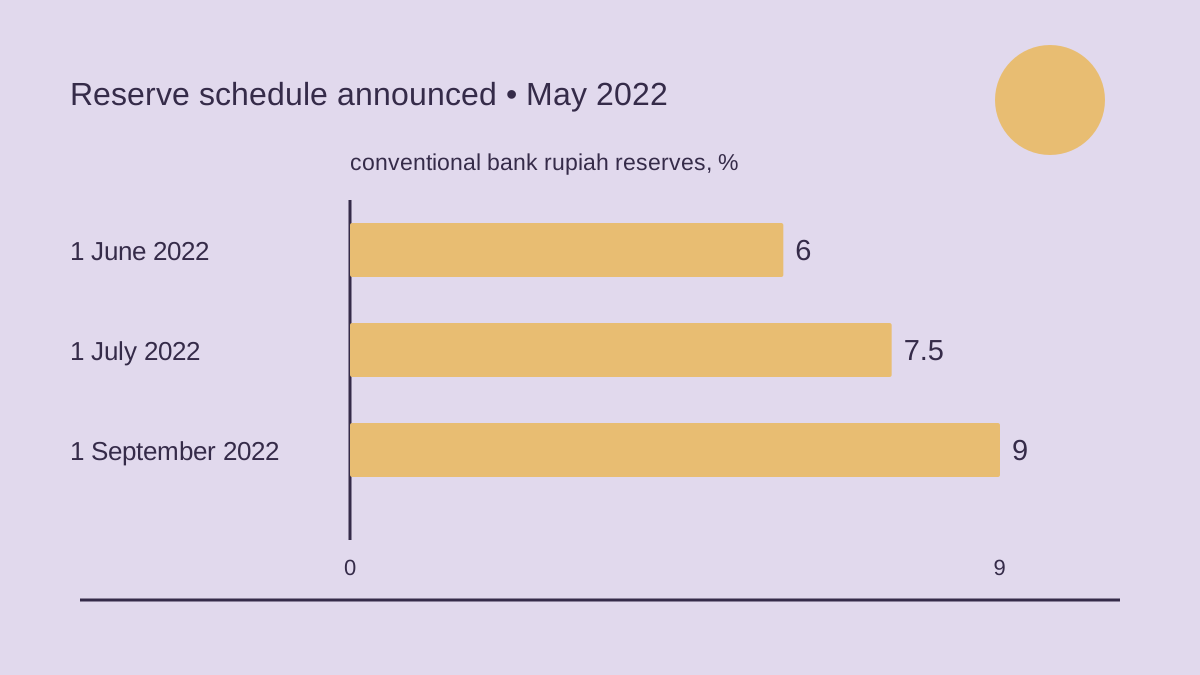
The 24 May 2022 meeting retained the 3.5% benchmark while announcing faster liquidity normalisation. Conventional banks’ rupiah reserve requirement would rise from 5% to 6% on 1 June, 7.5% on 1 July and 9% on 1 September. For sharia banks and business units, the corresponding path was from 4% to 4.5%, 6% and 7.5%. Bank Indonesia said the increases would preserve banks’ ability to extend corporate credit and buy government securities. April annual consumer-price inflation had reached 3.47%, with pressures from international commodity prices, greater mobility and seasonal holiday demand. The one-month deposit rate was 2.86%.
The board held the benchmark at 3.5% on 23 June 2022. May annual inflation was 3.55%, with core inflation at 2.58%. Bank Indonesia attributed increasing domestic price pressures to higher international commodity prices. It reported that the initial reserve-requirement phase, introduced in March, had absorbed about 119 trillion rupiah without reducing banks’ capacity to lend or purchase government securities. Banks’ liquid assets equalled 30.80% of third-party funds in May. The overnight money-market reference rate was 2.79%, while one-month deposits paid 2.86%. Lending rates had fallen 52 basis points annually as the bank described improving credit-risk perceptions.
The tightening sequence in 2022
On 23 August 2022, the board raised the benchmark by 25 basis points to 3.75%. The deposit and lending facilities increased to 3% and 4.5%. Bank Indonesia described a pre-emptive response to risks of higher core inflation and expectations associated with non-subsidised fuel prices and volatile food. July headline inflation was 4.94%, while core inflation stood at 2.86%. The bank also announced incentives from 1 September: support for lending to priority sectors would increase to a maximum of 1.5%, and the eligible priority subsectors would expand from 38 to 46.
The next decision, on 22 September 2022, raised the benchmark by 50 basis points to 4.25%, with facilities at 3.5% and 5%. The bank called the increase front-loaded and pre-emptive, aiming to lower inflation expectations and return core inflation to the target in the second half of 2023. August headline inflation was 4.69%, and core inflation was 3.04%. The bank expected subsidised fuel-price increases to intensify pressures. Its reserve policies had absorbed 269.3 trillion rupiah between 1 March and 15 September. August outstanding loans grew 10.62% annually, supported by loose lending standards and improving corporate and household demand.
On 20 October 2022, a further 50-basis-point increase brought the benchmark to 4.75%. September headline inflation had risen to 5.95% following fuel-price adjustments, while core inflation was 3.21%. Bank Indonesia said the headline reading was below its earlier projection because the effects on volatile food and administered prices were weaker than expected. Alongside tightening, it maintained accommodative borrower conditions for 2023. Qualifying banks could offer property financing with loan-to-value ratios up to 100%, and down-payment requirements for new vehicle financing could remain at zero. Both measures retained risk-management and prudential conditions.
The 17 November 2022 decision lifted the benchmark by another 50 basis points to 5.25%. Bank Indonesia sought to bring core inflation into the target range in the first half of 2023. October headline inflation was 5.71%, with core inflation at 3.31%. The bank reported that expectations remained high, although the November consensus forecast for year-end inflation had declined to 5.9%. Transmission was visible in money-market rates: the overnight reference reached 4.30% on 16 November. October’s one-month deposit rate was 3.40%, and the lending rate was 9.09%. The bank continued to describe rigidity in bank funding and lending rates.
A smaller December increase
On 22 December 2022, the board increased the benchmark by 25 basis points to 5.5%, with facilities at 4.75% and 6.25%. Bank Indonesia described a more calculated follow-up step to keep lowering inflation expectations and protect the core-inflation target. November core inflation had decreased to 3.30%, which the bank associated with limited fuel-price transmission and weak demand pressures. The overnight reference rate reached 4.80% on 21 December. Bank lending was still expanding: November credit grew 11.16% annually across loan types and most sectors. Sharia financing increased 23.5%, and lending to micro, small and medium enterprises grew 18.13%.
The 2023 pause and disinflation
The board raised the benchmark by 25 basis points to 5.75% on 19 January 2023. Deposit and lending facilities became 5% and 6.5%. Bank Indonesia considered the rate sufficient to keep core inflation within the target in the first half of 2023 and return headline inflation to the range in the second half. It also set out foreign-currency term-deposit operations for exporters to place export proceeds through banks. December 2022 bank rates reflected the tightening already undertaken: one-month deposits paid 3.97%, while lending rates averaged 9.15%. The bank attributed the limited increases in banking rates to ample liquidity and macroprudential incentives.
On 16 February 2023, the board retained the 5.75% benchmark and reiterated its confidence that this level could deliver the inflation target. January annual headline inflation had slowed to 5.28%. Bank Indonesia linked the disinflation to its earlier monetary response and measures to control volatile food prices. The overnight money-market reference was 5.47% on 15 February. January bank rates were 3.95% for one-month deposits and 9.25% for lending. Outstanding loans grew 10.53% annually, with the bank describing adequate liquidity and loose lending standards on the supply side, alongside corporate demand and improving household consumption.
The 18 April 2023 meeting again held the benchmark at 5.75%. Bank Indonesia now expected headline inflation to return to the target sooner than previously projected. March annual consumer-price inflation was 4.97%, with core inflation at 2.94%. The bank cited lower expectations and imported inflation, as well as adequate aggregate supply. March bank lending grew 9.93% annually; sharia financing expanded 19.43%, and lending to smaller enterprises increased 8.63%. The overnight reference rate was 5.65% on 17 April. March’s one-month deposit rate was 4.10%, while the average lending rate was 9.38%, according to that quarter’s policy report.
On 22 June 2023, the benchmark remained at 5.75%. May annual headline inflation had reached 4%, inside the 3% plus or minus one percentage point corridor, while core inflation fell to 2.66%. Bank Indonesia attributed the lower headline reading to monetary-policy consistency and coordination with government inflation-control teams. May credit growth accelerated to 9.39%, supported by corporate performance, ample liquidity and looser lending standards. The bank planned stronger liquidity incentives focused on downstream industries, housing, tourism, inclusion and green financing. Its reserve assets at the end of May were 139.3 billion dollars, equivalent to 6.1 months of imports.
Liquidity incentives and market instruments
The 25 July 2023 decision held the benchmark at 5.75% and announced a stronger macroprudential liquidity incentive policy from 1 October. The maximum total incentive would increase from 2.8% to 4%. The components were capped at 2% for selected sectors, 1.5% for inclusive financing and 0.5% for green loans. The mechanism reduced the reserve balances banks needed to hold to meet average rupiah reserve requirements. Eligible priorities included downstream industries, housing, tourism, smaller businesses and green finance. June annual consumer-price inflation had fallen to 3.52%.
On 24 August 2023, the benchmark remained at 5.75%, while the bank announced rupiah securities known as SRBI. It described them as contractionary, market-oriented monetary-operation instruments intended to deepen money markets, attract foreign portfolio inflows and use its government-security holdings as underlying assets. July annual headline inflation was 3.08%, with core inflation at 2.43%. The overnight reference rate stood at 5.59% on 23 August. July loans grew 8.54% annually, driven primarily by social services, mining and corporate services. Bank Indonesia said loose lending standards supported that increase, alongside stronger demand associated with economic growth.
The board retained the benchmark at 5.75% on 21 September 2023. It described the decision as consistent with keeping inflation within the target and strengthening currency stability against global financial uncertainty. August annual consumer-price inflation was 3.27%, while core inflation stood at 2.18%. Bank Indonesia attributed lower core inflation to managed demand, anchored expectations and low imported inflation. August loans grew 9.06% annually, primarily in corporate services, trade and social services. Islamic financing increased 14.52%. The bank described accelerating lending across economic sectors, while maintaining its focus on accommodative liquidity incentives for priority activities.
Tightening with liquidity support
On 19 October 2023, the board raised the benchmark by 25 basis points to 6%, citing currency stabilisation and imported-inflation risks amid greater global uncertainty. It simultaneously announced a reduction in conventional banks’ macroprudential liquidity buffer from 6% to 5%, effective 1 December, with corresponding repo flexibility. Initial implementation of the liquidity incentive programme on 5 October had supplied an additional 28.79 trillion rupiah to 120 banks. The statement also announced foreign-currency securities and sukuk as market-oriented instruments. Bank Indonesia presented these measures as part of its policy mix to maintain stability and revive sustainable growth.
The 23 November 2023 meeting held the benchmark at 6%. October annual consumer-price inflation was 2.56%, with core inflation at 1.91% and volatile-food inflation at 5.54%. Bank Indonesia associated the decline in core inflation with interest-rate policy and currency stabilisation. October’s ratio of liquid assets to third-party funds was 26.36%. The bank reported that SRBI issuance also gave banks more flexibility to manage liquidity and maintain lending capacity. One-month deposits averaged 4.40%, while lending rates averaged 9.37%. October loans grew 8.99% annually, supported by financing demand linked to corporate performance and household consumption.
Currency pressures and the 2024 decisions
On 17 January 2024, the board retained the 6% benchmark. December 2023 annual consumer-price inflation was 2.61%, within the previous year’s target corridor. Bank Indonesia reported 2023 credit growth of 10.38%, near the upper end of its 9–11% projection. It attributed lending growth to corporate and household performance, improving bank risk appetite and sufficient liquidity, including its macroprudential programmes. December bank rates were 4.69% for one-month deposits and 9.25% for lending. Looking ahead, the bank forecast credit growth of 10–12% in 2024, supported by the domestic recovery and effective liquidity incentives.
The 21 February 2024 meeting kept the benchmark at 6%. January headline inflation was 2.57%, with core inflation at 1.68%. Volatile-food inflation reached 7.22%, which the bank linked to rice and shallot prices, El Niño, seasonal factors and changes in planting schedules. The overnight reference was 5.97% on 20 February. January deposits paid 4.62%, and lending rates were 9.30%. Bank loans grew 11.83% annually. Bank Indonesia described two funding strategies as deposits grew more slowly: reallocating liquid assets from securities and strengthening non-deposit funding. It reported strong credit supply and demand at the beginning of the year.
On 20 March 2024, the board again retained the 6% benchmark. The target was 2.5%, with a one-percentage-point margin. February annual consumer-price inflation was 2.75%, with core inflation at 1.68% and volatile-food inflation at 8.47%. Bank Indonesia attributed the food-price increase mainly to rice and red chillies. Its money-market instruments continued to attract foreign holdings: SRBI outstanding reached 409.38 trillion rupiah on 19 March, including 85.02 trillion held by non-residents, or 20.77%. February credit grew 11.28% annually. The bank described strong lending appetite supported by capital and liquidity, while banks reallocated assets, adjusted funding prices and sought additional sources of funds.
The April response to external risks
The 24 April 2024 decision raised the benchmark by 25 basis points to 6.25%. Bank Indonesia described the move as strengthening the rupiah against deteriorating global risks and protecting the inflation target. The currency had depreciated 5.07% from the end of 2023 by 23 April. March headline inflation was 3.05%, while core inflation stood at 1.77%. The bank also announced broader priority sectors for liquidity incentives from 1 June, including construction, productive property, trade and utilities. Its policy statement maintained an accommodative macroprudential stance for businesses and households while tightening the benchmark rate.
The board held the benchmark at 6.25% on 20 June 2024. May annual consumer-price inflation had declined to 2.84%, with core inflation at 1.93%. The overnight reference rate was 6.09% on 19 June. Bank Indonesia reported SRBI yields of 7.16%, 7.28% and 7.35% for six-, nine- and twelve-month maturities. May bank rates were 4.61% on one-month deposits and 9.26% for lending. Bank credit grew 12.15% annually, primarily in trade, manufacturing and corporate services. The bank attributed maintained lending appetite to stronger funding growth, asset reallocation toward credit and its macroprudential liquidity support.
The final hold before September’s cut
On 21 August 2024, the board kept the benchmark at 6.25%, describing a continued focus on currency stabilisation and the inflation target. July annual headline inflation was 2.13%, with core inflation at 1.95% and volatile-food inflation at 3.63%. The overnight reference rate was 6.39% on 20 August. July bank rates were 4.73% for one-month deposits and 9.23% for lending. Credit grew 12.40% annually. Bank Indonesia reported maintained lending appetite, funding growth and reallocation of liquid assets toward loans. It also identified strong corporate demand and household demand, particularly for housing loans, in that month’s assessment.






Leave a comment