
The July 2026 decision
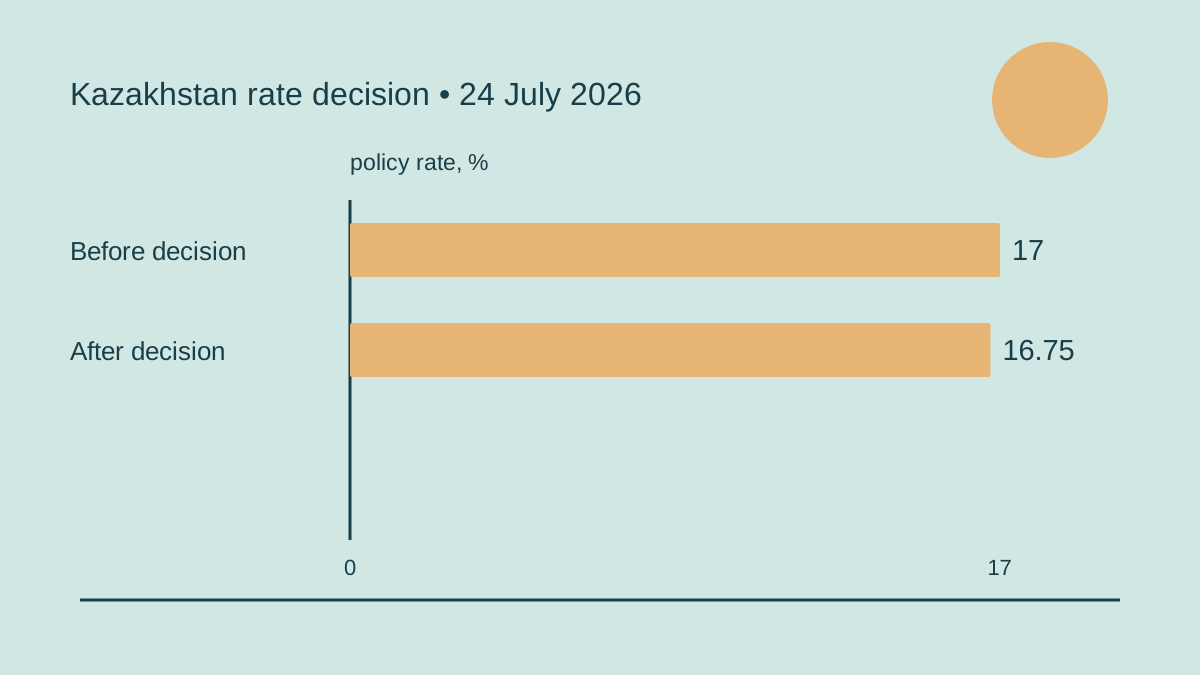
On 24 July 2026, the National Bank of Kazakhstan cut its rate from 17% to 16.75%, with a one-percentage-point corridor on either side. Interfax reported that most analysts in its poll expected 17%; 47% in a separate financiers’ association survey allowed for 16.75%. The bank cited achieved disinflation. It said there was no predetermined rate path: pauses or changes of direction remained possible.
- Fiscal consolidation, budget parameters and National Fund transfers remained conditions.
- Quasi-state stimulus volumes also mattered.
- Next decision: 4 September, noon in Astana.
2023
13 January 2023
At the start of 2023, the committee kept the rate at 16.75%. The January statement reported December monthly inflation of 1.2%, down from September’s 1.8% but above the five-year December average of 0.7%. Annual inflation ended 2022 at 20.3%, within the bank’s 20–21% forecast. Household inflation expectations reached a survey record of 21.3%. The bank considered further increases limited, while high persistent inflation and unstable expectations required keeping the rate unchanged for a prolonged period. Its assessment distinguished slowing monthly price growth from the continued strength of underlying pressure.
24 February 2023
The February decision again held 16.75%, with a stated intention to maintain that level throughout the first half. January annual inflation had increased to 20.7%, driven mainly by food, although monthly inflation slowed for a fourth consecutive month to 1.1%. Expectations fell from their December peak but remained high. The bank forecast inflation of 9–12% in 2023, 6–8% in 2024 and 4–6% in 2025. Those projections incorporated anticipated cheaper grain, a good domestic harvest and a stronger real exchange rate. Fiscal stimulus and changes in logistics remained domestic risks.
7 April 2023
April’s hold at 16.75% retained the first-half policy guidance. March annual inflation had fallen to 18.1% as the previous year’s high comparison base left the calculation. Monthly inflation declined to 0.9% from February’s 1.3%, yet exceeded the historical March average of 0.6%. One-year household expectations rose to 16.5% from 14.2%. The bank cited spending increases and fuel and utility-pricing reforms among domestic pressures. It planned to reassess policy using May’s forecasts and fuller information about those reforms, including their direct and indirect effects on inflation.
26 May 2023
In May, the bank still held 16.75%, while describing a slight shift towards disinflationary factors as external pressure weakened. April annual inflation had fallen to 16.8%; monthly inflation remained 0.9%, and household expectations edged up to 16.7%. The bank raised its inflation forecasts to 11–14% for 2023, 9–11% for 2024 and 5.5–7.5% for 2025, incorporating fuel and utility-price increases and a larger fiscal impulse. It would consider cautious second-half cuts if inflation slowed, indirect reform effects remained moderate and budget rules were observed for 2024–2025.
5 July 2023
July brought another hold at 16.75%. June annual inflation was 14.6%, while monthly inflation slowed to 0.5%. Household expectations moved in the opposite direction, reaching 17.2% from 17% in May; perceived inflation stood at 18.8%. The bank associated rising expectations with fuel and utility-price increases. It also reported 4.5% economic growth for January–May, with consumer demand remaining firm. Slower underlying inflation and the risk balance warranted caution, but the bank said the next forecast round would assess whether gradual easing had become appropriate. Its medium-term inflation target remained 5%.
25 August 2023
August delivered a cut to 16.5%. July annual inflation was 14%, although monthly inflation rose slightly to 0.6% and underlying measures stopped declining. Household expectations eased to 16.9%, still elevated. The bank forecast inflation of 10–12% in 2023, 7.5–9.5% in 2024 and 5.5–7.5% in 2025. It attributed room for easing mainly to weaker external pressure, while domestic demand, production costs and fiscal stimulus remained concerns. Further gradual cuts depended on slowing actual and underlying inflation; stronger second-half public spending could limit them, and pauses were explicitly possible.
6 October 2023
October reduced the rate to 16%. September annual inflation had fallen to 11.8%, moving towards the lower boundary of the 10–12% annual forecast. Monthly inflation was 0.6%, still above its historical comparison. Household expectations rose to 17%, while perceived inflation declined to 17.8%. The bank cited stronger fiscal stimulus and possible delayed effects of regulated-price increases as risks. It considered further cuts during 2023 substantially constrained and would assess easing before year-end only if annual inflation reached single digits. Moderately restrictive conditions remained necessary to bring inflation towards the medium-term 5% target.
24 November 2023
November’s cut brought the rate to 15.75%. October annual inflation had slowed to 10.8%, and monthly inflation of 0.7% matched its historical average. The bank lowered its 2023 inflation forecast to 9.3–10.3% but kept the 2024 and 2025 ranges at 7.5–9.5% and 5.5–7.5%. It linked the revision to more moderate utility-tariff increases and non-food prices. Fiscal stimulus, unstable expectations and the poor harvest remained risks. The bank said lower inflation and forecasts had created room for this cut, while further easing depended on actual inflation following its projected path and could include pauses.
2024
19 January 2024
January 2024 continued easing to 15.25%. December annual inflation had reached 9.8%, within the bank’s forecast, while monthly inflation was 0.8% against a historical 0.7%. Underlying inflation edged higher and still exceeded the target. The bank attributed slower overall inflation to monetary conditions, cheaper global food, lower production costs, official measures and the previous year’s high base. Household expectations declined somewhat but remained unstable. Without new shocks, it expected gradual cuts to continue, potentially with pauses and over a prolonged cycle. Further slowing of underlying inflation was needed for 5% inflation in 2025–2026.
23 February 2024
February cut another half percentage point to 14.75%. January annual inflation was 9.5%; monthly inflation of 0.8% exceeded the historical 0.6%. Household expectations had fallen for three consecutive months, a factor the bank cited in lowering the rate. Its forecasts remained 7.5–9.5% for 2024 and 5.5–7.5% for 2025, with 5–6% projected for 2026. Persistent demand, unanchored expectations and uncertain fiscal parameters limited further easing. The bank considered a hold at the new level highly likely at coming decisions while it accumulated evidence about economic and fiscal reforms.
12 April 2024
April delivered the anticipated pause at 14.75%. March annual inflation declined to 9.1% but stood somewhat above the forecast because utility prices increased faster than expected. Monthly inflation fell to 0.7% after February’s 1.1%, still above the historical March value of 0.6%. Underlying and seasonally adjusted measures also slowed after their February acceleration. The bank highlighted flood-related risks and uncertain spending needed to address them, alongside regulated-price reforms. It said scope for cuts would develop when persistent inflation showed stable declines, while moderately restrictive monetary conditions remained necessary for the 5% target.
31 May 2024
May resumed cuts, lowering the rate to 14.5%. April annual inflation was 8.7%, and monthly inflation of 0.6% matched its historical average. Underlying and seasonally adjusted inflation slowed for a second month, whereas household expectations rose after two months of decline. Respondents associated this with food prices, floods and utility reforms. The bank retained its inflation forecasts for 2024–2026. It said stable slowing of underlying inflation would allow cautious further easing. Policy would not respond to the direct effects of regulated-price reform through rate increases, but would closely monitor secondary effects.
12 July 2024
July lowered the rate to 14.25%. June annual inflation was 8.4%, within the forecast and below its central estimate; monthly inflation of 0.4% was below the historical 0.5%. Food inflation and slower tariff reform contributed to lower overall inflation, although paid services still showed the largest annual increases. Underlying and seasonally adjusted inflation rose slightly after previous declines. Household expectations had fallen from April’s high levels but increased somewhat in June as the exchange rate weakened. The bank planned to assess fiscal parameters and exchange-rate-related easing of monetary conditions in August’s forecast round.
29 August 2024
August held 14.25% as the bank reported a shift towards inflationary risks. July annual inflation rose to 8.6%, with monthly inflation of 0.7% against a historical 0.3%; underlying measures accelerated significantly. Domestic monetary conditions had eased through currency weakness, faster current inflation and consumer-credit growth. The bank kept its 2024 and 2025 inflation ranges but projected 5–7% for 2026. It highlighted uncertainty about financing the widening gap between public revenue and expenditure. A hold through the end of 2024 was considered highly likely, conditional on the risk assessment then available.
11 October 2024
October again held 14.25%. September annual inflation declined to 8.3%, while monthly inflation of 0.4% exceeded the historical 0.3%. Food contributed to slower overall prices, but services remained the largest inflation component amid tariff reform. Underlying and seasonally adjusted inflation were above spring and early-summer levels. Household expectations rose, and experts’ estimate for current-year inflation increased from 8% to 8.4%. The bank said stable declines in persistent inflation, together with effective financing of the fiscal gap, would create conditions for careful easing. Its immediate decision maintained the existing rate and moderately restrictive conditions.
29 November 2024
November reversed direction, raising the rate to 15.25%. October annual inflation increased to 8.5%, with higher underlying inflation and pressure from tariffs, currency weakness and demand. The bank raised its inflation forecasts to 6.5–8.5% for 2025 and 5.5–7.5% for 2026, expecting overall inflation near target in 2027. It attributed the revision to fiscal stimulus, utility reform, exchange-rate depreciation and external pressure. Lower real interest rates and currency weakness had eased monetary conditions despite the previous nominal-rate holds. The committee would assess whether further tightening was needed at subsequent meetings amid financial-market volatility.
2025
17 January 2025
January 2025 held 15.25% but signalled that further tightening would be assessed at the next forecast round. December inflation had risen to 8.6%, within the 8–9% forecast for 2024, with service prices and accelerating non-food inflation prominent. Household expectations rose again. The bank reported 6.2% growth in the short-term economic indicator for 2024, suggesting possible overheating; this was an indicator rather than a final GDP estimate. Firm demand, consumer lending and fiscal support remained concerns. Currency depreciation, rising expectations and higher actual inflation had somewhat eased overall monetary conditions, according to the bank.
7 March 2025
March increased the rate to 16.5%. February annual inflation reached 9.4%, and household expectations rose to 13.7%. The bank reported annualized monthly underlying and seasonally adjusted inflation of 14.2% and 16.9%, respectively, alongside consumer-credit growth of 33.5% over 2024. It raised forecasts to 10–12% inflation in 2025 and 9–11% in 2026, projecting 5.5–7.5% in 2027. The forecast incorporated fuel-price increases, higher VAT and utility reforms. The bank said stronger action was required after monetary conditions eased, with future decisions dependent on incoming inflation data and the risk balance.
11 April 2025
April paused at 16.5%. March annual inflation rose to 10%, within the forecast range, while monthly inflation fell from 1.5% to 1.3%. Underlying and seasonally adjusted monthly inflation were 0.9% and 1%, yet average seasonally adjusted inflation over the first quarter still reached 14.2% annualized. Professional forecasters’ inflation expectations rose from 8.7% to 10.6%. The bank saw early signs of stabilization in monthly prices but no grounds for cuts at coming meetings. It expected liquidity-management and prudential measures to support disinflation and planned to reassess tax-reform effects at the next forecast round.
5 June 2025
June retained 16.5% as May annual inflation reached 11.3%. Monthly inflation was 0.9%, and annualized underlying and seasonally adjusted measures were 10.1% and 11.4%. Household expectations increased to 14.1% from April’s 12.2%. The bank lifted its 2025 inflation forecast to 10.5–12.5% and its 2026 range to 9.5–11.5%, retaining 5.5–7.5% for 2027. Higher demand, food prices and lower oil-price assumptions informed the revision. A hold through year-end was highly likely, though increases remained possible. The bank also announced that it would begin publishing summaries of rate-decision discussions to expand policy communication.
11 July 2025
July again held 16.5%. June annual inflation reached 11.8%, including service inflation of 16.1% and food inflation of 10.6%. Monthly inflation slowed to 0.8%, but underlying and seasonally adjusted measures rose slightly to 0.9% and 1%. Professional participants raised their current-year inflation expectation from 10.7% to 11%. The bank cited consumer-credit growth of 32.4% year-on-year in May as supporting demand. It expected reserve-requirement changes, liquidity operations and prudential restrictions to strengthen disinflation. A rate hold through year-end remained highly likely, while further increases were not excluded if necessary.
29 August 2025
August kept 16.5% but made the prospect of tightening more explicit. July annual inflation remained 11.8%; monthly inflation slowed to 0.7%, compared with a historical 0.4%. Food’s contribution overtook services, while household expectations increased to 14.2%. The bank forecast inflation of 11–12.5% in 2025 and retained 9.5–11.5% for 2026. New reserve-requirement conditions were scheduled for September to reinforce transmission. The committee said a lack of meaningful inflation slowing in coming months would justify tighter monetary conditions, and it would consider raising the rate at upcoming meetings to restore progress towards its 5% target.
10 October 2025
October raised the rate to 18%. September annual inflation reached 12.9%, above the forecast, compared with 12.2% in August. Monthly inflation increased to 1.1%, while underlying and seasonally adjusted inflation rose to 1.2% and 1.3%. Professionals lifted their current-year expectation from 11.3% to 12%. The bank described demand exceeding supply, active fiscal policy and tariff and fuel-price effects as domestic pressures. Higher inflation, elevated expectations and a weaker real effective exchange rate had eased overall monetary conditions. It would consider further tightening if the new degree of restriction proved insufficient to stabilize inflation.
28 November 2025
November held 18% after October annual inflation declined to 12.6%. Monthly inflation slowed to 0.5%, but underlying inflation remained 1%, equivalent to 12.2% annualized. Around 80% of goods and services in the consumer basket were rising faster than the 5% target. Household one-year expectations increased to 13.6%, and longer-term expectations reached 14.3%. The bank raised its 2026 inflation range to 9.5–12.5%, citing uncertainty over tax reform and quasi-fiscal financing. It saw no room for cuts through the end of the first half of 2026 and did not rule out further tightening.
2026
23 January 2026
January held 18% after 2025 annual inflation reached 12.3%, in line with the forecast. December monthly inflation was 0.9%, with underlying inflation of 0.8%. Household one-year expectations rose to 14.7%, while professionals expected 10.8% inflation in 2026. The bank highlighted demand exceeding supply, fuel and tariff effects, higher VAT and quasi-fiscal risks. Issuance of unsecured consumer loans grew 7.3% year-on-year over eleven months of 2025. Reserve and liquidity measures and currency appreciation supported disinflation. A rate hold through the end of the first half of 2026 was considered highly likely.
6 March 2026
March retained 18% as February annual inflation declined to 11.7%, from January’s 12.2%. Monthly inflation was 1.1%, with underlying inflation of 0.8%. Household expectations fell to 13.7%; professionals reduced their 2026 estimate to 10%, from 10.8% in January. The bank lowered its 2026 inflation forecast to 9.5–11.5%, retaining 5.5–7.5% for 2027 and projecting near-target inflation in 2028. Currency strength, credit restraint and liquidity measures supported slower prices, alongside the fuel and utility moratorium. Conditional cuts were envisaged in the second half of 2026; fiscal consolidation and quasi-fiscal spending control remained important.
24 April 2026
April again held 18%. March annual inflation declined to 11%, from 11.7% in February; monthly inflation slowed from 1.1% to 0.6%. Underlying and seasonally adjusted measures also decreased but remained above levels consistent with the 5% target. Household expectations rose to 14.6%, while professionals’ 2026 estimate stayed at 10%. Currency strength, slower retail lending and the tariff and fuel moratorium supported disinflation. Future price reforms and quasi-fiscal stimulus remained risks. The bank was ready to consider cuts at subsequent meetings if current trends persisted without new shocks, while requiring confirmation that slower inflation would endure.
5 June 2026
June reduced the rate to 17%. May annual inflation declined to 10.4%, from its September 2025 peak of 12.9%. Monthly inflation was 0.7%, with underlying and seasonally adjusted measures also at 0.7%. Household expectations reached 12.7%, and professionals expected 10% inflation in 2026. The bank lowered its 2026 inflation forecast to 9–11%, citing faster actual disinflation, limited VAT pass-through and currency appreciation. It raised its 2026 growth forecast to 4.5–5.5% on activity and oil assumptions. Achieved disinflation and improved forecasts allowed the cut, while policy remained moderately restrictive and dependent on subsequent data.






Leave a comment