
Kenya’s central bank cut its benchmark from 12.75% to 12% on 8 October 2024. Reuters reported that the committee cited weaker credit and second-quarter growth. September inflation was 3.6%. The bank cut its 2024 growth forecast from 5.4% to 5.1%, projecting 5.5% for 2025. Its October statement put August private-credit growth at 1.3%, against July’s 3.7%. Second-quarter GDP grew 4.6%, compared with 5.6% a year earlier.
Support before the pandemic
On 27 January 2020, the committee reduced the rate from 8.5% to 8.25%. It assessed that the economy was operating below potential and noted fiscal tightening, while judging that November’s earlier reduction was still passing through the economy. Private-sector credit had grown 7.1% over the twelve months to December 2019. Commercial banks’ December liquidity and capital-adequacy ratios averaged 49.7% and 18.8%, respectively. The committee expected further credit growth to smaller businesses following the removal of interest-rate caps and the development of lending products for that segment.
March’s emergency measures
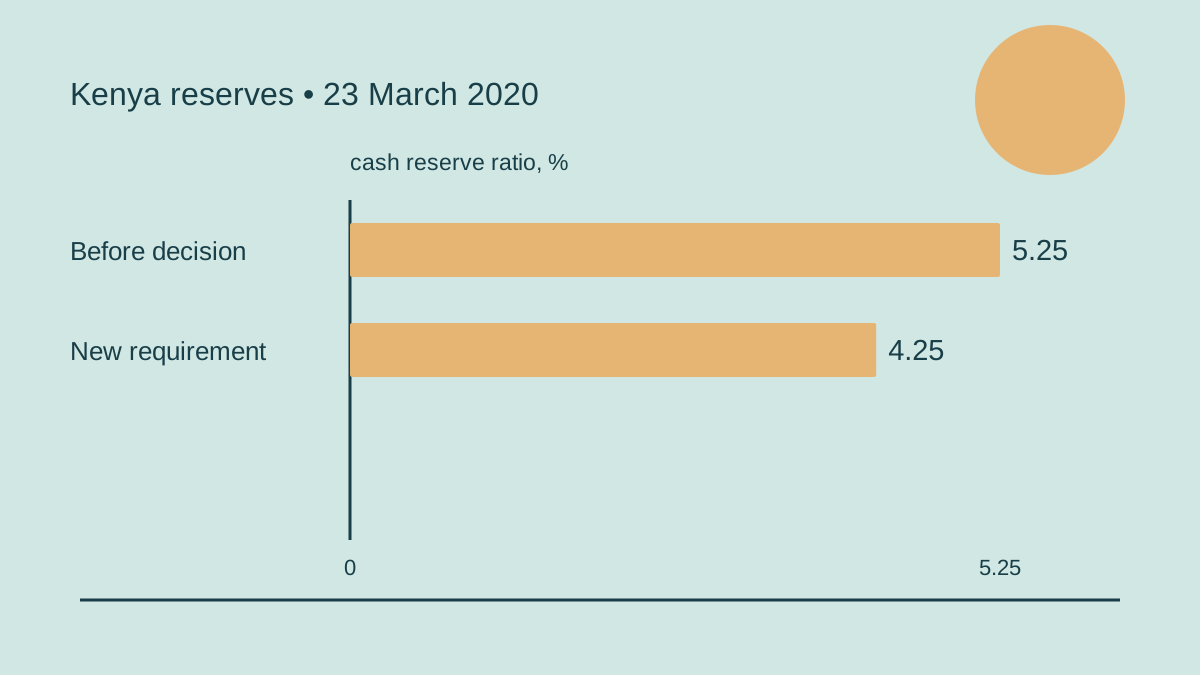
The pandemic changed the policy setting. On 23 March 2020, the bank warned that growth might fall from a baseline forecast of 6.2% to 3.4%, citing weaker trading-partner demand, supply-chain disruption and domestic production difficulties. Private-sector credit had grown 7.7% in the twelve months to February. The committee adopted two measures to support borrowers and banking liquidity:
- Reduce the benchmark rate from 8.25% to 7.25%.
- Lower the cash reserve ratio from 5.25% to 4.25%, making KES35.2 billion available to support borrowers distressed by COVID-19.
A further reduction followed on 29 April: the benchmark moved from 7.25% to 7%. The bank reported that 43.5% of the funds released by the reserve-ratio change had been used, with tourism, property, trade and agriculture among the beneficiaries. Loans worth KES81.7 billion had been restructured under the emergency arrangements. Private-sector credit grew 8.9% in the twelve months to March. The bank’s growth forecast for 2020 was now about 2.3%, while the committee said the earlier measures were still being transmitted through the economy.
By the 27 May meeting, the use of released reserves had reached KES29.1 billion, or 82.6% of the available funds. The benchmark remained at 7%. Repayment periods had been extended for KES102.5 billion of personal and household loans by the end of April; another KES170.6 billion had been restructured in other sectors. The combined KES273.1 billion represented a reported 9.5% of the banking loan book. Meanwhile, the gross non-performing-loan ratio rose from 12.5% in March to 13.1% in April, and annual private-credit growth reached 9%.
The June assessment recorded a larger restructuring programme while leaving the rate unchanged. On 25 June, the bank put restructured loans at KES679.6 billion by the end of May, equal to 23.4% of the loan book. Personal and household repayment extensions accounted for KES199.1 billion, with KES480.6 billion restructured elsewhere. Of the released reserve funds, KES30.8 billion had supported lending. Private-credit growth was 8.1% over the twelve months to May. The committee continued to identify the prospective small-business credit-guarantee scheme as important for lending to vulnerable enterprises.
Restructuring across sectors
On 29 July 2020, the rate was again held at 7%. Restructured loans totalled KES844.4 billion by the end of June, representing 29% of the banking portfolio. Personal and household repayment extensions covered KES240 billion; restructuring in other sectors amounted to KES604.4 billion. Trade, property, transport and communications, and manufacturing were prominent in that second category. Reserve-release funds used for lending reached KES31.4 billion. Annual private-sector credit growth was 7.6% in June, with the bank still describing the credit-guarantee scheme’s operationalisation as imminent.
The 29 September decision kept the rate at 7% as restructuring reached KES1.12 trillion by the end of August, or 38% of the loan book. Released reserves used to support lending amounted to KES32.4 billion. Private-sector credit grew 8.3% over the twelve months to August. A separate bank survey conducted on 21–23 September found that 89% of responding hotels were open, compared with 35% in May. Respondents reported improving employment and occupancy, while the committee noted uncertainty about a possible second wave of infections.
At the 26 November meeting, the cumulative restructured amount had risen to KES1.38 trillion by the end of October, equivalent to 46.5% of total gross loans. The rate remained 7%, and KES32.6 billion of the reserve-release funds had been used for lending. Annual private-credit growth stood at 7.7% in October. The bank’s November hotel survey found 96% of respondents open, but average bed occupancy was 23%. The committee described recovery in activity while also noting renewed infection risks and uncertainty in the global outlook.
Recovery and the end of emergency restructuring
The rate remained at 7% on 27 January 2021. Private-credit growth reached 8.4% in the twelve months to December 2020, with agriculture, manufacturing and transport among the sectors recording growth. Gross non-performing loans nevertheless accounted for 14.1% of the portfolio in December, against 13.6% in October. The bank linked the increases in transport, trade, property and agriculture to the subdued business environment and said banks continued provisioning. The committee judged the accommodative stance appropriate and considered the earlier monetary measures alongside the government’s economic-stimulus programme.
On 29 March 2021, the bank reported that the emergency loan-restructuring arrangements had expired on 2 March. Over the preceding year, KES1.7 trillion had been restructured, representing 57% of gross loans. The outstanding restructured balance at the end of February was KES569.3 billion, or 19% of gross loans. The credit-guarantee scheme had become operational, and the reserve-ratio reduction had supplied KES32.8 billion for lending. Annual private-credit growth reached 9.7% in February. The benchmark remained at 7%, with the committee assessing the emergency support as effective.
The 26 May 2021 release dated the credit-guarantee scheme’s operationalisation to October 2020 and reported progress in lending under it. Private-credit growth was 6.8% in the twelve months to April, when the bank recorded substantial repayments and recoveries. Loan applications picked up in May after dipping in April. The non-performing-loan ratio declined to 14.2% in April from 14.5% in February, with recoveries in transport, property, hospitality and agriculture. The committee retained the 7% rate, describing inflation expectations as anchored and the economy as operating below potential.
A programme of transmission reforms
The committee’s 28 July 2021 statement connected monetary-policy effectiveness with reforms outlined in a white paper published the previous day. Its priorities included refining macroeconomic modelling and forecasting, improving interbank-market functioning and strengthening communication about decisions. The benchmark stayed at 7%. Private-credit growth was 7.7% in June, compared with 6.8% in April, while the non-performing-loan ratio fell to 14% from 14.2%. Banks were developing products for underserved customers, including women, young people and smaller enterprises, with the committee noting progress under the credit-guarantee scheme.
On 28 September 2021, the bank reported that mobile-phone transactions represented 84.8% of bank transactions, compared with 55.7% before the pandemic. It described banks expanding digital services in response to customer demand. Private-credit growth reached 7% in August from 6.1% in July, and loan applications increased. The non-performing-loan ratio eased to 13.9% in August from 14% in June. Although the committee kept the rate at 7%, it noted rising domestic and international inflation pressures and said it would monitor potential second-round effects closely.
The 29 November 2021 release recorded another rise in private-credit growth, to 7.8% in October from 7% in August. The non-performing-loan ratio declined to 13.6% from 13.9%, with repayments and recoveries in trade, manufacturing, personal lending and financial services. Banks had started incorporating climate-related risks into their strategies and risk-management arrangements following October guidance. They were also raising additional capital intended to support lending in 2022 and regional opportunities. The committee retained the 7% rate and described leading economic indicators as showing continued robust performance.
Inflation changes the policy direction
At the start of 2022, the committee still considered accommodation appropriate. On 26 January, it held the rate at 7%, with December inflation at 5.7%. The banking system’s assets had increased 11.1% during 2021, from KES5.4 trillion to KES6 trillion. Private-credit growth rose to 8.6% in December from 7.8% in October, while the non-performing-loan ratio declined from 13.6% to 13.1%. The bank reported strong loan applications and growth in lending to transport, manufacturing and trade, but the committee also noted elevated global risks.
On 29 March 2022, the benchmark remained 7%. February inflation had declined to 5.1% from 5.4% in January, with the bank citing lower food and fuel prices. It nevertheless identified increased inflation risks arising from global uncertainty. Private-credit growth reached 9.1% in February, against 8.6% in December, and applications and approvals remained strong. The non-performing-loan ratio moved in the opposite direction, rising from 13.1% to 14%. The bank attributed those increases to business-specific challenges in manufacturing, hospitality, construction and property, with continued provisioning by lenders.
The first tightening decision
The committee raised the rate from 7% to 7.5% on 30 May 2022. It cited commodity-price increases and supply-chain disruption as risks to the inflation outlook and sought to reinforce expectations. Overall inflation had reached 6.5% in April, against 5.6% in March. April food inflation was 12.1%, and fuel inflation 8.5%. Private-credit growth increased to 11.5% in April from 9.1% in February. The bank recorded a 14.1% non-performing-loan ratio, with increases in construction, manufacturing, trade and transport, and continued lender provisioning.
The 27 July meeting paused at 7.5%. The committee said May’s tightening was still passing through the economy and had been complemented by fiscal measures affecting specific prices. June inflation was 7.9%, against 7.1% in May, while private-credit growth reached 12.3%, compared with 11.5% in April. The non-performing-loan ratio rose to 14.7% in June from 14.1% in April. The bank characterised the increases as concentrated in a few large borrowers facing particular difficulties, rather than systemic, and reported continued adequate provisioning by banks.
Further tightening followed on 29 September 2022, when the rate rose from 7.5% to 8.25%. August inflation was 8.5%, compared with 8.3% in July. The bank expected near-term pressure partly from the scaling back of price-support measures and budget-related taxes, while the committee cited persistent inflation and global risks. Private-credit growth reached 12.5% in August from 12.3% in June. The non-performing-loan ratio declined to 14.2% from 14.7%, with the bank reporting repayments and recoveries in construction, manufacturing and transport and continued provisioning.
On 23 November 2022, the benchmark increased again, from 8.25% to 8.75%. Overall inflation had reached 9.6% in October, up from 9.2% in September, with food and fuel driving the change. Food inflation was 15.8% and fuel inflation 12.6%. Private-credit growth reached 13.3% in October, compared with 12.5% in August, while the non-performing-loan ratio declined from 14.2% to 13.8%. The committee considered another tightening appropriate to anchor expectations, citing sustained price pressures and elevated global risks to the domestic economy.
Bank balance sheets and a new implementation framework
On 30 January 2023, the committee held the rate at 8.75%, judging that November’s tightening was still being transmitted. December inflation had eased to 9.1% from 9.5% in November, with the bank reporting lower food prices and international commodity costs. Bank assets increased 10% during 2022, from KES6 trillion to KES6.6 trillion. The non-performing-loan ratio declined to 13.3% in December from 13.8% in October. The bank reported repayments and recoveries in trade, tourism, hospitality, transport and manufacturing, while lenders continued to provision for problematic loans.
The rate rose from 8.75% to 9.5% on 29 March 2023. February inflation was 9.2%, compared with 9% in January, and the bank identified higher vegetable prices associated with hot, dry conditions. Fuel inflation remained elevated at 13.8%, reflecting subsidy reductions and higher electricity tariffs. Private-credit growth was 11.7% in February, with applications and approvals declining as demand weakened. The non-performing-loan ratio rose to 14% from December’s 13.3%. The committee cited sustained inflation and global risks when explaining its decision to tighten again.
The 29 May 2023 meeting left the rate at 9.5%. April inflation had fallen to 7.9% from 9.2% in March, with the bank citing lower vegetable prices following rain and improved food supply. Fuel inflation remained 13.2%. Private-credit growth recovered to 13.2% in April from 11.7% in February, but the non-performing-loan ratio increased to 14.6% from 14%. The committee said March’s tightening was still passing through the economy. It also expected duty-free imports of selected foods, particularly sugar, to help moderate prices alongside the monetary measures.
The interbank rate becomes an operating target
On 9 August 2023, the committee retained a 10.5% benchmark and approved a new inflation-targeting implementation framework. It introduced a corridor of 250 basis points on either side of the policy rate, with operations intended to make the interbank rate closely track that benchmark. The discount-window premium was reduced from 600 to 400 basis points above the benchmark to improve access. July inflation had returned to the 5% plus-or-minus 2.5 percentage-point target range at 7.3%. Private-credit growth was 12.2% in June, compared with 13.2% in May.
At the 3 October 2023 review, the committee reported increased interbank activity, lower interest-rate volatility and narrower spreads under the new framework. It associated those developments with better liquidity distribution. The benchmark remained 10.5%, and September inflation was 6.8%, compared with 6.7% in August. Private-credit growth reached 12.6% in August from 10.3% in July. The non-performing-loan ratio was 15% in August, compared with 14.2% a year earlier. The bank recorded increases in manufacturing, mining, property and construction and said lenders were continuing adequate provisioning.
Exchange-rate pressure and the peak rate
The December decision moved the benchmark from 10.5% to 12.5%. On 5 December 2023, the committee estimated that exchange-rate depreciation contributed about three percentage points to November’s 6.8% inflation. It also linked depreciation to higher external-debt service and a larger shilling value of foreign-currency debt. The committee sought to address exchange pressures and secondary price effects. October private-credit growth was 12.5%, while the non-performing-loan ratio reached 15.3%, up from 15% in August. Lenders continued provisioning as problematic loans increased in several business and household categories.
On 6 February 2024, the benchmark increased from 12.5% to 13%. January inflation had risen to 6.9% from 6.6% in December, with food, fuel and non-food non-fuel components all increasing. The committee described exchange-rate pressures as reduced but continuing and considered further action necessary to stabilise prices. December’s non-performing-loan ratio had fallen to 14.8% from October’s 15.3%, with decreases in energy, manufacturing, agriculture, construction and transport. The stated policy objective was to anchor expectations and move inflation towards the 5% midpoint of the target range.
The committee kept the rate at 13% on 3 April 2024. March inflation had declined to 5.7% from 6.3% in February. The bank associated lower food prices with better supply and favourable weather, and linked lower electricity and pump prices to the shilling’s appreciation. The committee credited earlier measures with easing inflation and exchange pressures and expected further moderation. The non-performing-loan ratio nevertheless rose to 15.5% in February from 14.8% in December. Increases were recorded in property, trade, personal lending, energy and construction, with lenders maintaining provisioning.
A narrower interest-rate corridor
On 5 June 2024, the committee retained the 13% benchmark but changed its implementation settings. The interest-rate corridor narrowed from 250 to 150 basis points on either side of the benchmark, and the discount-window premium moved from 400 to 300 basis points above it. The bank reported narrower interbank spreads and reduced market segmentation under the earlier framework. May inflation was 5.1%, compared with 5% in April. The non-performing-loan ratio rose to 16.1% in April from 15.5% in February, with increases across agriculture, property, hospitality, trade and construction.
The return to easing
The 6 August 2024 meeting lowered the rate to 12.75%. July inflation was 4.3%, compared with 4.6% in June, and the committee saw room for gradual easing while preserving exchange-rate stability. The June non-performing-loan ratio rose to 16.3% from April’s 16.1%, although the stock of problematic loans fell 0.7%: gross loans fell faster, by 1.5%. The bank identified decreases in several lending sectors. The committee attributed lower inflation and stabilised exchange conditions to previous measures and noted moderation in underlying price pressures when explaining the easing decision.






Leave a comment