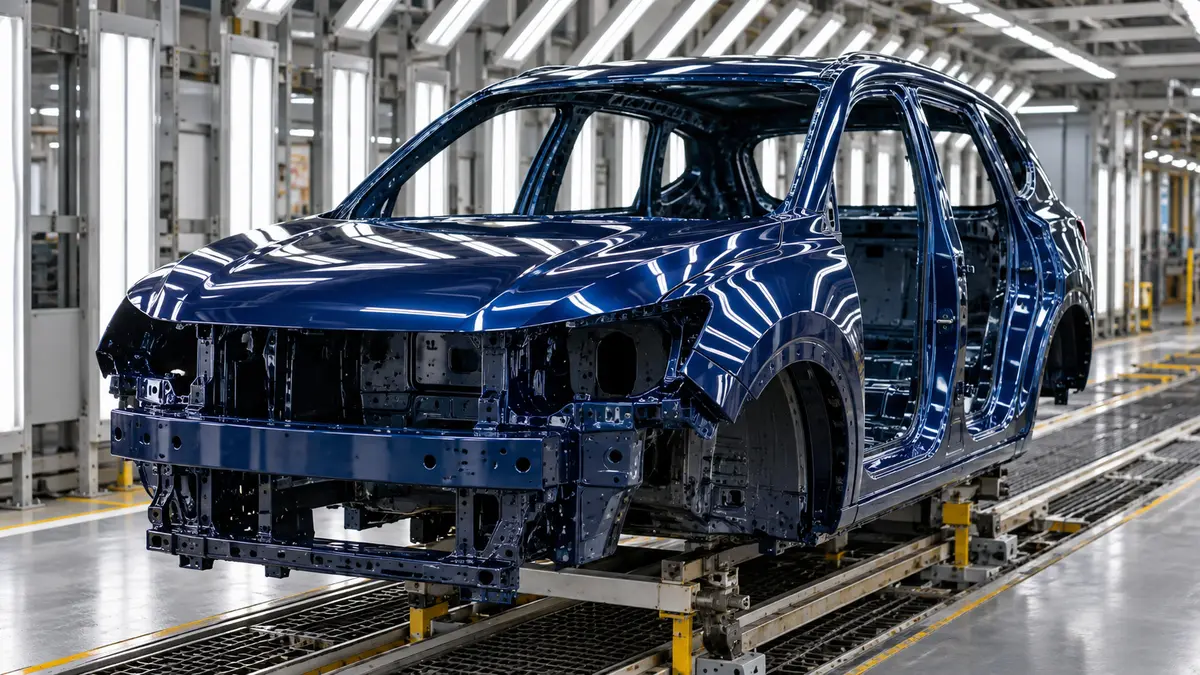
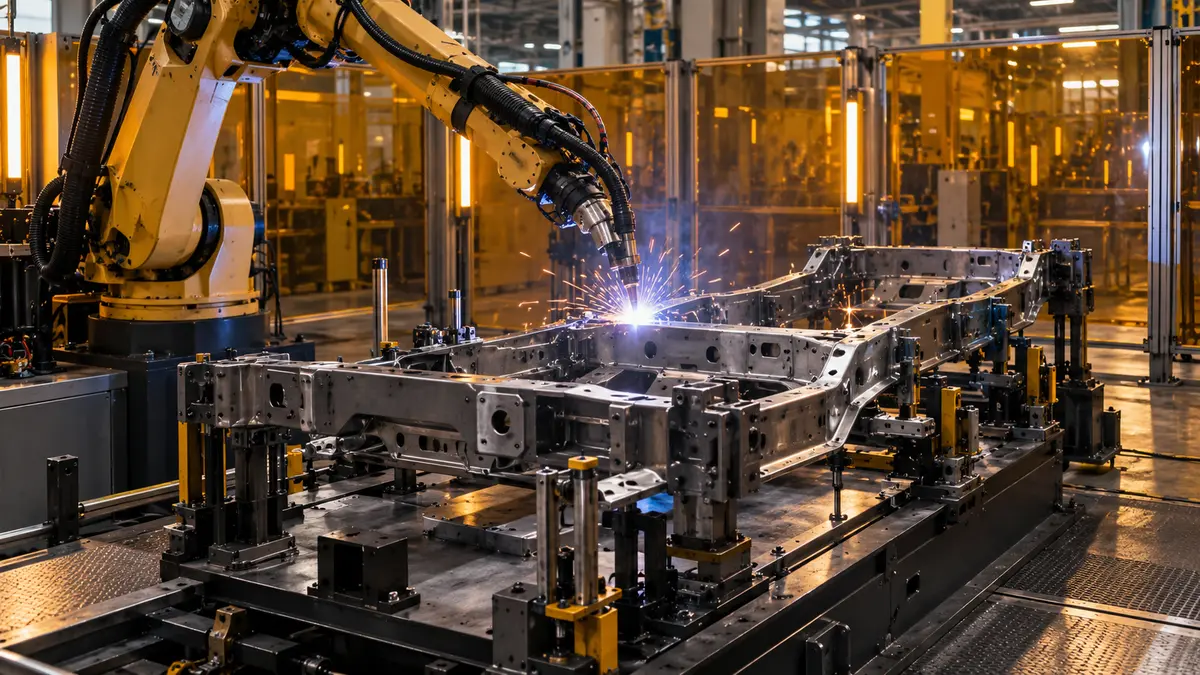
Moskvich started full-cycle vehicle production at its Moscow factory in Russia on 13 May 2024. Mayor Sergei Sobyanin and Kamaz chief executive Sergei Kogogin launched the new manufacturing stage, Interfax reported. The change introduces body welding and painting alongside assembly.
City-government materials said the transition would reduce logistics expenditure by up to 25%. More than 70 test vehicles assembled on the new line had passed the necessary checks. Customers would also gain a two-tone option combining a black roof with any of the five available body colours.
Robotic equipment and body protection
Vedomosti's same-day report, citing Sobyanin, described a welding system installed specifically for Moskvich. The mayor said special body treatment was intended to improve paint durability and protection against gravel and small stones in local climatic conditions. He presented further localization and a domestically developed electric-vehicle platform as subsequent objectives.
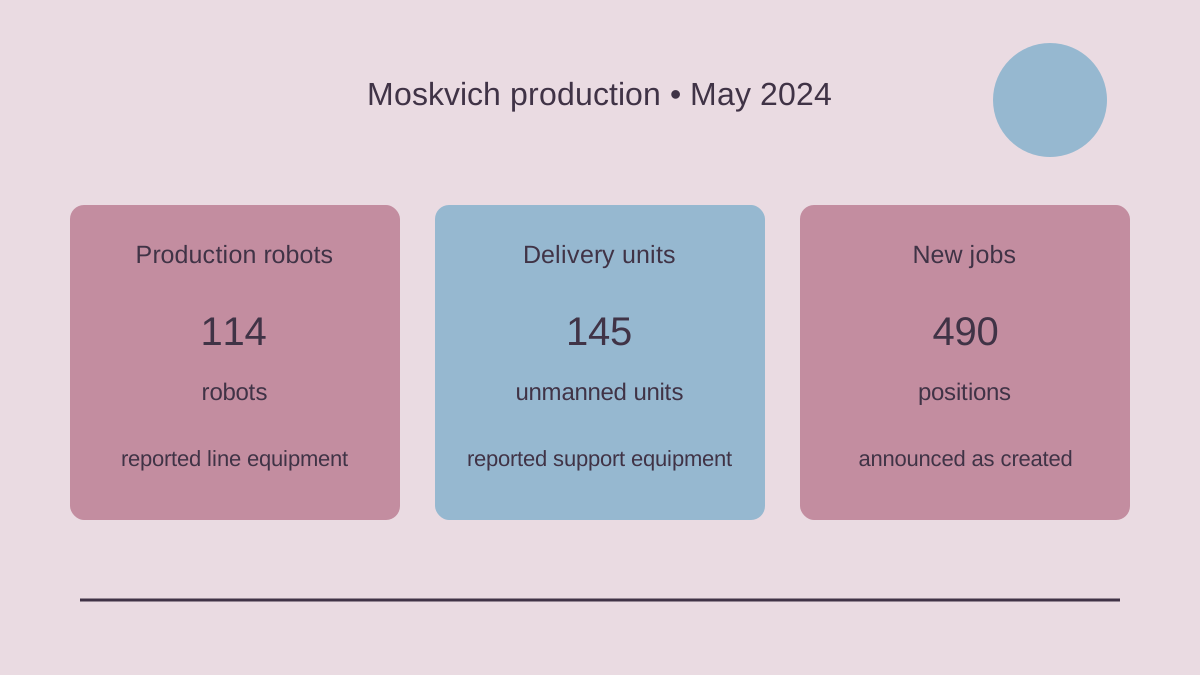
- The production line employs 114 robots.
- Another 145 unmanned delivery units support manufacturing.
- The transition created 490 new jobs, according to the mayor's announcement.
From the restart to localization
The plant resumed manufacturing on 23 November 2022 with knock-down assembly of the petrol-powered Moskvich 3 crossover. Interfax's report from that day identified a 1.5-litre turbocharged engine producing 150 horsepower and 210 newton-metres of torque, paired with a continuously variable transmission or six-speed manual gearbox.
The restart followed the transfer of the former Renault factory to Moscow's government in May 2022 and its renaming in June. The city signed its cooperation agreement with technology partner Kamaz that July. Before the ownership change, the site had capacity for up to 180,000 vehicles annually.
The earlier investment-contract timetable
On 17 July 2023, Interfax reported the industry ministry's announcement that Moskvich had joined Kamaz's special investment contract. The ministry described phased localization covering both combustion-engine vehicles and electric cars.
That announcement scheduled welding and body painting with domestic suppliers for 2024. Production of electric vehicles using key domestic components, including the traction battery and electric motor, was expected from 2026. These were the ministry's stated plans at the time of the contract announcement.


Leave a comment