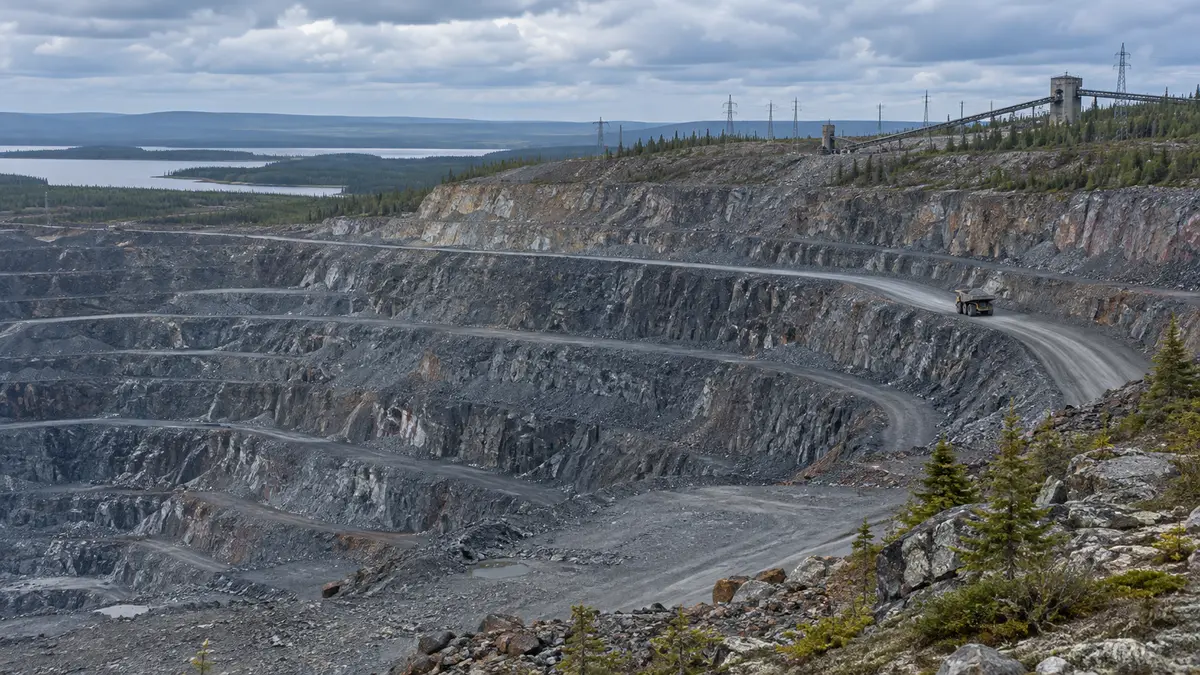
Mine development begins
Olkon, part of Severstal in Russia, launched its Olenegorsk deposit project, Interfax reported on 30 June 2025. Its budget exceeds five billion rubles. Open-pit mining is planned until 2044–2045, followed by underground operations. Infrastructure relocation is due by 2030. A permanent power line is already built.
- Relocations cover water and slurry pipelines, substations, fuel, railway and crushed-stone facilities.
- A new primary crushing facility is planned.
Strategy announced: 19 June 2024
Severstal’s earlier development programme, published in June 2024, envisaged investment exceeding 90 billion rubles during 2025–2040. It identified the Olenegorsk, Komsomolsky and Pechegubsky quarries as the principal contributors to production. The company planned a 40% increase in mined rock over three years and a doubling of iron-ore concentrate output by 2027. Its stated target was four million tonnes of concentrate annually from 2027 through 2040. The programme had been reviewed at Olkon on 17 and 18 June; Severstal’s announcement retained those output figures as future objectives.
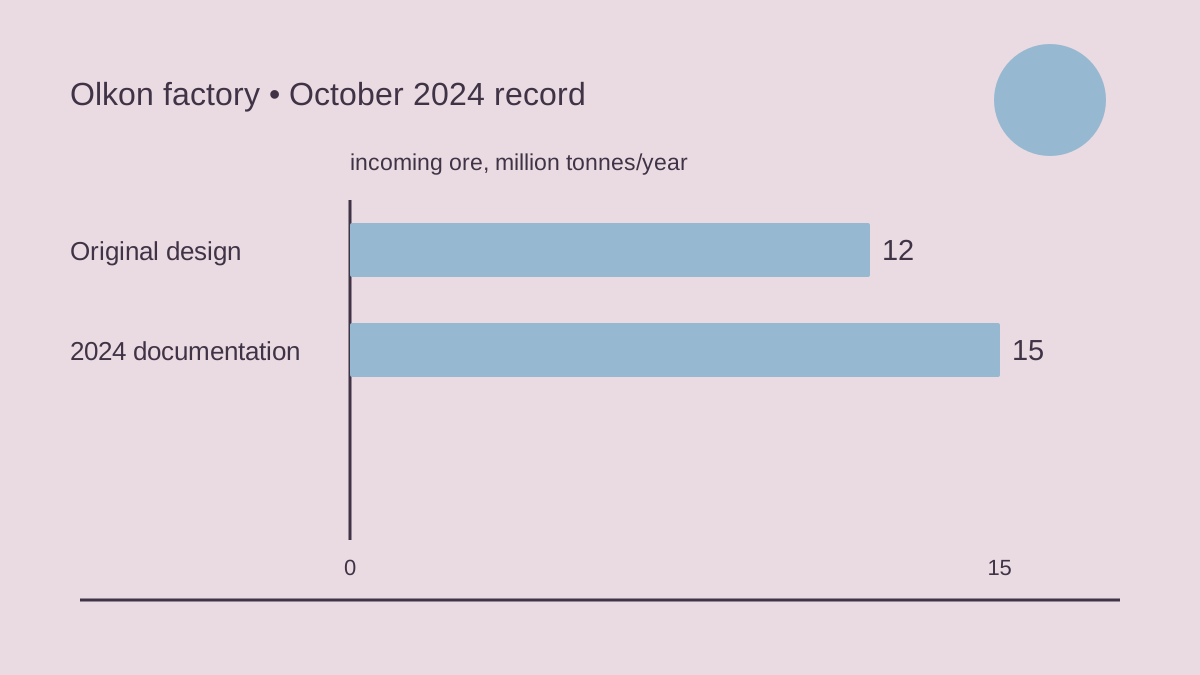
Factory documentation: 8 October 2024
Design contractor SPb-Giproshakht reported a favourable state-expertise conclusion issued on 7 October for Olkon’s beneficiation-factory reconstruction documentation and engineering surveys. Its 8 October release described design capacity of 15 million tonnes of incoming ore annually, following technical upgrades to a factory originally designed for 12 million tonnes. The documentation incorporated existing equipment and earlier upgrades. It proposed local solutions for existing buildings, structures and internal engineering systems, without new capital-construction facilities. The contractor said the conclusion provided a basis for preparing subsequent building-reconstruction projects.
Dust-control equipment: 7 November 2024
A separate Severstal statement in November 2024 described new equipment arriving for dust suppression at the factory’s tailings storage facility. The combined road machine was designed to disperse reagent and stabilise dusty surfaces, using two generator fans with a stated spraying range of up to 100 metres. The site also used grass planting alongside reagent treatment. One hectare had been sown during the summer with annual and perennial grasses. Employees and scientists had selected seeds and fertilisers suited to pollution, drought and northern conditions, according to the company’s account of those measures.



Leave a comment