
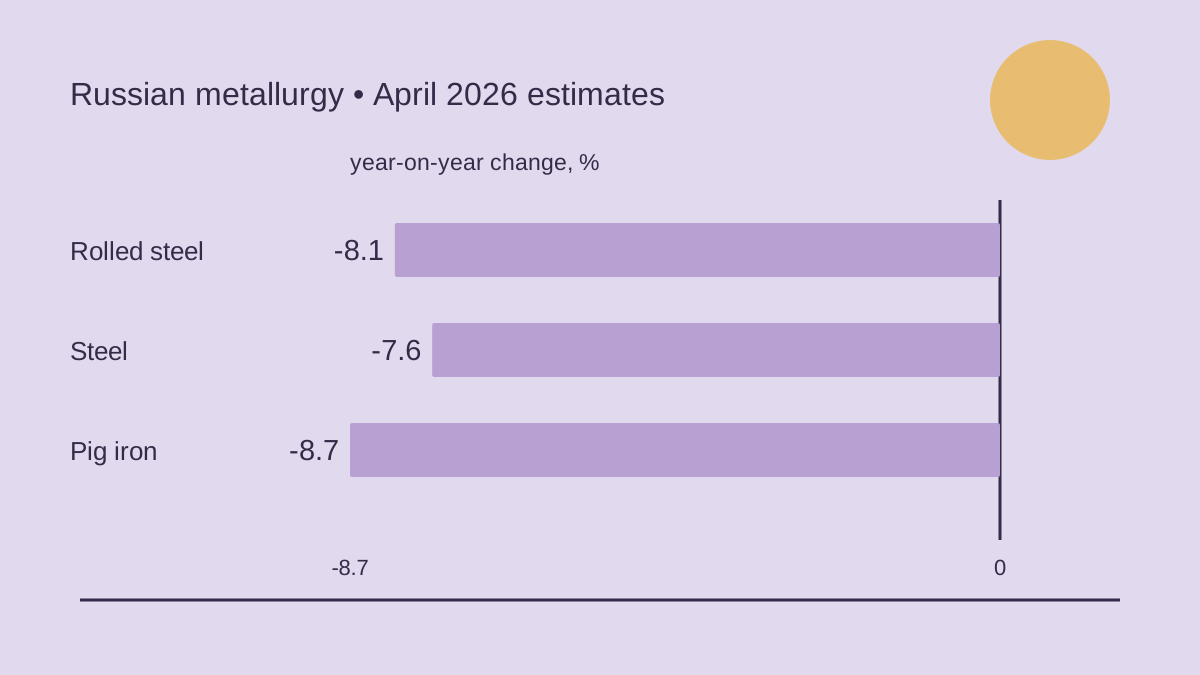
Russia produced 4.6 million tonnes of finished rolled steel in April 2026, down 8.1% year on year, Interfax reported on 12 May, citing preliminary Chermet estimates. January–April output was 18.5 million tonnes, down 6.9%.
Other April output
- Steel: 5.2 million tonnes, down 7.6%.
- Pig iron: 3.9 million tonnes, down 8.7%.
The February estimates
Interfax's 11 March release put February finished rolled-steel output at 4.3 million tonnes, down 7.7% from the corresponding month of 2025. In that preliminary release, the two-month total was 8.9 million tonnes, down 8.3%. February steel production was 4.9 million tonnes, down 11.9%, with January–February output of 10.3 million tonnes, down 9.9%.
The same release put February steel-pipe output at 600,000 tonnes, down 36%; its two-month total was 1.2 million tonnes, down 35%. Iron-ore production was 7.5 million tonnes in February, down 10.4%, and 16 million tonnes over two months, down 8.9%.
First-quarter figures published in April
A 11 April Prometall report, also citing preliminary Chermet figures, put first-quarter steel production at 15.6 million tonnes, down 10.4% year on year. Its March figure was 5.2 million tonnes, down 13.1%. The reported quarter's finished rolled-metal production was 14 million tonnes, down 6.4%.
That publication recorded first-quarter iron-ore output of 24.6 million tonnes, down 7.6%, and gross dry coke output of 5.4 million tonnes, down 7.3%. Pig-iron production was 12.2 million tonnes, down 5.8%; steel-pipe output was two million tonnes, down 28%.
The January report and its context
In Kommersant's 10 February report by Polina Trifonova, January steel output was 5.6 million tonnes, down 5.4% year on year. Finished rolled-steel output was five million tonnes, down 2.3%; pipe output was 700,000 tonnes, down 17.2%. Pig-iron production was 4.5 million tonnes, up 0.6%.
Rating-agency NKR managing director Dmitry Orekhov described January as traditionally weak for metallurgy, while pointing to low scrap deliveries and capacity utilization as indications of weak demand. Economist Pavel Gamov identified maintenance stoppages, holiday-related construction and logistics weakness, and orders shifting towards quarter-end as seasonal factors.






Leave a comment