The April negotiations
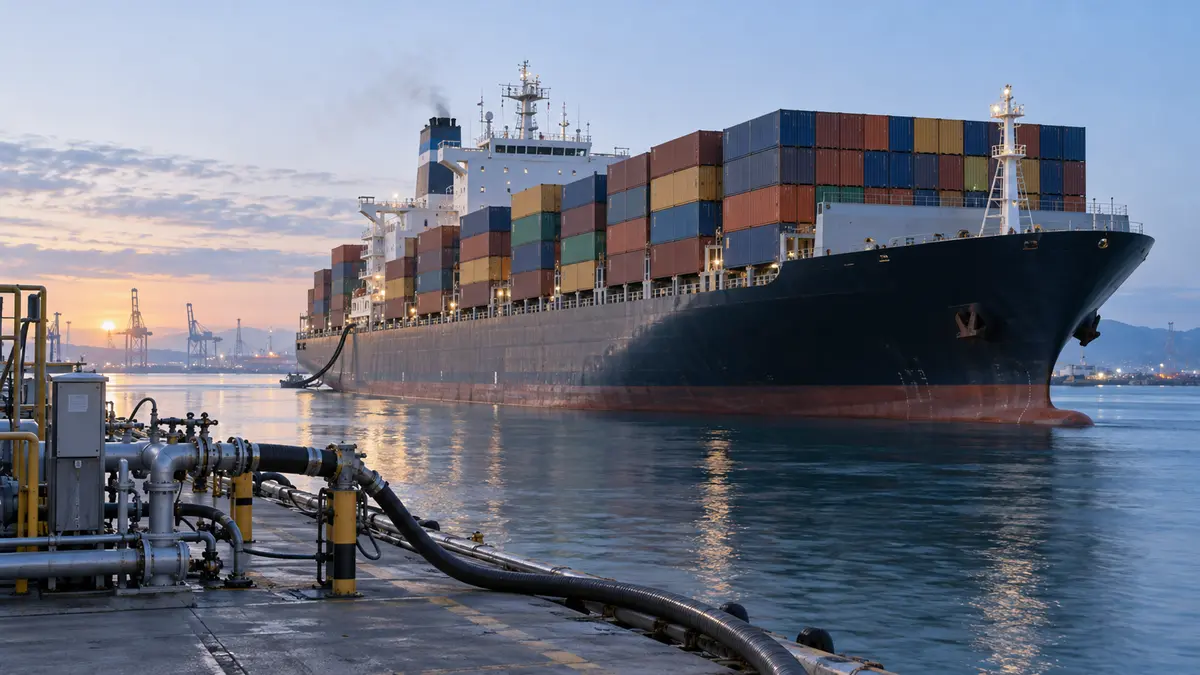
On April 9, 2025, governments were debating how to combine a mandatory marine-fuel standard with a global mechanism for pricing shipping emissions. Euronews reported the negotiations while the International Maritime Organization’s Marine Environment Protection Committee was meeting. At the opening, the organization described the proposed package as linking fuel greenhouse-gas intensity, economic incentives and support for developing countries. Agreement on the pricing instrument remained under discussion.
The immediate negotiating groundwork had been described at the opening of the committee’s September 30–October 4, 2024 session. The organization said an intersessional working group, meeting on September 23–27, had prepared a consolidated text of possible amendments to Annex VI of the International Convention for the Prevention of Pollution from Ships. That text brought proposals into a common negotiating document without prejudging its eventual content or structure. The September announcement identified a fuel standard and global pricing as the two components under consideration, with adoption of binding measures then expected in late 2025.
By the February 17–21, 2025 working-group meeting, the chair’s consolidated framework was still described as work in progress. All pricing proposals remained in the text, alongside options intended to bridge positions. Discussion covered the structure of a proposed fund, revenue distribution and food-security effects. An expert workshop held on February 13 recommended assessing food-security implications between adoption and entry into force, followed by continuing review. The group also advanced scientific work on lifecycle factors and indirect land-use change, recommending a draft methodology for consideration at the April committee session.
Data and efficiency rules
The strategy’s institutional history included a working-group session on October 23–27, 2017, reported by the organization on October 30. More than 200 delegates from over 50 member states largely agreed on the strategy’s structure while continuing discussion of detailed wording. The proposed structure included periodic review and separate windows for short-, medium- and long-term measures: 2018–2023, 2023–2030 and beyond 2030. Participants also considered impacts on small island developing states and least developed countries, including technical assistance and fuel research. Another working-group meeting and the April 2018 committee session were the next scheduled stages.
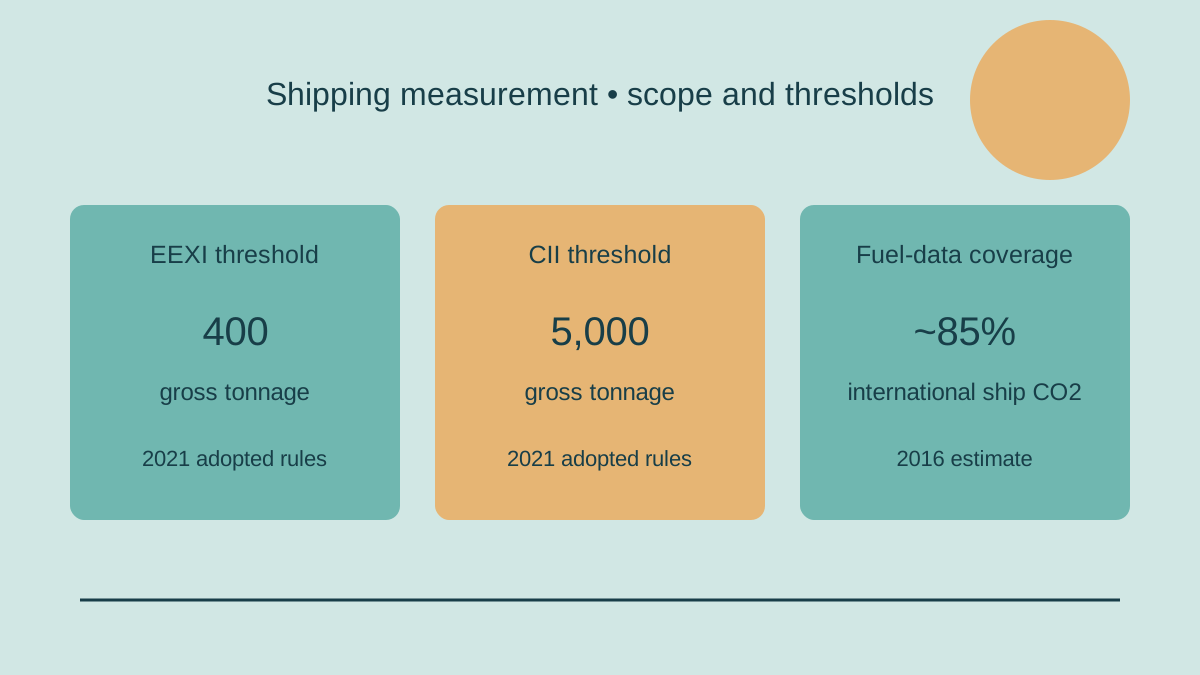
A separate foundation was the fuel-consumption data system adopted in October 2016. The organization said ships of at least 5,000 gross tonnage would report consumption by fuel type together with additional information serving as proxies for transport work. It estimated that ships within this threshold accounted for approximately 85% of carbon-dioxide emissions from international shipping. Flag states would verify reports, issue compliance statements and transfer data to the organization for anonymized annual reporting. The procedure followed three stages: collecting data, analysing it and debating policy. Entry into force was then expected on March 1, 2018.
At its November 16–20, 2020 session, the committee approved the Fourth IMO Greenhouse Gas Study. Its scope included emissions inventories for 2012–2018, carbon-intensity analysis and projections to 2050. The committee also adopted a resolution encouraging voluntary national action plans and advanced tighter design requirements for certain new ships. For specified ship types, the third phase of the Energy Efficiency Design Index was brought forward from 2025 to 2022. Container-ship requirements varied with deadweight: the largest category, at least 200,000 tonnes, faced a 50% reduction requirement, while smaller categories had different thresholds.
Existing ships
The June 10–17, 2021 committee session adopted amendments combining technical efficiency requirements for existing ships with operational carbon-intensity rules. The Energy Efficiency Existing Ship Index applied from 400 gross tonnage, with requirements differentiated by ship type and size. The Carbon Intensity Indicator applied from 5,000 gross tonnage and introduced ratings from A to E, with A representing the strongest performance. The announced timetable anticipated Annex VI amendments entering into force in November 2022 and the new requirements taking effect in January 2023. Data reported for 2023 would provide the first ratings in 2024.
On November 1, 2022, the organization confirmed that the Annex VI amendments had entered into force. Its explanation distinguished the attained efficiency index from the required value: a ship’s attained index had to be below the applicable requirement. For operational ratings, a D rating over three consecutive years or an E rating for one year required a corrective action plan to reach C or better. The announcement identified hull cleaning, speed and route optimization, and renewable auxiliary power among possible operational measures. It also described continuing proposals for levies, trading and incentives for zero-emission vessels.
At the March 18–22, 2024 session, the committee revised lifecycle assessment guidelines, including templates and default factors covering fuel production and use aboard ships. It established scientific support through the Joint Group of Experts on the Scientific Aspects of Marine Environmental Protection. Further work addressed methane, nitrous oxide and the socioeconomic sustainability of fuels. The session also considered safety work for hydrogen, ammonia and other low-flashpoint fuels, including methyl and ethyl alcohol. Alongside this technical programme, the committee discussed impact assessment and modelling of revenue distribution for the proposed emissions framework.
The autumn 2024 session reported fuel-consumption data for 2023 from 28,620 ships, representing 1,301 million gross tonnage. Submissions came from 105 of 135 administrations. Reported consumption totalled 211 million tonnes, compared with 213 million tonnes for 2022. Heavy and light fuel oils, diesel and gas oil together represented 93.52% of consumption, against 94.65% the previous year. Carbon-intensity ratings were available for 24,653 ships, or 86.1% of the reporting fleet. The committee’s efficiency review also identified short voyages, idle time, waiting in ports and incentives for just-in-time arrivals as issues for further work.
The strategy adopted in July 2023 set several distinct ambitions. It sought net-zero greenhouse-gas emissions from international shipping by or around 2050. For 2030, it called for at least a 40% reduction in carbon dioxide per unit of transport work against 2008, and at least 5% uptake of zero- or near-zero-emission energy, striving for 10%. Absolute annual greenhouse-gas checkpoints were at least 20% below 2008 by 2030, striving for 30%, and at least 70% below by 2040, striving for 80%. The strategy also required consideration of lifecycle emissions and impacts on states.
Operations and fuel readiness
Operational timing was examined in a study summarized by the organization in June 2022. MarineTraffic and Energy and Environmental Research Associates modelled container-ship voyages using 2019 automatic identification system data. They estimated average fuel savings of 14.16% when speed was optimized throughout a voyage, 5.90% over its final 24 hours and 4.23% over its final 12 hours. The approach coordinated arrival with availability of the berth, fairway and nautical services. The summary emphasized standardized data exchange between ships, terminals and ports. Its percentages described modelled voyage scenarios using pre-pandemic traffic data.
Fuel availability and workforce preparation were discussed at the October 21, 2022 symposium, attended by more than 1,500 participants. Kenneth Tveter of Clarksons argued that energy-saving technologies could have greater short- and medium-term impact while alternative fuels matured. Chris Chatterton of the Methanol Institute said methanol was available in over 100 ports, while stressing the need to scale renewable production. Gerardo Borromeo, a member of the Just Transition Task Force, highlighted the workforce timetable: shipbuilding could take less than three years, whereas progression from cadet to master could take up to 14 years.
The organization’s July 2021 account of a decade of action described practical assistance alongside regulation. The global network of five Maritime Technology Cooperation Centres supported technical work in developing regions. In a Pacific ferry pilot using solar power, the organization reported a 32% reduction in fuel consumption during operation and an 87% reduction in greenhouse-gas emissions at anchor. The same account described assistance with legal and institutional reforms, fuel-consumption data, ship trim and port energy audits. These activities accompanied rules first adopted on July 15, 2011 for new-ship design efficiency and ship energy-efficiency management plans.
Route-based trials
A route-based approach appeared in the Singapore–IMO NextGEN Connect Challenge, whose winner was announced on April 27, 2023. The Lloyd’s Register Maritime Decarbonization Hub proposed an action-plan methodology based on the Silk Alliance, a container-shipping corridor cluster operating primarily in Asia. Judges assessed feasibility and inclusiveness, and an initial group of participating ships was to be identified. The announcement envisaged disseminating lessons to developing states. The wider NextGEN database, launched in September 2021, then listed more than 150 decarbonization projects involving over 500 stakeholders, including shipowners, technology developers, classification societies and governments.
The April 25, 2024 technology-challenge announcement selected three solutions for detailed technical proposals: wind turbines, shore-to-ship power and port-call data sharing. Governments in Namibia, Mauritius, St Kitts and Nevis, and Trinidad and Tobago made the final choices for selected domestic vessels and ports. Twenty-one companies had submitted technologies, assessed by a panel including government, academic, industry and maritime technology-centre representatives. Funding was being released for proposal development, with possible demonstrations to follow. Regional technology centres in Africa and the Caribbean would guide the work under the organization’s Coordinated Actions to Reduce Emissions from Shipping project.
Finance and project preparation
The support architecture also expanded through the organization’s Department of Partnerships and Projects, created in March 2020. A March 5, 2021 report said the department had mobilized $13 million during 2020 and maintained a $45 million long-term project portfolio. That portfolio covered wider environmental cooperation, including marine litter and biofouling as well as shipping emissions. Work included recruiting pilot countries for GreenVoyage2050 and GloLitter, creating an industry alliance on biofouling, launching the FIN-SMART roundtable and initiating NextGEN. The department’s stated aspiration for 2021 was to double its portfolio through further partnership development.
The FIN-SMART roundtable’s July 9, 2021 meeting brought together 54 participants to discuss access to finance. The organization’s July 14 account identified gaps in maritime-sector information, grant access and the preparation of investable proposals, together with risks for early movers. Participants considered how international financial institutions could combine donor resources with commercial finance, technical assistance and co-financing. Discussion included ports, infrastructure for new fuels and smaller shipping operators. The roundtable was intended to help connect maritime needs with financing opportunities and develop scalable pilot projects; its report described institutional discussion rather than an announced financing transaction.
The October 2023 Technical Cooperation Committee summary recorded several project commitments. Norway had signed a September 28 agreement for annual contributions totalling about $19 million to support GreenVoyage2050’s second phase in 2024–2030. The European Commission pledged €10 million for the maritime technology-centre network’s 2023–2027 phase, focused on portside efficiency and domestic-vessel retrofit demonstrations. The Republic of Korea pledged $1.2 million for the initial 2022–2025 period of the Future Fuels and Technology project. These commitments supported different technical-cooperation programmes, with separate periods and implementation activities spanning fuel transition, ship technology and port operations.
An application call published on September 12, 2024 offered technical assistance valued at up to $250,000 for each selected pilot project. The GreenVoyage2050 support covered advisory work and administration. Developing countries eligible for official development assistance were invited to submit expressions of interest by October 11. The programme’s first phase, in 2020–2023, had supported policy frameworks and pilots; its 2024–2030 phase was intended to expand that work. The call offered project-preparation support for selected proposals, with the stated financial ceiling attached to technical assistance.
- Technical and economic feasibility.
- Risk assessment.
- Stakeholder engagement.
A February 17, 2025 donor-meeting report described an additional commitment from Denmark of approximately $2.8 million to the organization’s greenhouse-gas trust fund. A portion was earmarked for GreenVoyage2050 activities. The programme team reported expanded partnerships to explore alternative marine-fuel production opportunities in developing countries and reviewed financial resources against its 2025 priorities. Programme manager Astrid Dispert emphasized continued collaboration with existing and new donors in supporting the low-carbon transition.
Training and implementation
Training plans connected regulatory ambitions with government capacity. A February 6, 2024 call sought nominations for the GHG-SMART continuing professional-development programme covering national action plans, financing and transition roadmaps for fuels, ships and ports. Its curriculum also included training needs for ports and hinterland transport. Eligible countries were small island developing states and least developed countries. The programme sought government professionals with sufficient English-language proficiency to take part in the programme. Countries could nominate up to two people; where two were nominated, at least one had to be a woman. The nomination deadline was February 16.
The April 4, 2024 account then reported 23 enrolled participants, including 12 women, from 14 small island developing states and least developed countries. The programme had begun in 2020 with an initial budget of $2.5 million. A July 2023 extension added $2 million and continued the programme through December 31, 2026. Some former trainees attended the March 2024 committee session and said the programme had helped them participate in discussions.
On February 6, 2025, GreenVoyage2050 announced nine new partner countries with two distinct forms of assistance. Bangladesh, Egypt, Ghana, Mexico and Nigeria were selected for national action-plan support, including workshops, expert guidance, data analysis and stakeholder engagement. India, Indonesia, Türkiye and Viet Nam were selected for pilot-project feasibility support. Their assistance would address technical and economic studies, risk assessment and engagement strategies for shipboard and port solutions with zero or near-zero greenhouse-gas emissions. The organization said further calls would be issued annually, with the next invitation planned for the third quarter of 2025.




Leave a comment