
The preliminary October reading
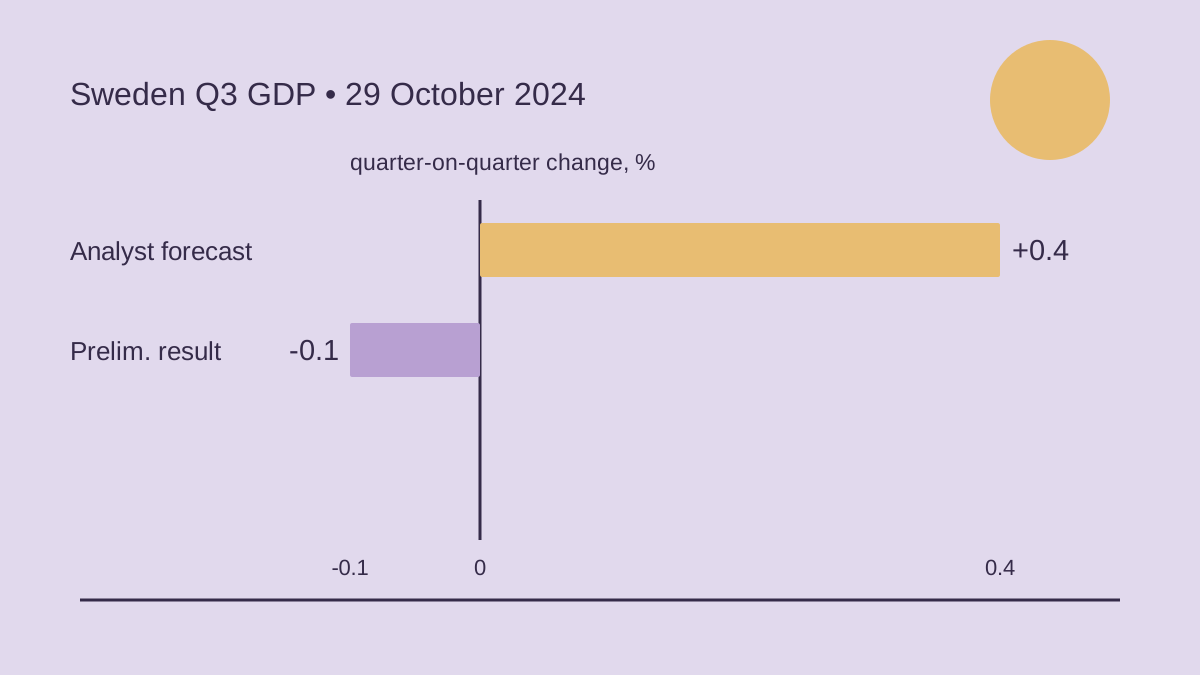
On 29 October 2024, Reuters reported that Sweden had entered a technical recession on preliminary data, following two consecutive quarterly declines. Analysts had expected growth of 0.4% from the preceding quarter and 0.7% annually. September output fell 0.4% from August, while standing 0.1% above September 2023.
- Preliminary third-quarter change: −0.1% from the preceding quarter.
- Preliminary annual change: −0.1%.
- Full quarterly accounts scheduled for 29 November 2024.
A record of dated releases
The following record retains each publication’s dated figures. Statistics Sweden’s May 2024 benchmark revision updated the series for 1993 through the first quarter of 2024, introducing revised methods and sources alongside detailed annual calculations.
2018
First quarter: investment and consumption
The release of 30 May 2018 recorded a 0.7% quarterly expansion, with working-day-adjusted annual growth of 3.3%. Households increased spending by 0.8%, while public consumption edged up 0.1%. Fixed capital formation rose 2.8%, compared with a 0.2% decline in exports and a 1.0% increase in imports. Inventories added 0.1 percentage points to growth. Market output advanced 1.1%; goods production and services both expanded. Employment rose 0.6%, but total hours worked were unchanged. The publication therefore paired higher output and employment with a flat measure of labour hours.
Second quarter: domestic spending and trade
The 30 July 2018 publication put second-quarter GDP growth at 1.0% from the previous quarter and 3.3% annually after working-day adjustment. Household spending rose 0.9%, public consumption increased 0.2%, and inventories contributed 0.3 percentage points. Fixed investment slipped 0.2%. Exports expanded 0.5%, while imports declined 0.1%. Market production rose 1.2%, combining a 0.7% increase in goods output with a 1.5% gain in services. Hours worked climbed 1.0% and employment rose 0.3%. That vintage combined higher consumption and market production with a positive inventory contribution and lower fixed investment.
Third quarter: lower consumption and inventories
On 29 November 2018, the third-quarter release showed a 0.2% quarterly contraction alongside 1.6% working-day-adjusted annual growth. Household expenditure fell 1.0%, while government consumption stayed unchanged. Inventories subtracted 0.4 percentage points from growth. Fixed investment increased 0.8%; exports rose 0.3% and imports fell 0.6%. Market production declined 0.2%. Goods output dropped 1.1%, while services grew 0.3%, separating the two production groups. Labour indicators nevertheless increased: hours worked rose 0.2% and employment grew 0.3%. The release placed the negative quarterly result beside a positive annual comparison and higher labour inputs.
Fourth quarter: exports and the annual total
The 28 February 2019 release reported a 1.2% quarterly expansion at the end of 2018. Working-day-adjusted annual growth was 2.4%, while growth for the whole calendar year was 2.3%. Household spending increased 0.7% and public consumption rose 0.6%. Fixed investment fell 1.6%, but exports advanced 3.1%, exceeding the 1.4% increase in imports. Inventories contributed 0.3 percentage points. Goods production grew 1.5% and services expanded 1.3%. Hours worked increased 1.6%, compared with a 0.8% rise in employment. The year-end release combined a stronger quarterly export increase with declining fixed investment.
2019
First quarter: growth with lower household spending
The 29 May 2019 release estimated quarterly GDP growth of 0.6% and working-day-adjusted annual growth of 2.1%. Household spending declined 0.2%, while government consumption rose 0.1%. Fixed investment fell 0.4% and inventories made no significant contribution. Exports grew 0.8% as imports decreased 0.7%. Market production increased 1.0%, with goods up 1.2% and services up 0.9%. Hours worked fell 0.2%, while employment was essentially unchanged. The quarter’s published figures showed growth in overall output and both market production groups despite lower household expenditure, fixed investment and hours worked.
Second quarter: a decline before the benchmark revision
The release dated 30 July 2019 recorded a 0.1% quarterly decline and 1.4% working-day-adjusted annual growth. Household spending increased 0.6%, whereas public consumption fell 0.1% and fixed investment dropped 1.1%. Exports declined 0.3% and imports fell 0.5%; inventories reduced growth by 0.1 percentage points. Goods output decreased 0.4%, while services expanded 0.3%, leaving market production unchanged. Hours worked rose 0.2%, but employment fell 0.2%. The publication also announced a September 2019 benchmark revision of GDP and other national-account measures, explicitly placing these July results before that scheduled overhaul.
Third quarter: an export contribution
The 29 November 2019 release described quarterly growth of 0.3%, driven mainly by exports, and calendar-adjusted annual growth of 1.6%. Household spending rose 0.4% and public consumption increased 0.2%. Fixed investment grew 0.5%, supported by transport equipment, while inventories subtracted 0.4 percentage points. Exports increased 1.4%, imports rose 0.8%, and net exports added 0.3 percentage points to GDP growth. Services output rose 0.9%, whereas goods production was largely unchanged. Employment and hours worked each increased 0.2%. Real household disposable income was 2.7% above its level in the corresponding quarter of 2018.
Fourth quarter: consumption and weaker exports
On 28 February 2020, the year-end accounts showed quarterly growth of 0.2% and calendar-adjusted annual growth of 0.8%. GDP for the whole of 2019 increased 1.2%. Household expenditure rose 0.7%, supported by transport spending, including vehicles. Government consumption was largely unchanged. Fixed investment declined 0.4%, with machinery and equipment weighing on the total. Exports fell 1.7% and imports fell 1.2%, producing a negative net-export contribution of 0.3 percentage points. Inventories added 0.2 percentage points. Goods production declined 0.2%, while services rose 0.3%, leaving a small increase in market output.
2020
First quarter: an early indicator
The 5 May 2020 publication was an early GDP indicator rather than the complete quarterly accounts. It estimated a 0.3% decline from the fourth quarter of 2019, but calendar-adjusted annual growth of 0.5%. Exports contributed positively to the quarterly result, while fixed investment and inventories weighed on growth. Statistics Sweden described the indicator as a compilation using limited, preliminary information and published only overall GDP growth. It advised caution over individual components. The full first-quarter accounts were scheduled for 29 May, distinguishing the early aggregate reading from the later, more detailed accounting release.
Second quarter: the scale of the preliminary contraction
The indicator released on 5 August 2020 estimated an 8.6% quarterly contraction and an 8.2% calendar-adjusted annual decline. Statistics Sweden attributed much of the quarterly fall to exports and household expenditure. It described the decline as the largest single-quarter drop in the directly comparable series beginning in 1980. The preliminary publication also explained reconciliation between production and expenditure calculations. Before balancing, unadjusted annual changes were −6.6% and −9.0%, respectively; averaging produced −7.8%. These unadjusted calculations were separate from the headline calendar-adjusted comparison. Complete second-quarter accounts were scheduled for 28 August.
Third quarter: recovery in the indicator
The 5 November 2020 indicator showed a quarterly rebound of 4.3%, while calendar-adjusted GDP remained 3.5% below the corresponding quarter of 2019. Statistics Sweden linked the increase mainly to goods exports and said it recovered roughly half of the sharp second-quarter contraction. Its preliminary reconciliation put unadjusted annual growth at −4.3% on the expenditure side and −2.7% on the production side, yielding −3.5%. The publication continued to present an overall GDP estimate using preliminary information. Complete third-quarter accounts were scheduled for 27 November, after this early view of the rebound.
Fourth quarter: the initial year-end estimate
The early indicator of 1 February 2021 estimated fourth-quarter growth of 0.5% from the preceding quarter and a calendar-adjusted annual decline of 2.6%. Statistics Sweden said that the second-half recovery had regained 63% of the large second-quarter drop. That publication put the full-year contraction in 2020 at 2.8%. It reconciled unadjusted annual fourth-quarter calculations of −3.1% from expenditure and −1.2% from production into a −2.2% result. Those figures belonged to the early indicator vintage. Complete year-end quarterly accounts were scheduled for 26 February, following the preliminary February announcement.
2021
First quarter: consumption, exports and labour hours
The 28 May 2021 accounts recorded quarterly growth of 0.8%, with calendar-adjusted GDP largely unchanged from the first quarter of 2020. Household expenditure increased 0.5%, partly through transport spending. Public consumption rose 0.4%, inventories added 0.5 percentage points, and fixed investment fell 0.1%. Exports increased 1.3% and imports rose 1.4%, leaving net trade with a limited effect on growth. Market production rose 1.1%. Employment increased 0.3%, while economy-wide hours worked rose 1.3%. Business-sector productivity fell 0.5%, and real household disposable income was 0.6% below its year-earlier level.
Second quarter: investment and household spending
The 27 August 2021 release put quarterly expansion at 0.9%, with calendar-adjusted annual growth of 9.7% against the second quarter of 2020. Fixed investment rose 3.8%, with machinery providing the largest contribution. Household consumption increased 1.0%; the agency identified recreation, culture and foreign consumption in Sweden among the contributors. Public consumption grew 0.8%. Exports fell 1.1% while imports rose 0.7%, subtracting 0.8 percentage points through net trade. Services output increased 0.9%, but goods production remained unchanged. Real disposable income of households rose 10.1% from the corresponding quarter a year earlier.
Third quarter: services consumption strengthens
In the 29 November 2021 release, GDP grew 2.0% quarterly and 4.7% annually after calendar adjustment. Household expenditure advanced 2.4%, with hotels and restaurants supplying the largest contribution. Fixed investment rose 2.6%, supported by dwellings and other buildings and structures. Inventories added one percentage point to GDP growth. Exports increased 0.5%, but imports grew 2.4%, leaving a negative net-export contribution of 0.8 percentage points. Market production rose 2.4%, with both goods and services increasing. Employment rose 0.4% and business productivity grew 1.7%, while real household disposable income increased 4.1% annually.
Fourth quarter: exports and the recovery-year estimate
The 28 February 2022 publication estimated quarterly GDP growth of 1.1%, calendar-adjusted annual growth of 5.2%, and full-year growth of 4.8% for 2021. Household expenditure rose 1.4%, supported by recreation and culture. Public consumption increased 0.3%. Fixed investment slipped 0.1%, while inventories subtracted 0.1 percentage points. Exports grew 3.4% and imports rose 2.4%, contributing a positive 0.6 percentage points through net exports. Services production advanced 1.7%, compared with 0.3% for goods. Employment was unchanged and hours worked fell 0.1%, while business productivity increased 1.3% in the quarter.
2022
First quarter: imports and weaker domestic demand
The 30 May 2022 release recorded a quarterly GDP decline of 0.8%, while calendar-adjusted annual growth was 3.0%. It attributed the downturn mainly to net exports: exports rose 1.0%, imports rose 2.8%, and net trade subtracted 0.7 percentage points. Household expenditure fell 0.4%, government consumption declined 0.3%, and fixed investment dropped 1.3%. Inventories added 0.5 percentage points. Goods output declined 2.4%, whereas services were unchanged. The same release revised full-year 2021 growth upwards to 5.1% and the 2020 contraction to 2.2%, providing new annual-account estimates alongside the quarterly decline.
Second quarter: domestic expenditure and net exports
The 29 August 2022 accounts showed a 0.9% quarterly expansion and 3.8% calendar-adjusted annual growth. Household spending increased 1.6%, supported by recreation, culture and residents’ expenditure abroad. Fixed investment rose 3.3%, with buildings, structures and intellectual-property products contributing. Public consumption fell 0.3% and inventories made no contribution. Exports increased 1.1%, but imports grew 2.5%, leaving net exports with a negative contribution of 0.5 percentage points. Goods and services production both expanded. Employment grew 0.9%, economy-wide hours increased 1.2%, and business productivity slipped 0.1%. Real household disposable income was unchanged annually.
Third quarter: machinery investment and household incomes
The corrected release of 29 November 2022 put quarterly growth at 0.6% and calendar-adjusted annual growth at 2.5%. Fixed investment increased 1.2%, mainly through machinery and equipment. Household spending fell 0.2%, with food, furnishings and household equipment contributing to the decline. Government consumption rose 0.4% and inventories added 0.4 percentage points. Exports grew 0.5%, imports increased 1.0%, and net exports subtracted 0.2 percentage points. Goods output expanded 2.5%, services grew 0.3%, and employment rose 0.5%. Real household disposable income was 2.4% below the corresponding quarter of 2021.
Fourth quarter: a weak ending in the indicator
The 30 January 2023 indicator estimated a 0.6% quarterly contraction at the end of 2022 and a matching annual decline of 0.6%. December alone fell 0.5% from November and 1.8% annually. The release put growth for the whole of 2022 at 2.4%. Statistics Sweden economist Neda Shahbazi attributed that annual performance mainly to low activity in early 2021 rather than a clear rise in GDP during 2022. The indicator used preliminary information; full calculations were due on 28 February. December and the quarter each had the same working-day count as their year-earlier comparison periods.
2023
First quarter: inventories and exports
The 30 May 2023 release recorded quarterly growth of 0.6% and calendar-adjusted annual growth of 0.8%. Household spending fell 1.2%, with transport among the contributors, while government consumption rose 0.5%. Inventories added 0.6 percentage points, mainly through trade-sector stockbuilding. Fixed investment increased 0.5%. Exports grew 1.2% and imports rose 0.7%, adding 0.3 percentage points through net exports. Services value added increased 1.0%, but goods-producing industries slipped 0.1%. Employment grew 0.7%, while business productivity fell 1.3%. Real household disposable income decreased 3.1% annually, leaving household measures negative alongside the positive GDP estimate.
Second quarter: consumption and trade weaken
The 29 August 2023 accounts showed a quarterly contraction of 0.8% and a calendar-adjusted annual decline of 1.0%. Household spending fell 0.2%, marking a fourth consecutive decline in the agency’s description. Government consumption increased 0.5%, while fixed investment was unchanged: lower dwelling investment was offset by other buildings and structures. Inventories subtracted 0.4 percentage points and net exports subtracted 0.5 percentage points. Exports fell 0.8%, imports rose 0.1%, and business value added declined 1.1%. Employment increased 0.4%, despite a 0.8% decline in economy-wide hours. Real disposable household income fell 3.0% annually.
Third quarter: inventories against net exports
The release of 29 November 2023 reported a 0.3% quarterly decline and a 1.4% calendar-adjusted annual contraction. Household expenditure fell 0.6%, and the agency described a fifth consecutive quarterly decrease. Industrial inventories contributed to a negative 1.4-percentage-point stock effect. Fixed investment dropped 0.6%, with dwellings, other buildings and structures weighing on the total. Exports rose 1.4%, while imports fell 1.5%, adding 1.5 percentage points through net trade. Goods-producing value added fell 0.8%, whereas services increased 0.2%. Real disposable household income declined 0.6% annually.
Fourth quarter: consumption returns to growth
The 29 February 2024 release put the fourth-quarter GDP decline at 0.1% from the preceding quarter and 0.2% annually after calendar adjustment. Full-year 2023 GDP also declined 0.2%. Household spending increased 0.7%, following five quarterly declines, with housing expenditure contributing most. Public consumption rose 0.5% and inventories added 0.5 percentage points. Fixed investment fell 1.8%, mainly through intellectual-property products and continuing weakness in dwellings. Exports fell 0.1%, imports rose 0.9%, and net exports subtracted 0.5 percentage points. Business value added declined 0.2%, combining increased goods production with lower services output.
2024
First quarter: the May publication
The 30 May 2024 release recorded 0.7% quarterly growth, with inventories contributing 0.5 percentage points. Household expenditure fell 0.3%, fixed investment increased 0.6%, and exports rose 0.2%. Goods and services value added increased; the agency identified inventories as the largest contributor to aggregate growth.
Second quarter: the August account of contraction
The 29 August 2024 accounts recorded a 0.3% quarterly GDP decline, with calendar-adjusted annual growth of 0.5%. Household spending fell 0.2%, notably through food and non-alcoholic beverages. Fixed investment dropped 1.7%, while inventories subtracted 0.6 percentage points. Exports grew 1.0% and imports declined 0.6%, contributing a positive 0.9 percentage points through net exports. Business value added fell 0.4% and economy-wide hours declined 0.5%. The publication revised the 2023 quarters and the first quarter of 2024. Its quarterly revision table raised the first-quarter 2024 growth estimate from May’s 0.7% to 0.8%.
Monetary policy before the GDP indicator
Before the October preliminary GDP reading, the Riksbank had announced a quarter-percentage-point rate cut to 3.25% on 25 September 2024, effective from 2 October. Its September decision described a recovery proceeding more slowly than expected and lower inflation risks. Subject to an unchanged outlook for inflation and activity, the board envisaged cuts at the two remaining meetings of 2024, possibly including a half-percentage-point move, and one or two further cuts in the first half of 2025. These were the bank’s conditional policy expectations before the subsequent GDP indicator.





Leave a comment