Fujairah and suppliers
Fujairah agreement
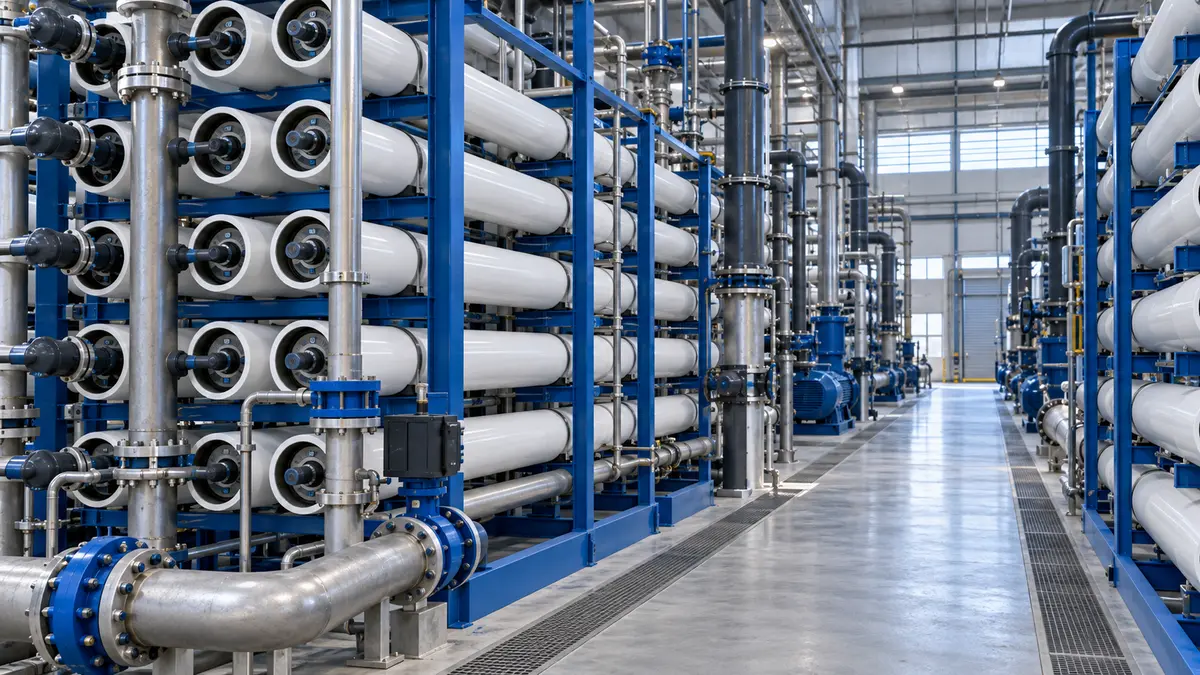
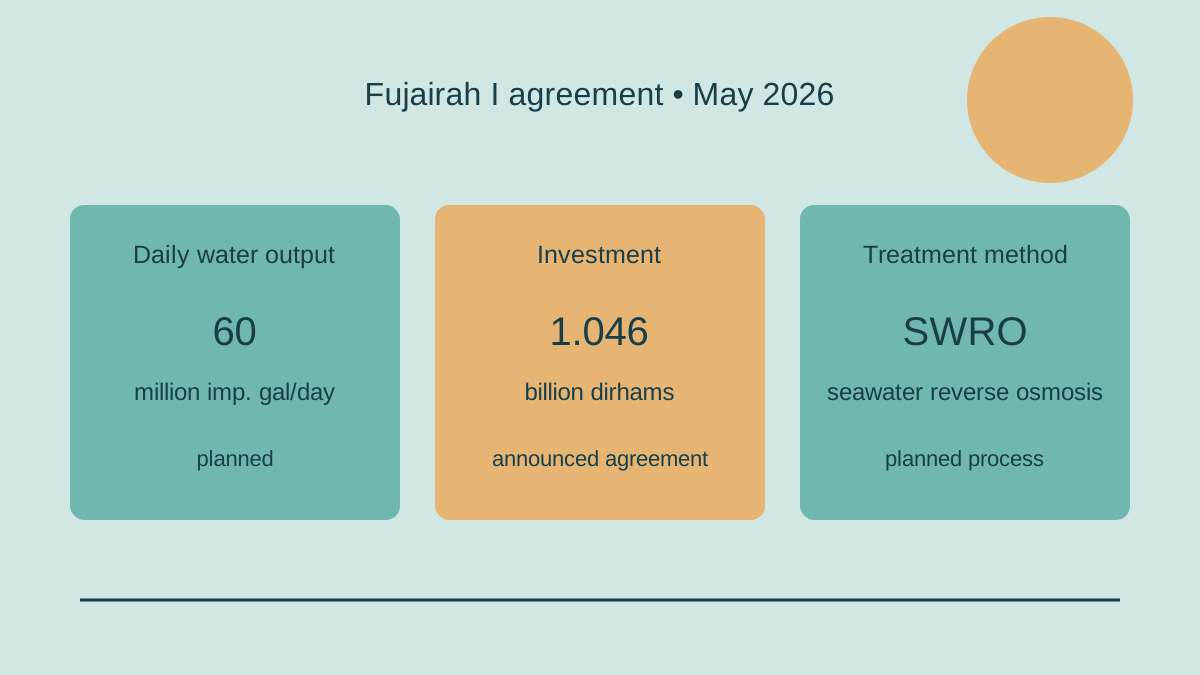
A desalination agreement in the United Arab Emirates concerns a plant at Fujairah’s port on the Gulf of Oman. The National reported on 5 May 2026 that Etihad Water and Electricity’s investment arm had signed with NMDC Infra and Lantania Aguas for the Fujairah I independent water producer project. Output is planned at 60 million imperial gallons a day, with investment of Dh1.046 billion. The project will use seawater reverse osmosis.
Supplier ownership agreement
The supplier relationship had an earlier corporate stage. NMDC Group’s announcement of 19 January 2026 described an agreement for NMDC Infra to acquire 51 per cent of Lantania Aguas in Spain, leaving 49 per cent with Lantania. Completion remained subject to customary regulatory approvals. It envisaged a company with more than 300 professionals and a current project backlog exceeding Dh2 billion. It envisaged the name Lantania NMDC Water, continuity of the existing management and joint management arrangements. Those were the terms and intentions announced with the agreement, rather than confirmation that closing had already occurred.
Procurement and financing
Preparing the procurement
Hassyan’s procurement history documents work before the developer selection. On 23 October 2022, DEWA appointed Deloitte, WSP and Addleshaw Goddard as advisers. Their remit included preparing tender documents, seeking development and investment interest, building the financial model, managing and evaluating developer submissions, and developing supplemental agreements. Commercial negotiation, the water purchase agreement and financial closure also formed part of that remit. The consultancy scope included a project marketing plan, marketing activities and roadshows. At this stage, DEWA described a proposed first phase of 120 million imperial gallons a day.
Expressions of interest
On 10 December 2022, DEWA reported receiving 29 expressions of interest for the first Hassyan phase under the independent water producer model. These were expressions of developer interest, preceding the later bid selection. The utility then expected phased operation during 2025 and 2026. This dated announcement records the market-interest stage and the timetable being described at that time.
From qualification to selection
DEWA’s release of 16 August 2023 named ACWA Power the preferred bidder for construction and operation. The phase was now specified at 180 million imperial gallons a day. The procurement chronology included a request for qualification on 18 October 2022 and a request for proposals on 9 December. Six international companies qualified to bid; ACWA Power and TAQA submitted the two bids received on 22 May 2023. DEWA reported a lowest offer of $0.36536 per cubic metre. This was the project’s desalinated-water bid price, recorded at preferred-bidder selection.
Hassyan financial close
The financial-close announcement followed on 17 April 2024. DEWA and ACWA Power put the investment at Dh3.377 billion for the project. The utility placed it within its desalination expansion strategy.
Mirfa 2 arrangements
Mirfa 2’s financing was announced on 31 May 2023 by ENGIE, TAQA and EWEC. Investment was Dh2.3 billion, with 78 per cent funded through debt. The project company’s shares were 60 per cent TAQA and 40 per cent ENGIE; the operations and maintenance company reversed those proportions. EWEC would purchase the water under a 30-year agreement. Al Nasr Contracting and SIDEM were the engineering, procurement and construction consortium. Planned capacity was 120 million imperial gallons a day, about 550,000 cubic metres. Operation in the fourth quarter of 2025 remained the announcement’s forecast.
Shuweihat 4 financing
A separate closing for Shuweihat 4 was announced on 22 December 2023. The reverse-osmosis project had an investment value of Dh1.6 billion, with debt providing 71 per cent. TAQA held 60 per cent of the project company and GS Inima 40 per cent, while the maintenance and operating company was 60 per cent GS Inima and 40 per cent TAQA. Its water purchase agreement with EWEC covered 30 years. The planned daily capacity was 70 million imperial gallons, approximately 320,000 cubic metres. The partners expected operations to begin in the second quarter of 2026.
Construction and technology
Reported construction progress
DEWA’s inspection report of 18 February 2025 put Hassyan’s construction progress at more than 55 per cent and planned completion in 2027. Officials from Hassyan Water Company A briefed DEWA’s managing director Saeed Mohammed Al Tayer on the works. The report also set out a separate utility-wide expansion target: adding 240 million imperial gallons a day of reverse-osmosis capacity by 2030.
Technology and coastal environment
Veolia’s release of 14 May 2024 assigned SIDEM the engineering and supply of key Hassyan technology. It forecast an operating start in 2026 and gradual ramp-up to full capacity in 2027. The supplier specified prospective energy consumption of 2.9 kilowatt-hours per cubic metre. The site lies about 55 kilometres southwest of Dubai Creek, near the Jebel Ali Wetland Sanctuary. Veolia said construction had been planned around endangered turtles’ breeding season. Its account also described controls on brine composition, temperature and quantity, with discharge locations selected to mitigate effects on the ecosystem.
Jebel Ali treatment stages
DEWA’s 29 April 2022 account of the Jebel Ali plant distinguished water delivery, begun in March 2021, from construction progress of 96.5 per cent. It described dissolved-air flotation before desalination to remove pollutants, followed by dual-media filtration to improve feedwater quality and membrane performance. The plant used two-pass reverse osmosis. Energy-recovery devices, reported at 96 per cent efficiency, transferred pressure from first-pass brine to part of the incoming feedwater, reducing high-pressure pumping demand. That percentage described the recovery devices, while the release separately described the wider treatment process.
Operating milestones
Taweelah purchase agreement
EWEC and ACWA Power announced Taweelah’s water purchase agreement on 16 September 2019, following the award in January. Located 50 kilometres north of Abu Dhabi, it was described as the emirate’s first stand-alone independent water project. Development would follow a build, own and operate model. The engineering, procurement and construction joint venture comprised Abengoa and PowerChina. Construction had started, with completion expected in October 2022. At this stage the announced daily capacity was 909,200 cubic metres, and ACWA Power’s planned project-company stake was 40 per cent.
First operating phase
The operating announcement of 23 June 2022 reported first-phase production of 454,600 cubic metres a day, reaching half the plant’s capacity. Connection to Abu Dhabi’s network had occurred in December 2021. The announcement described partial solar powering and expected solar energy to represent at least 30 per cent of electricity capacity within eight years, with a further target of 55 per cent by the end of the first quarter of the project’s life. EWEC was the sole buyer under a 30-year contract. These solar shares were stated expectations alongside the operating milestone.
Pressure recovery equipment
Energy Recovery’s announcement of 12 March 2020 included Taweelah in $23.5 million of awards for several Middle Eastern and North African desalination projects. Shipments were expected from the first quarter of 2020 through the first half of 2021. The supplier forecast that Taweelah’s pressure exchangers would recycle hydraulic energy equivalent to more than 900 gigawatt-hours annually, associated with approximately 550,000 tonnes of carbon emissions. It also estimated a contracted water cost below half that of the nearby older thermal plant. Those comparisons and savings were supplier expectations made before the new facility’s operation.
Naqa’a financing and offtake
Naqa’a’s financing milestone preceded its opening by several years. On 17 November 2019, ACWA Power reported financial closure for the Umm Al Quwain project with Mubadala’s MDC Power Holding and the Federal Electricity and Water Authority. The $800 million project had a debt-to-equity ratio of up to 85:15; seven lenders would provide $680 million in senior debt with a 24.5-year tenor. The water purchase agreement ran for 35 years. Planned capacity was 150 million imperial gallons a day. The scheme included coastal intake and outfall facilities near the Ras Al Khaimah border.
Operation before inauguration
WAM’s account of Naqa’a’s inauguration on 8 March 2024 set out earlier operating stages. The first phase began during the second half of 2021, with experimental daily production of 50 million gallons. The second phase was completed and full-capacity operation began by the end of 2022. The 2024 ceremony therefore followed those operating stages. Minister Suhail Al Mazrouei described annual production capacity of around 50 billion gallons and service to approximately two million northern-region inhabitants. EtihadWE’s chief executive also described a long-term transition away from less efficient thermal technology, with a 75 per cent carbon-footprint reduction goal.
Engineering and commissioning roles
Veolia’s November 2022 Wave magazine described the division of work on Umm Al Quwain. SIDEM handled engineering and procurement, while Gezhouba Group International Engineering undertook construction. The account dated the start of commercial production to August 2022. It also included process commissioning engineer Fabien Vergnolle’s description of working on the plant’s design details before joining the site team for commissioning. The magazine identified his role within SIDEM’s project team. Its description concerned engineering responsibilities and the start of commercial production, rather than the later inauguration ceremony.
Membranes and technical support
Toray’s 2023 report recorded its reverse-osmosis membrane order for Taweelah. The supplier attributed the award to its membrane technology and a 15-year Middle Eastern track record, which it said had lowered capital investment and operating costs compared with conventional evaporation. Toray Membrane Middle East would provide technical services. The report placed membrane supply alongside continuing technical support for further infrastructure development. Its commissioning reference concerned the second half of fiscal 2022, a reporting-period description separate from the later confirmation of full-capacity operation.
Full-capacity confirmation
ACWA Power’s results release of 4 August 2024, covering the first half of that year, confirmed that Al Taweelah was operating at full capacity. The statement reported the completed operating condition alongside the company’s other project milestones.
Retiring thermal desalination
Capacity changes also include retirement of older production. EWEC’s announcement of 28 April 2025 described a new power purchase agreement for Shuweihat 1, operating since 2005 under a 20-year power-and-water agreement. Its gas-fuelled desalination would be decommissioned and the facility converted to an open-cycle power-only plant. Planned commercial operation from 2027 would provide up to 1.1 gigawatts of flexible reserve supply for 15 years. TAQA owned 60 per cent of the plant, with ENGIE and Sumitomo holding 20 per cent each. These were the announced reconfiguration arrangements and future operating terms.
Production and networks
Output, demand and capacity
DEWA’s release of 8 August 2025 reported three different water measures.
- In the second quarter, actual desalinated-water production reached 40.78 billion imperial gallons, up 9.55 per cent year on year.
- Peak daily demand reached 475 million imperial gallons, an increase of 5.87 per cent.
- Installed daily capacity at 30 June was 495 million imperial gallons.
The capacity table comprised 427 million from multistage flash desalination, 63 million from Jebel Ali reverse osmosis and five million from Palm Jumeirah reverse osmosis.
Transmission pipeline extensions
The distribution chain has its own construction record. DEWA reported on 3 June 2023 that it had extended 64 kilometres of major water transmission lines during 2022, at a cost of about Dh358 million. Pipe diameters were 600, 900 and 1,200 millimetres. The works included supplying, installing, testing and commissioning glass-reinforced epoxy pipes. Remote monitoring and valves operated from the control centre supported management of the main networks around the clock. DEWA reported water-network losses of 4.5 per cent in 2022. This was a network-loss figure, separately reported from desalination production capacity.
Monitoring and leak detection
DEWA’s 5 April 2024 account described remote terminal units at transmission and distribution interconnections, linked to supervisory control and hydraulic-management systems. A leakage simulator used sensors for pressure, flow and temperature; its algorithm identified leakage events with 94.4 per cent accuracy. Smart Ball technology travelled through pipes with the water flow and detected sounds of leaks or anomalies. From April 2021 to the end of 2023, it detected 81 transmission-network leaks. DEWA reported more than 1.8 million post-meter connection leakages detected through its high-water-usage alert service by the end of 2023.
Storage and strategy
Hassyan reservoir construction
Hassyan also names a separate reservoir project. DEWA’s report of 5 December 2024 put its completion at 82 per cent. The Dh290 million reservoir had a storage capacity of 120 million gallons, with completion expected in the first quarter of 2025. The report described it as part of the utility’s programme to increase Dubai’s water reserves. Its capacity was a volume stored in the reservoir, rather than daily water production.
Enkhali network connection
On 21 June 2024, DEWA announced commissioning of the Enkhali reservoir and its connection to the water network. The project cost Dh287.8 million and provided storage for 120 million imperial gallons. The announcement put Dubai’s existing storage capacity at 1,001.3 million gallons and described a future increase to 1,121.3 million after completion of the wider reservoir programme. The first number was the reported existing stock capacity; the second was a programme forecast.
Lusaily additional storage
DEWA’s announcement dated 16 July 2024 recorded commissioning and network connection of the Lusaily reservoir. The reinforced-concrete structure had capacity for 60 million imperial gallons and cost Dh157.4 million. It was built beside an existing reservoir holding 120 million imperial gallons of desalinated water. The new structure therefore had its own storage specification and commissioning record beside the older facility at the same location.
Hatta construction components
Hatta’s earlier progress report, dated 6 September 2023, described two reservoirs with combined storage of 30 million gallons, supporting buildings, and inlet and outlet pipes. The project cost about Dh86 million and was 89.42 per cent complete. Foundation works for all facilities and reservoirs were finished; above-ground works were 92 per cent complete and nearly 99 per cent of pipes had been laid. Completion was then expected in the fourth quarter of 2023.
Hatta commissioning announcement
The commissioning announcement for Hatta was issued on 11 December 2024. DEWA described completed supporting buildings and inlet and outlet pipe extensions. This later release documented commissioning after the completion timetable stated in the earlier construction-progress report.
Aquifer storage and recovery
DEWA reported completion of the first construction stage of its aquifer storage and recovery project on 13 March 2022, followed by operations and testing. The model used solar power for reverse-osmosis desalination, stored excess water in aquifers and pumped it back into the network when needed. Full-scale storage of 6,000 million imperial gallons was expected by 2025. The planned emergency reserve would provide 50 million imperial gallons a day for 90 days. Al Tayer described the integrated model as less costly than traditional reservoirs. These full-scale reserve figures were forecasts accompanying the first-stage milestone.
Abu Dhabi implementation programmes
Abu Dhabi’s Department of Energy launched a water strategy on 28 November 2025. The implementation plan included diversified agricultural water sources, network upgrades in 28 agricultural areas, residential and agricultural consumption efficiency, distribution monitoring and control, and loss-reduction programmes. Projects would roll out over ten years. Chairman Abdulla Hamid Al Jarwan stated goals of reducing network water losses by 40 per cent by 2035 and improving demand efficiency by 32 per cent by 2030. Plans also included rainwater harvesting of 100 million cubic metres annually and greater use of recycled water. These were future targets.



Leave a comment