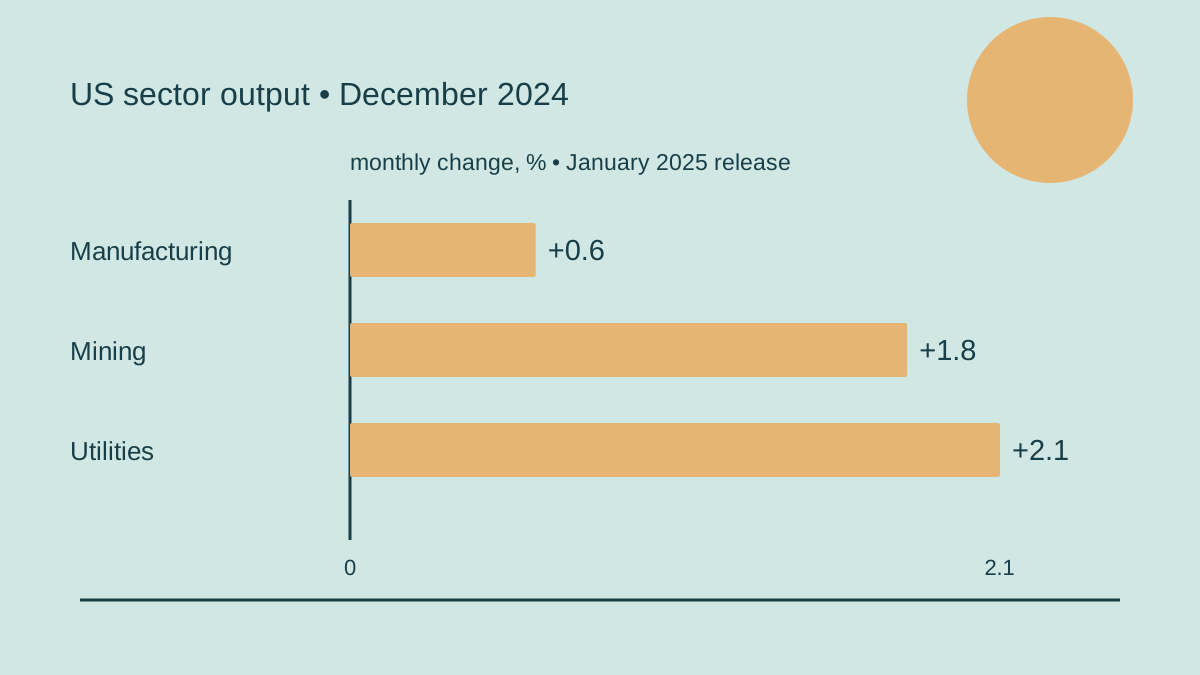
Manufacturing output in the United States rose 0.6% in December 2024, according to figures reported by Reuters on 17 January 2025. The previous month’s increase was revised upward to 0.4%. Reuters connected the December improvement in aerospace production with the resumption of work following Boeing’s factory strike. Motor vehicles and parts moved in the opposite direction, declining 0.6%. Manufacturing output nevertheless contracted at a 1.2% annualised rate across the fourth quarter.
The December result and the preceding industrial record
The Federal Reserve’s January release put total industrial production growth at 0.9% for December. Aircraft and parts contributed 0.2 percentage point following the resolution of the work stoppage. Mining grew 1.8%, while utilities rose 2.1%. Manufacturing capacity utilisation reached 76.6%, compared with a long-run average that was 1.7 percentage points higher. The broader industrial operating rate was 77.6%. These figures describe the December position using the estimates available on 17 January.
May 2023: manufacturing and total industry diverged
In its 15 June 2023 release, the Federal Reserve recorded a 0.2% decline in total industrial production for May, while manufacturing increased 0.1%. Mining fell 0.4% and utilities dropped 1.8%. Among durable manufacturers, aerospace and miscellaneous transport equipment gained 2.5%, whereas computers and electronic products declined 0.8%. Manufacturing capacity utilisation remained at 78.4%, slightly above the average then used for 1972–2022.
June 2023: quarterly growth accompanied a monthly fall
The 18 July report showed industrial production declining 0.5% in June, but increasing at a 0.7% annualised rate over the second quarter. Manufacturing fell 0.3% during June while recording quarterly growth of 1.5% at an annual rate. Motor vehicles and parts had expanded sharply over the quarter, although their June output fell 3%. Consumer durables also declined, including appliances, furniture and carpeting. The Federal Reserve reported that manufacturing capacity utilisation had slipped to 78%.
July 2023: heat and vehicle production
The 16 August release recorded a 1% July increase in industrial production after declines in the preceding two months. Utilities grew 5.4%, with the Federal Reserve attributing increased cooling demand to unusually high temperatures. Manufacturing rose 0.5%; vehicles and parts jumped 5.2%, compared with a 0.1% increase in other factory production. The report also revised earlier manufacturing growth downward. Its year-on-year factory comparison remained negative, at minus 0.7%.
August 2023: growth outside automotive production
In the 15 September release, August industrial output rose 0.4%, but manufacturing increased only 0.1%. Vehicle and parts production fell 5%, while manufacturing excluding that category grew 0.6%. Machinery gained 2%, primary metals increased 1.6%, and aerospace and miscellaneous transport equipment rose 3.3%. Mining expanded 1.4%, mainly reflecting oil and gas extraction. Total capacity utilisation reached 79.7%, matching the historical average in that release. Manufacturing utilisation was lower, at 77.9%.
September 2023: an automotive stoppage entered the data
The 17 October release placed September industrial growth at 0.3% and manufacturing growth at 0.4%. It reported that an ongoing strike against three automakers had held down vehicle assembly. Motor vehicles and parts nevertheless increased 0.3% for the month. Across the third quarter, manufacturing was flat: annualised growth of 2.3% in durable goods was offset by a 2.4% decline in nondurables. Mining and utilities contributed quarterly increases to the broader industrial total.
Production interruptions and the starting point for 2024
October 2023: automotive output fell sharply
In its 16 November release, the Federal Reserve reported a 0.6% fall in October industrial production. Manufacturing declined 0.7%, largely reflecting a 10% reduction in vehicles and parts affected by strikes at major producers. Manufacturing excluding vehicles and parts edged up 0.1%. Computers and electronic products gained 1.9%, while electrical equipment, appliances and components increased 1.5%. Utilities declined and mining expanded. Factory utilisation fell to 77.2%.
November 2023: vehicle assembly resumed
The 15 December release recorded a 0.2% increase in November industrial production and a 0.3% rise in manufacturing. Vehicles and parts rebounded 7.1% after strikes ended, more than accounting for the factory increase. Manufacturing excluding that category fell 0.2%. Durable manufacturing rose 1.2%, whereas nondurable production declined 0.5%. Automotive products also lifted consumer durables, and transport equipment helped business equipment. Manufacturing capacity utilisation increased to 77.2%.
December 2023: a modest monthly gain within a weaker quarter
The 17 January 2024 release recorded industrial production increasing 0.1% in December 2023 but contracting at a 3.1% annualised rate in the fourth quarter. Manufacturing also gained 0.1% during December, while its quarterly rate was minus 2.2%. Durable manufacturing declined that month, and nondurables increased. Mining grew 0.9%, while utilities fell 1%. The Federal Reserve said it planned an annual revision of production and capacity estimates, incorporating updated indicators and seasonal factors.
January 2024: winter weather affected different sectors differently
In the 15 February report, total industrial production edged down 0.1% in January. Manufacturing fell 0.5% and mining declined 2.3%, with winter weather contributing to both losses. Utilities rose 6% as heating demand increased after unusually mild December conditions. Natural-gas utility output jumped 13.9%. The report identified weather-related declines in petroleum and coal products, chemicals, plastics and rubber. It also included preliminary capacity estimates for 2024, projecting growth in manufacturing and utilities capacity. These were capacity projections, alongside observed monthly output changes, rather than a forecast of factory production growth.
February 2024: manufacturing recovered while utilities retreated
The 15 March release reported February industrial production growing 0.1%. Manufacturing rose 0.8%, and mining increased 2.2%, partly recovering from January’s weather-related disruption. Utilities fell 7.5% amid warmer-than-typical temperatures. Wood products, vehicle production, chemicals and paper registered factory gains. Manufacturing capacity utilisation increased to 77%. The report’s consumer-goods total fell despite increases in non-energy nondurables and durables, because consumer energy production declined sharply.
Spring improvement, revisions and sector differences
March 2024: gains in manufacturing and a weaker mining quarter
In its 16 April release, the Federal Reserve recorded industrial production growing 0.4% in March but contracting at a 1.8% annualised rate over the first quarter. Manufacturing increased 0.5% during the month, including a 3.1% rise in vehicles and parts. Factory output excluding automotive production rose 0.3%. Mining declined 1.4% in March and fell at a 12.3% annualised quarterly rate in that release. Petroleum and coal products increased strongly within nondurable manufacturing.
April 2024: utilities offset weakness elsewhere
The 16 May release described total industrial production as little changed in April. Manufacturing fell 0.3%, mining declined 0.6%, and utilities rose 2.8%. Vehicle output, electrical equipment and wood products registered notable factory losses. Primary metals, electronics and aerospace production increased. The mining decline largely reflected an 18.1% fall in coal mining. The Federal Reserve also scheduled its annual statistical revision for 28 June.
May 2024: broad gains and a revision programme
The 18 June report put May industrial production growth at 0.9%, with manufacturing recording the same increase. Utilities gained 1.6% and mining rose 0.3%. Wood products increased 2.6%, machinery rose 2.3%, and nondurable manufacturing grew 1.1%. The report described gains across most major market groups, including consumer goods and materials. It also explained that the forthcoming revision would incorporate updated monthly indicators and seasonal factors, while detailed 2022 Economic Census manufacturing benchmarks were unavailable. Capacity revisions would use the Census Bureau’s plant-capacity survey and information from other public agencies.
June 2024: a stronger quarter after the annual revision
In the 17 July report, industrial production increased 0.6% in June, and the second-quarter annualised rate reached 4.3%. Manufacturing grew 0.4% for the month and 3.4% at an annual rate for the quarter. Utilities expanded 2.8%, while mining rose 0.3%. Nondurable manufacturing provided the monthly factory increase, with durable production unchanged. The Federal Reserve confirmed that its annual revision had been issued on 28 June. It described revised monthly indicators, seasonal factors and estimation methods, as well as updated capacity information, explaining why figures from successive releases can differ.
July 2024: Hurricane Beryl and automotive losses
The 15 August release recorded a 0.6% decline in July industrial production. The Federal Reserve estimated that shutdowns caused by Hurricane Beryl reduced the monthly growth rate by 0.3 percentage point, particularly through petrochemical and related industries. Manufacturing fell 0.3%, with vehicles and parts dropping 7.8%, while other manufacturing increased. Utilities declined 3.7%. Electronics, machinery and primary metals registered gains within durable manufacturing. Temporary closures also affected natural-gas-liquids extraction.
Automotive recovery, aircraft disruption and the autumn estimates
August 2024: vehicles supported several market groups
The 17 September release reported August industrial growth of 0.8% and manufacturing growth of 0.9%. Vehicles and parts rebounded by nearly 10% following a roughly 9% July decline in the revised estimates then published. Manufacturing excluding automotive production grew 0.3%. Automotive output supported consumer durables, transport equipment and durable materials. Primary metals and electrical equipment also increased, while nondurable manufacturing declined. Mining grew 0.8%, and utilities were flat.
September 2024: aircraft production and hurricanes
In its 17 October report, the Federal Reserve recorded a 0.3% decline in September industrial production. It estimated that a civilian-aircraft strike reduced growth by 0.3 percentage point and two hurricanes subtracted another 0.3 percentage point. Manufacturing fell 0.4%; aerospace and miscellaneous transport equipment declined 8.3%. Business equipment fell 3.5%, including a sharp reduction in transport equipment. Mining declined as hurricanes affected oil and gas extraction, while utilities increased.
October 2024: the aircraft stoppage continued
The 15 November release recorded industrial output declining 0.3% in October. It estimated that the aircraft strike reduced October growth by 0.2 percentage point, while Hurricane Milton and lingering effects of Hurricane Helene subtracted 0.1 percentage point. Manufacturing fell 0.5%, with aerospace and miscellaneous transport equipment down 5.8%. Mining partly recovered as oil and gas extraction improved after September’s hurricane disruption. Utilities also rose. Manufacturing utilisation declined to 76.2%.
November 2024: vehicle growth preceded aircraft recovery
In the 17 December release, industrial production fell 0.1% in November, while manufacturing increased 0.2%. Vehicles and parts gained 3.5%, but aerospace and miscellaneous transport equipment declined 2.6% despite the aircraft work stoppage ending early in November. The Federal Reserve attributed that continued decline largely to aircraft-parts manufacturing. Nondurables and other manufacturing also fell, while machinery increased. Mining and utilities declined. These were the initial November estimates: the January release subsequently revised both total industrial production and manufacturing growth upward. The dated figures retain their original reporting periods and estimation vintages.
Monetary policy and the wider economy alongside factory activity
On 18 September 2024, the Federal Open Market Committee reduced its federal funds target range by half a percentage point, to 4.75–5%. It said inflation had made further progress toward 2%, employment gains had slowed, and the risks to its employment and inflation objectives were roughly balanced. The committee nevertheless described economic activity as expanding at a solid pace. Its policy assessment covered the wider economy and both elements of its mandate. The statement did not attribute subsequent manufacturing growth to that rate decision or promise a particular path for industrial output.
The committee lowered the range again on 7 November, by a quarter percentage point to 4.5–4.75%. It described labour-market conditions as generally easier than earlier in the year, while unemployment remained low and inflation somewhat elevated. The statement retained a commitment to assessing incoming data, changes in the outlook and the balance of risks before further adjustments. It also continued the reduction of Treasury and agency securities holdings. That monetary-policy record sits alongside the November production report, whose industry movements included automotive growth and continuing weakness in aircraft-parts output.
On 18 December, the committee made another quarter-point reduction, taking the range to 4.25–4.5%. It continued to describe economic activity as expanding at a solid pace and inflation as progressing toward its objective while remaining elevated. The statement referred to evaluating both the extent and timing of additional adjustments. It supplied the policy setting before the January industrial release, but contained no manufacturing-output forecast. Across the three statements, the numerical rate changes and the committee’s assessments are published policy decisions and attributed judgements, rather than a measured industrial response to lower rates.
The Bureau of Economic Analysis supplied another comparison in its third estimate of first-quarter 2024 GDP. Real GDP grew at a 1.4% annualised rate, while private goods-producing industries’ value added declined 1.1%. Services and government value added increased. Durable and nondurable manufacturing contributed to the goods-sector decline, partly offset by construction. The agency defined industry value added as contribution to GDP and separately reported gross output, which includes intermediate sales. Its figures place manufacturing within an economy that also contains services and government activity, using a different measure from the Federal Reserve’s industrial-production indexes.
Three comparisons within the industrial record
- Monthly output measures compare one month with its predecessor, using the seasonal adjustments in that release.
- Quarterly annualised rates describe changes across a quarter expressed at an annual rate.
- Capacity utilisation reports the proportion of estimated productive capacity in use, with sector-specific historical averages.
The releases record automotive stoppages in 2023 and an aircraft stoppage in 2024, followed by recoveries in the affected industries. The December factory increase and fourth-quarter contraction remain distinct comparisons within the January report.






Leave a comment