
The December 2025 decision
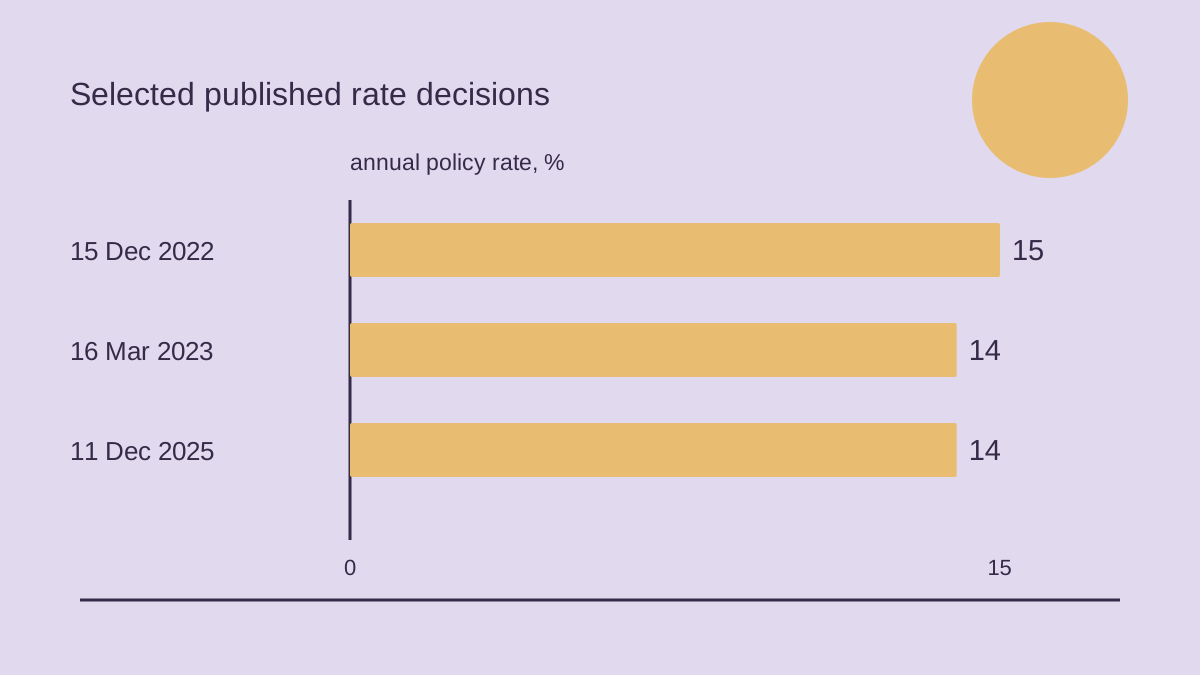
On 11 December 2025, Interfax reported that Uzbekistan’s central bank kept its rate at 14%. November annual inflation was 7.5%. The bank projected year-end inflation around 7.3% and about 6.5% for the end of 2026, while its target remained 5%. Strong demand and services prices still posed risks.
- The year-end figures were forecasts.
- Policy could change with inflation risks.
2022
8 September 2022
The September statement held the rate at 15%. August headline inflation was 12.3%, while core inflation reached 12.4%. Household expectations for the next twelve months had declined to 15.3%, and business expectations to 14.1%, but both remained above current inflation. The board described fiscal stimulus, lending and seasonal agricultural incomes as potential sources of demand pressure. Fuel supplies and delivery costs also posed risks. Its year-end inflation forecast remained 12–14%, with an outcome near the lower boundary expected. Positive real deposit rates were supporting growth in local-currency savings.
15 December 2022
December brought another decision to retain 15%. November inflation was 12.3%, with food prices rising 16%, non-food goods 10.7% and services 7.8% over a year. Core inflation had accelerated to 13.4%, strengthening the case for moderately tight conditions. Household expectations were 15.3%, against 14.3% for businesses. The statement linked domestic activity to fiscal expansion, foreign transactions and credit growth. It warned that fuel shortages could increase transport and logistics costs. Global recession risks could also weaken external demand, while tighter international financing made domestic resources and fiscal restraint more important.
2023
26 January 2023
January’s board meeting left the rate at 15%, judging this sufficient to preserve moderately tight conditions. The statement reported 2022 economic growth of 5.7% and headline inflation of 12.3%. Core inflation had reached 13.8%, and inflation expectations had risen moderately over the preceding three months. Wages, remittances and a stable labour market were supporting demand for durable goods and property. Abnormal weather introduced short-term supply risks. The baseline projected 2023 growth of 4.5–5% and inflation of 8.5–9.5%. The board’s medium-term objective remained 5%, rather than an immediate achievement.
16 March 2023
In March, the board reduced the rate by one percentage point to 14%. It described the move as removing the additional burden associated with the previous year’s risk response, while preserving relatively tight conditions. February headline inflation was 12.2%; core inflation had eased from December’s 13.8% to 13.2%. Expectations had also fallen compared with January. The statement nevertheless identified difficult external refinancing conditions and domestic activity weaknesses in early-year indicators. Recovery was expected by the end of the first half. The projected year-end inflation range remained 8.5–9.5%, rather than a newly measured outcome.
4 May 2023
The May decision kept 14% after the March reduction. Headline inflation had declined to 11.7% in March and 11% in April, helped partly by seasonal factors and the previous year’s high comparison base. March core inflation was still higher, at 12.9%, signalling persistent risks. Household and business expectations were 14.4% and 14.1%, respectively. The board retained an 8.5–9.5% year-end inflation forecast. It also highlighted rapid retail lending and the potential household debt burden, indicating that macroprudential measures would be used to balance lending growth alongside the monetary policy stance.
15 June 2023
June’s hold at 14% accompanied further disinflation, but a slower decline in core prices. May headline inflation was 10.4%, compared with 12.4% core inflation. Household expectations had eased to 13.7%, and business expectations to 13.5%. Half the consumer basket still consisted of items with annual price increases above 10%, a larger share than in 2020–2021. The board saw possible room for a future reduction if core inflation and expectations established a durable downward path. It also cautioned that fiscal expansion and strong lending could make premature monetary easing add to price pressure.
27 July 2023
July’s rate remained 14%. June headline inflation had fallen to 9%, whereas core inflation decelerated more slowly, to 11.3%, widening the difference between them. Household and business expectations were around 13–13.5%. Economic growth reached 5.6% in the first half, with lending, budget expenditure and higher wages among the stated drivers. Strong demand limited the decline in services inflation. The revised forecast placed full-year growth at 5–6% and inflation at 8.5–9.5%. The board continued to emphasise persistent demand pressures and the importance of keeping the budget deficit within established parameters.
14 September 2023
The September decision again retained 14%. August headline inflation was 9%, while core inflation had declined to 10.7%. Services inflation accelerated from 8.2% to 8.5%, and expectations rose to 14.2% for households and 14.4% for businesses. Respondents identified exchange-rate fluctuations and higher fuel and energy prices as concerns. Household electricity and gas tariffs remained unchanged; the board expected indirect effects from business tariff increases to fit its inflation forecast. High retail lending and fiscal support still posed demand risks. The year-end inflation projection remained within the 8.5–9.5% corridor.
26 October 2023
October’s board retained 14% as headline inflation had reached 9.2% and food inflation 11%. September core inflation eased to 10.3%, but the gap above headline inflation still justified relatively tight conditions in the board’s assessment. Household expectations fell to 13.5% and business expectations to 14.2% after August’s increase. Nine-month GDP growth was 5.8%, supported by consumer expenditure and investment. The board described continuing effects from seasonal food prices and regulated prices as risks. It also noted that macroprudential measures were balancing retail credit growth, with additional action possible if necessary.
14 December 2023
December’s hold at 14% reflected uncertainty over how durable disinflation would be. November headline inflation was 8.8%, and core inflation 9%, while household and business expectations remained around 13–14%. The statement projected inflation of 8–9% in 2024 and envisaged reaching the 5% target in 2025. Those were forward-looking assessments at that meeting. Strong consumption and private investment supported economic activity, with public expenditure and retail lending sustaining demand. The board identified budget consolidation and market reforms as important to long-term price stability, while retaining flexibility to adjust the rate.
2024
25 January 2024
The first published 2024 decision kept 14%. Headline inflation had recently remained at 8.8%, with weaker goods-price growth but some acceleration in services. Perceived inflation and expectations were still high. The board forecast year-end headline inflation of 8–9% and core inflation of 7–8%, while projected GDP growth was 5.5–6%. It anticipated risks from changes in regulated prices and tax adjustments, alongside external fragmentation and persistent global inflation. The statement also described a reduction in surplus banking liquidity and greater money-market activity, with operations intended to keep short-term rates inside the corridor.
14 March 2024
March’s meeting left the rate at 14%. February headline inflation had declined to 8.3%, yet services inflation was accelerating amid strong demand and increases in regulated prices and tariffs. Household and business expectations remained high. The board kept its year-end inflation projection at 8–9%, with uncertainty about future regulated-price changes. It noted stronger early-year output indicators but slower food production, which could create supply-demand imbalances or additional import pressure. Labour demand was particularly strong in services. Monetary conditions were expected to remain relatively tight, and savings in the national currency continued expanding.
25 April 2024
April’s decision retained 14% while revising the 2024 headline inflation forecast upward to 9–11%. The board anticipated a one-off effect from regulated-price liberalisation beginning in May, with uncertainty over how compensation and social consumption norms would influence expectations. March headline inflation had fallen to 8%, and core inflation to 7.6%, helped by food-price developments. Core inflation was still projected at 7–8% by year-end. The board reported first-quarter economic growth of 6.2%, but its full-year growth projection was 5.2–5.7%. It remained prepared to adjust monetary conditions if expectations increased significantly.
13 June 2024
June’s hold at 14% sought to limit energy-tariff effects on expectations. May headline inflation had accelerated to 10.6% after household energy prices increased. Excluding energy prices, inflation was 6.8%, while core inflation continued falling to 6.3%. The board therefore distinguished the direct tariff effect from more persistent inflation components. Household expectations remained at 14%, whereas business expectations eased to 12.7%; the tariff effect on expectations was judged smaller than anticipated. Strong activity, rising remittances and investment still supported demand. The board intended to preserve positive real rates consistent with reaching its medium-term target.
25 July 2024
July’s board cut the rate by half a percentage point to 13.5%. June headline inflation was 10.6%, but core inflation had declined to 5.9%, down 2.6 percentage points since the year began. The statement judged secondary energy-tariff effects smaller than expected, and household expectations had also fallen. Its revised year-end headline forecast was about 9%, approaching the 5% target by the end of 2025. First-half real economic growth was 6.4%; full-year growth was projected at 5.7–6.2%. The board still identified uncertainty around expectations and persistently high core services inflation.
12 September 2024
September’s hold at 13.5% followed the July reduction. August headline inflation was 10.5%, after remaining broadly flat for three months. Lower fruit and vegetable prices had reduced inflation by about one percentage point during the year, but core inflation had stopped decelerating after June. Expectations had fallen to around 11–12% in July before returning to 12–13% in August. The board associated the rise with anticipated pensions, public-sector wages and fuel prices. Investment, budget expenditure and remittances continued supporting demand. Maintaining the rate was intended to preserve savings incentives and reduce inflation toward projected levels.
31 October 2024
October’s meeting retained 13.5% as September headline inflation stayed at 10.5%, but core inflation resumed an upward trend to 7.1%. The statement linked that rise to strong consumption, energy-price transmission and some food prices. Household expectations were 13.3%, against 12.6% for businesses. Nine-month real GDP growth was 6.6%, with investment among the key drivers. The revised forecasts placed year-end inflation around 9.5% and economic growth at 6–6.5%. Energy supply, short-term price fluctuations and persistent services inflation remained risks. The board considered tighter monetary conditions necessary to sustain disinflation over the medium term.
12 December 2024
December’s hold at 13.5% reflected inflation declining more slowly than forecast. November headline inflation was 10%, helped by stabilising food prices, while core inflation had remained around 7% for four months. Household expectations accelerated to 13.7%, and business expectations to 12.7%. Consumption, investment, higher wages and remittances were supporting aggregate demand. The board projected economic growth around 6–6.5% for the year. It described current monetary conditions as necessary to restrain inflation and preserve saving activity. A rate increase could be considered if strong demand and upward price pressures intensified in subsequent quarters.
2025
23 January 2025
January’s meeting maintained 13.5%. December headline inflation had eased to 9.8%, but core inflation edged up to 7.2%, indicating persistent pressure in services and non-food goods. The statement expected headline inflation around 7–8% by the end of 2025, with GDP growth around 6%. It anticipated the fading initial effect of the previous year’s energy-price reform, while stressing that secondary effects would influence policy choices. Seasonal supply problems had raised expectations late in 2024. The board would reconsider restrictiveness if aggregate demand or prices faced stronger pressure than anticipated in coming quarters.
20 March 2025
The March decision raised the rate by half a percentage point to 14%. The board cited sustained inflation pressure, stronger demand and rising expectations. February headline inflation was 10.1%, while household expectations reached 15.3% and business expectations 13.8%. Fuel, utilities, transport, education and medical services were among the price increases discussed. Remittances and consumer loans supported demand, especially in services. The board intended tighter conditions to balance demand and supply and bring year-end inflation to 7–8%. The decision date was 20 March; this section describes that meeting rather than a separate implementation date.
24 April 2025
April’s board kept 14% amid continued uncertainty over inflation and external conditions. March headline inflation had risen to 10.3%, and core inflation to 8.1%. Expectations had declined with better fuel supplies and relative exchange-rate stability, but remained elevated. First-quarter GDP growth accelerated to 6.8%, supported by consumption and investment. The board projected full-year growth around 6% and inflation approaching the upper boundary of its 7–8% corridor. It expected the previous energy-tariff base effect to fade, while the next reform phase could produce secondary effects requiring a reassessment of monetary conditions.
12 June 2025
June’s decision retained 14% because price pressures persisted despite lower headline inflation. May headline inflation had fallen to 8.7% as the previous energy-tariff base effect faded; core inflation continued rising to 8.5%, driven by services. Expectations remained above headline inflation. Activity in trade, paid services, remittances, bank transactions and property sales indicated strong demand. The board also highlighted lending growth and budget expenditure as sources of future pressure. It expected tight conditions to moderate credit and sustain deposit growth, while remaining ready to reassess policy if demand or prices strengthened beyond expectations.
11 September 2025
September’s hold at 14% followed some easing of inflation during August. Headline inflation was 8.8%, while core inflation fell to 7.6% as food and non-food price growth slowed. Services prices still reflected high demand and secondary energy-cost effects. Expectations were declining but remained above measured inflation. First-half economic growth had accelerated to 7.2%, alongside strong remittances, lending, public expenditure and investment. The board projected year-end inflation around 8.7%. It judged that preserving savings incentives and moderating credit would help balance demand, while warning that establishing a sustained downward inflation path would take time.
24 October 2025
October’s board maintained 14% as September headline inflation declined to 8% and core inflation to 7%. The statement attributed disinflation partly to tight conditions and currency appreciation, while noting that services inflation remained high amid strong demand. Expectations continued falling but exceeded current and projected inflation. The year-end inflation forecast was reduced to about 8%, with GDP growth projected at 7–7.5%. The board still identified energy-tariff transmission and supply constraints as risks. It regarded sustained relatively tight conditions as necessary to preserve the downward inflation trend and move toward the medium-term target.






Leave a comment