
The October cut and the earlier policy record
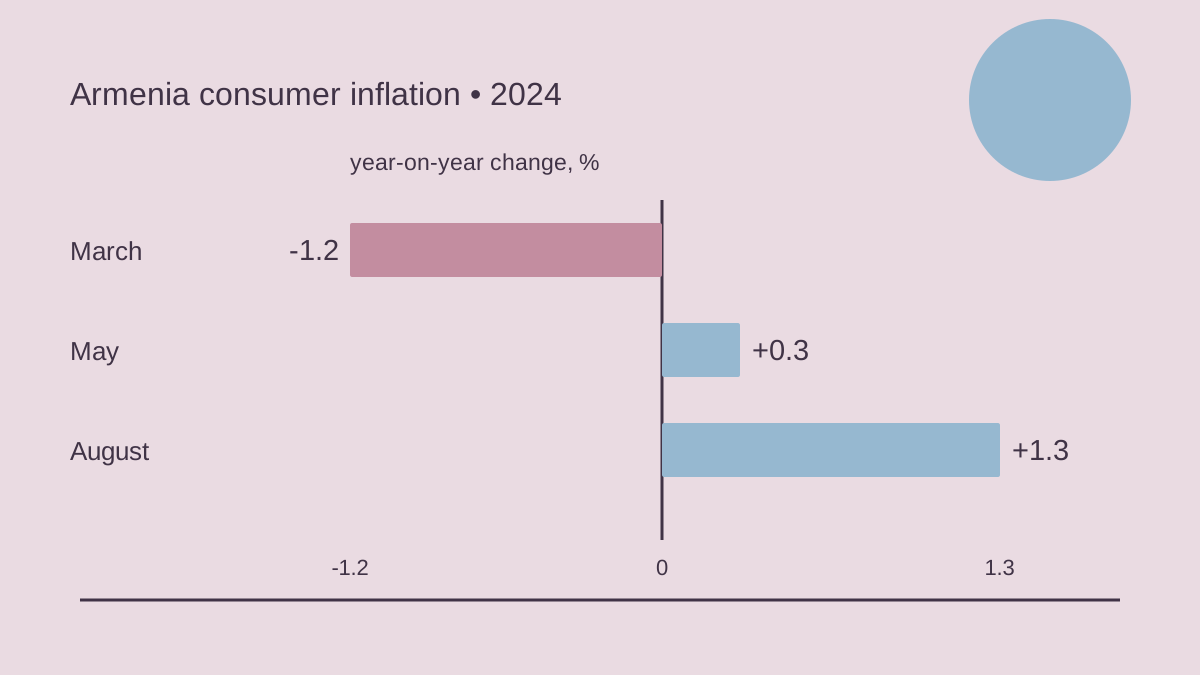
On 29 October 2024, Armenia’s central bank cut its refinancing rate by a quarter of a percentage point to 7.25 per cent, Interfax reported. It was the seventh reduction that year, following five cuts in 2023. August annual inflation was 1.3 per cent; the 2024 target was 4 per cent, plus or minus 1.5 percentage points. The board favoured gradual easing.
Pandemic stimulus in 2020
The starting point in January 2020 was a 5.50 per cent rate, which the Central Bank of Armenia left unchanged on 24 January. Annual consumer inflation for December 2019 was only 0.7 per cent. The board described strong late-year economic activity and private consumption, supported by monetary stimulus. It expected expansionary fiscal policy to continue, although its scale would depend on implementation. With global demand still weak, the bank anticipated no significant external inflationary impact and considered continued monetary support appropriate for a gradual recovery of inflation.
On 17 March, the bank cut the rate by a quarter of a percentage point to 5.25 per cent. February consumer prices were 0.5 per cent below their year-earlier level. The statement linked pandemic-related disruption to simultaneous contraction of supply and demand, particularly in tourism and entertainment. The board also described limits to monetary policy: its instruments could not resolve particular sectors' health-related problems or remove real economic uncertainty. It therefore emphasised macroeconomic stability and targeted government measures while expecting inflation to remain low in coming months.
The next quarter-point reduction, on 28 April, brought the rate to 5.00 per cent. The annual decline in consumer prices had narrowed to 0.1 per cent in March. The CBA reported falling activity across almost every domestic sector and expected the contraction to deepen in the second quarter. Government measures could partly offset weak demand, but uncertainty about the duration of the pandemic had increased. Against that background, the board favoured additional stimulus and an expansionary stance beyond the immediate crisis, with inflation approaching its target only later in the forecast horizon.
On 16 June, the board chose a larger, half-point cut to 4.50 per cent. Annual inflation had reached 1.2 per cent in May, but the bank expected private consumption and investment to weaken. Construction and services were the principal supply-side sources of the anticipated downturn. Fiscal stimulus was not expected to outweigh the loss of private demand. The board cited a slower recovery in domestic and external demand when explaining the larger step and assessed inflation risks as tilted downwards because uncertainty could persist.
Pauses and the December reversal
The rate remained at 4.50 per cent on 28 July. Annual inflation for June was 1.7 per cent, while core inflation stood at 0.8 per cent. The bank said the second-quarter decline in domestic activity and demand had broadly matched its projections. Construction and services had weakened, whereas the industrial decline was smaller than expected. Remittances exceeded expectations, but uncertainty still constrained demand. The board also identified recent changes in profit taxation as potentially supportive of supply and demand, judging the existing monetary conditions sufficiently expansionary.
A further quarter-point cut on 15 September lowered the rate to 4.25 per cent. August annual inflation was 1.8 per cent, with core inflation at 1.1 per cent. The bank had observed a deeper-than-expected contraction in private spending during the first half, partly offset by fiscal expansion. Precautionary behaviour in consumption and investment was expected to delay recovery. The board argued that fiscal support remained essential alongside monetary easing because the pandemic imposed different costs on different sectors while monetary policy affected the economy broadly.
The 27 October meeting kept the rate at 4.25 per cent. September annual inflation was 1.4 per cent and core inflation 1.3 per cent. The CBA described weaker-than-expected domestic demand in the third quarter, primarily because private consumption had fallen more sharply. It expected the renewed pandemic and military circumstances to delay recovery and increase uncertainty. Although the government envisaged substantial additional spending, the board also noted a rise in the country risk premium and risks to inflation expectations. Its response was a hold rather than another reduction.
The direction changed on 15 December, when the board raised the rate by a full percentage point to 5.25 per cent. November annual inflation was still below target at 1.6 per cent. Nevertheless, the bank pointed to rising international commodity and food prices, vaccine-related expectations of recovering global demand and a higher country risk premium. Domestic activity remained weak, with third-quarter output down 9.1 per cent from a year earlier. The CBA considered the overall stance still expansionary and envisaged reducing that stimulus gradually over the forecast horizon.
Recovery and inflation expectations in 2021
The 2 February 2021 decision added another quarter-point increase, taking the rate to 5.50 per cent. December 2020 annual inflation had reached 3.7 per cent and core inflation 3.6 per cent. The bank attributed much of the price acceleration to imported food. Demand remained sluggish, and slower lending was expected to constrain it further. The board nevertheless judged that supply-driven inflation was beginning to accelerate expectations. It raised the rate to address that risk while observing some improvement in country risk-premium estimates in international financial markets.
On 16 March, the board paused at 5.50 per cent. February annual headline and core inflation had risen to 5.3 and 5.5 per cent respectively, reflecting international commodity prices and dram depreciation. Services activity and private consumption were still weak, and the bank did not expect inflationary pressure from the domestic economy. It described the earlier December tightening as a response to anticipated supply-driven inflation and expectations. The hold preserved that response while seeking to limit the negative effect on a still-fragile recovery in domestic demand.
The 4 May increase was half a percentage point, bringing the rate to 6.00 per cent. March annual inflation had reached 5.8 per cent, with core inflation at 6.6 per cent. The CBA described faster recovery in partner economies and sustained inflationary conditions in international food markets. Domestic demand was recovering more quickly than anticipated as remittances and lending improved, although it remained weak overall. The board reported increased public uncertainty about inflation and considered a gradual withdrawal of stimulus necessary without excessively damaging the demand recovery.
Another half-point increase on 15 June lifted the rate to 6.50 per cent. May annual headline inflation had eased to 5.9 per cent, but core inflation continued accelerating to 7.4 per cent. The bank linked rapid private-consumption growth to improving credit and households' use of accumulated savings. Private investment was still sluggish. In its assessment, demand was growing faster than productive capacity, adding domestic inflationary effects to the external pressures. The board therefore envisaged possible further tightening, even though the latest headline inflation measure had declined.
Demand, productive capacity and seasonal prices
On 3 August, the rate rose by another half-point to 7.00 per cent. June annual headline inflation was 6.5 per cent and core inflation 7.8 per cent. Agriculture and services were performing better than the bank had expected, while remittances and external demand continued to support consumption. The CBA also observed improvement in the external balance. Its statement anticipated continuing imported inflation from commodity and food markets, alongside sustained domestic demand pressures. The board considered more tightening potentially necessary to prevent accelerating inflation expectations.
The September step was smaller: a quarter-point increase on 14 September took the rate to 7.25 per cent. August annual inflation had risen to 8.8 per cent, whereas core inflation remained around 8.0 per cent. The bank attributed the recent short-term acceleration primarily to seasonal food prices. Strong consumption, remittances and external demand still exceeded the expansion of productive capacity, while private investment remained subdued. The board expected inflation to stay high until year-end before approaching the target in 2022, an outlook stated at that meeting rather than a later outcome.
The 2 November hold maintained the September rate. Annual inflation for September was 8.9 per cent and core inflation 8.0 per cent. The CBA described weaker-than-expected economic activity as agriculture declined and a new pandemic wave threatened services. Consumption continued recovering through remittances and a lower private saving rate. Unlike the earlier meetings, the board reported signs of stabilising inflation expectations. It considered the tightening already implemented since late 2020 sufficient at that stage to contain excess demand and support its medium-term inflation objective.
On 14 December, the pause ended with a half-point increase to 7.75 per cent. November annual inflation reached 9.6 per cent and core inflation 8.4 per cent. The statement pointed to global supply bottlenecks and recovering partner-country demand as external sources of pressure. Domestic activity was lower than anticipated because agriculture and industry had slowed, but tourism growth exceeded expectations and supported external demand. The board also reported some acceleration in quarterly core inflation and inflation expectations, judging risks to the medium-term inflation path predominantly upward.
External shocks and domestic demand in 2022
The board raised the rate by a quarter-point to 8.00 per cent on 1 February 2022. December 2021 annual inflation had fallen to 7.7 per cent and core inflation to 7.3 per cent. The bank nevertheless identified continuing external pressure from energy prices and disrupted production chains. Domestically, construction and industry had been stronger than expected at year-end. High external demand and anticipated changes in regulated prices were influencing inflation expectations. The board described geopolitical uncertainty as substantial and judged inflation risks mainly upward when explaining the additional tightening.
The 15 March meeting delivered a much larger increase of 1.25 percentage points to 9.25 per cent. February annual headline and core inflation were 6.5 and 6.4 per cent. The bank's statement described sanctions on Russia, financial volatility, increased risk premiums and disruption to supply chains as consequences of the conflict. It expected weaker domestic growth and remittances, while identifying tourism as a positive counterweight. The board explained the larger rate increase through the risk of destabilising inflation expectations, even as the economic outlook had become markedly more uncertain.
On 3 May, the board held the rate at 9.25 per cent. March annual inflation had climbed to 7.4 per cent and core inflation to 7.0 per cent. Yet domestic activity in the first quarter was stronger than the CBA had anticipated. A substantial inflow of international visitors was supporting services and aggregate demand, improving the external balance and strengthening the dram. The bank expected that currency appreciation to help moderate inflation and expectations. The unchanged rate thus accompanied both persistent imported price pressure and a newly identified domestic offset.
The 14 June meeting again held the rate at 9.25 per cent. May annual inflation had reached 9.0 per cent, with core inflation at 8.4 per cent. The CBA described exceptionally strong domestic activity and rising private spending alongside the visitor inflow. Services exports and financial inflows were contributing to dram appreciation, which the bank expected to ease domestic inflation subsequently. At the same time, disrupted global value chains and commodity prices continued to generate external pressure. The board retained its stance while committing to contain risks to inflation expectations.
Currency appreciation alongside higher rates
Tightening resumed on 2 August with a quarter-point increase to 9.50 per cent. June annual inflation had risen to 10.3 per cent and core inflation to 9.4 per cent. The bank reported stronger-than-expected second-quarter activity, especially in services, with positive industrial and export developments. International visitors and remittances from Russia remained major demand drivers. The dram's appreciation partly offset price increases, but high demand sustained inflation expectations. The board anticipated some weakening of external price pressure as developed-country central banks tightened, while considering that pressure likely to persist near term.
A half-point increase on 13 September took the rate to 10.00 per cent. August annual headline inflation had eased to 9.1 per cent, whereas core inflation continued rising to 10.2 per cent. Construction and services remained highly active, and exports were improving. The CBA attributed much of growth to demand supported by visitors and remittances. Its policy scenario projected inflation gradually stabilising around the target from the end of 2023. That forecast accompanied a commitment to use relatively restrictive monetary policy and the appreciated dram to contain demand and expectations.
The 1 November increase added another half-point, lifting the rate to 10.50 per cent. September annual inflation was 9.9 per cent and core inflation 10.5 per cent. Global activity was slowing and some commodity prices had declined, yet domestic demand remained strong. The bank described international visitors and transfers from Russia as supporting services, the external balance and currency appreciation. It also identified a tighter labour market and persistent inflation expectations. The board argued for coordinated restrictive fiscal and monetary policies and raised the rate despite softer external price conditions.
The final 2022 increase was a quarter-point on 13 December, setting the rate at 10.75 per cent. November annual inflation had fallen to 8.8 per cent, with core inflation at 9.9 per cent. The CBA observed growing export and productive potential in services and industry. Tight monetary policy, dram appreciation and external developments were slowing imported food-price increases. Those offsets were insufficient to eliminate the influence of high demand and expectations. The board therefore increased the rate again, while assessing risks around its projected inflation path as broadly balanced.
Slowing inflation and renewed easing in 2023
The rate remained at 10.75 per cent on 14 March 2023. February annual inflation had fallen to 8.1 per cent and core inflation to 8.4 per cent. The CBA continued to describe high activity in construction and services, rising remittances and stronger export potential. Private consumption, however, remained weak despite higher incomes, leaving uncertainty about future spending of accumulated savings. The board considered the restrictive stance and dram appreciation to be dampening inflation, but domestic demand and expectations still supported wage and price pressure. Its scenario envisaged target-level inflation from the second half.
The 13 June decision began the next phase: a quarter-point reduction to 10.50 per cent. May annual inflation had fallen sharply to 1.3 per cent, while core inflation reached 3.1 per cent. The bank attributed the improvement to weaker external inflationary effects, its restrictive policy and dram appreciation. Construction and services activity still exceeded expectations, and productivity gains were increasing estimated potential growth. Services and some goods prices were adjusting more slowly because demand and expectations remained elevated. The board consequently chose a small reduction while retaining its commitment to control demand.
On 12 September, the board reduced the rate by half a percentage point to 9.75 per cent. August annual consumer inflation was negative at minus 0.2 per cent, and core inflation had declined to 0.4 per cent. Economic activity was slowing from its earlier high pace but remained strong, particularly in construction and services. The bank reported some easing in demand-related inflation expectations, while services and certain goods prices adjusted relatively slowly. It anticipated further external deflationary effects and expected inflation to stay below target near term before returning gradually over the medium horizon.
The 12 December decision cut the rate by a quarter-point to 9.25 per cent. November annual consumer inflation was minus 0.5 per cent, and October core inflation stood at zero. The CBA contrasted slowing external demand with robust domestic consumption. Construction and services continued to support activity, but wage growth and inflation expectations were moderating. The board linked the low-inflation environment to external deflationary effects and the restrictive policy already implemented. It maintained a gradual easing course while projecting below-target inflation in the near term and a later return to the medium-term objective.
The sequence of reductions in 2024
The first 2024 decision, on 30 January, lowered the rate by half a percentage point to 8.75 per cent. December 2023 annual consumer inflation was minus 0.6 per cent and core inflation minus 0.4 per cent. The bank reported slowing tourism growth but robust private consumption. It also identified new external risks from energy prices and possible supply-chain disruption. Those risks coexisted with an assessment of weakly deflationary external effects overall. Slower wage growth and lower inflation expectations supported the board's decision to continue easing rather than reverse the earlier reductions.
On 12 March, a quarter-point cut set the refinancing rate at 8.50 per cent. The bank described expanding labour supply as reducing some imbalances between demand and supply, with slower wage growth and declining domestically driven sticky-price inflation. External demand had weakened while domestic demand remained comparatively strong. The board considered two opposing possibilities: persistent expectations and country-risk uncertainty could require tighter policy, whereas broader labour-supply growth and weaker demand could require faster reductions. Its decision continued gradual easing while preserving readiness to respond to either scenario.
- The March decision also set the Lombard facility rate at 10.00 per cent and the deposit facility rate at 7.00 per cent.
The 30 April decision lowered the rate by another quarter-point to 8.25 per cent. March annual consumer inflation was minus 1.2 per cent and core inflation minus 0.7 per cent. The CBA described strong trade and industrial activity, partly influenced by short-term factors that complicated assessment of sustainable growth. Private investment was supporting domestic demand even as external demand for services weakened. The board linked low inflation to prior monetary policy, external deflationary pressure and dram appreciation. Its scenario discussion again balanced tighter-policy risks against labour-supply expansion and a possible rapid demand slowdown.
Two opposing policy scenarios
The 11 June reduction took the rate to 8.00 per cent, again in a quarter-point step. May annual consumer inflation was positive at 0.3 per cent, while April core inflation remained negative at minus 0.5 per cent. Construction, trade and industry were driving robust activity, but the bank remained uncertain about the breadth and sustainability of that growth. It described cooling labour conditions, weaker wage growth and declining inflation expectations. The board continued gradual easing while considering both a prolonged restrictive external rate environment and domestic demand weak enough to require faster reductions.
Interfax's 30 July report recorded a further quarter-point cut to 7.75 per cent, the fifth reduction of 2024. It identified the preceding 8.00 per cent rate as having applied since the 11 June decision.
On 10 September, the board reduced the rate by a quarter-point to 7.50 per cent. Annual consumer inflation stood at 1.3 per cent in August, and July core inflation was 0.3 per cent. The bank described construction and trade as major activity drivers, while external services demand had slowed relative to 2023. Cooling wage growth and stabilising domestically driven price inflation contrasted with continuing fiscal-demand risks. The board considered both country-risk and neutral-rate uncertainty and a weaker-demand scenario, choosing continued gradual easing while maintaining the medium-term inflation objective.






Leave a comment