
The December 2024 decision
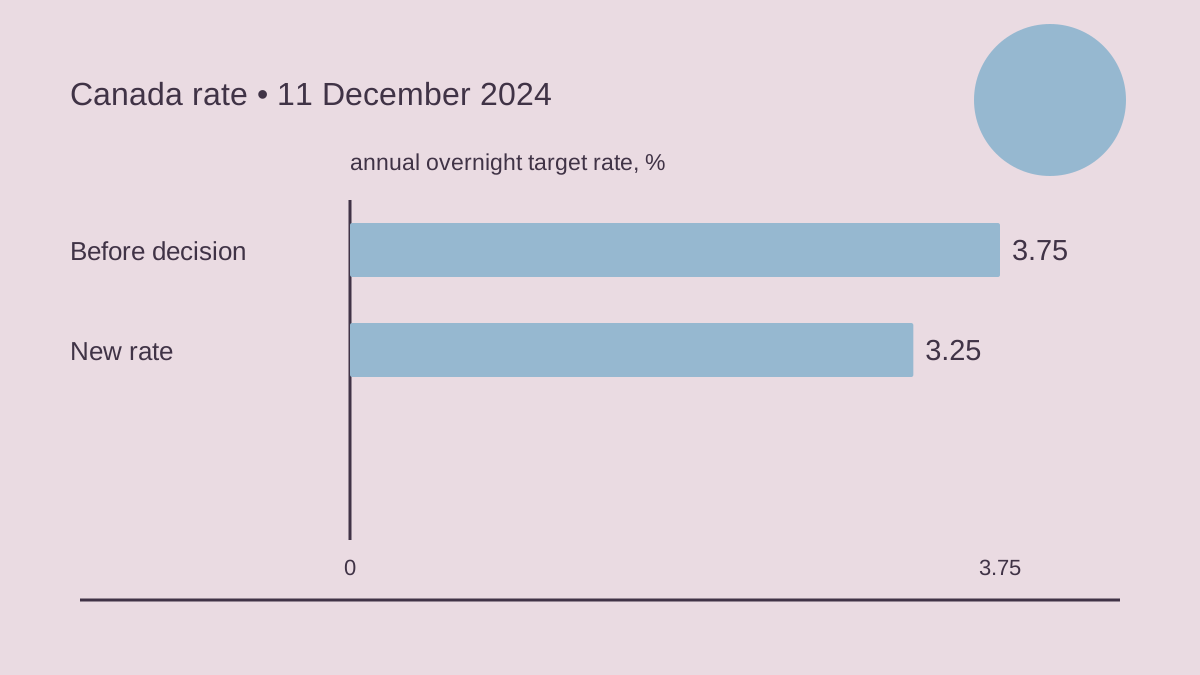
On 11 December 2024, Reuters reported that the Bank of Canada cut its rate by 50 basis points to 3.25%. It signalled more gradual further easing, conditional on economic developments. Third-quarter growth was 1%, below its projection. Inflation was around 2%, while weaker growth and uncertainty over immigration and possible tariffs shaped the outlook.
- Further reductions were conditional.
- Tariffs remained a prospective risk.
2021
8 December 2021
The December 2021 statement kept the overnight target at 0.25% and retained guidance linking that rate to the absorption of economic slack. Bond reinvestment also continued. The Bank of Canada reported third-quarter growth of about 5.5%, but downward revisions for the preceding quarter left output 1.5% below its final-quarter 2019 level. It described a recovery in services spending alongside supply constraints on manufacturing exports and investment. Employment had recovered, while vacancies remained high. Flooding in British Columbia and the Omicron variant posed new risks. Its forecast put inflation back near 2% in the second half of 2022.
2022
26 January 2022
January’s decision left the rate at 0.25% but withdrew the exceptional forward guidance: the bank judged that overall economic slack had been absorbed. Reinvestment continued, with the future reduction of bond holdings to be considered after the first rate increase. The statement described a tight labour market, hiring difficulties and strong housing activity. Omicron was expected to weaken the first quarter, though less severely than earlier pandemic waves. Its Canadian growth forecasts were 4% for 2022 and 3.5% for 2023. Inflation was projected near 5% during the first half of 2022, then around 3% at year-end.
2 March 2022
The March statement raised the overnight target by 25 basis points to 0.5%, while maintaining bond reinvestment. It reported fourth-quarter 2021 growth of 6.7%, stronger than the bank had forecast, and identified this as confirmation of absorbed slack. Omicron-related absences and layoffs in January were described as temporary. Inflation had reached 5.1%, with all three core measures also rising. The bank attributed food-price pressures partly to poor harvests and transport costs. It identified the war as an additional source of commodity, supply and confidence risks, expected further rate increases and was considering quantitative tightening.
13 April 2022
April brought a larger increase, of 50 basis points, taking the overnight target to 1%. The bank also ended reinvestment and set 25 April for quantitative tightening: maturing government bonds would no longer be replaced. Its statement described excess demand, tight employment conditions and businesses able to pass higher costs to customers. Inflation was 5.7%, above January’s forecast. The new projection placed inflation close to 6% in the first half of 2022 and above the control range throughout that year. Forecast growth was 4.25% in 2022, 3.25% in 2023 and 2.25% in 2024.
1 June 2022
June’s 50-basis-point increase took the target to 1.5%, alongside continued quantitative tightening. April inflation of 6.8% had exceeded the forecast, and the bank expected further near-term pressure. Its core measures ranged from 3.2% to 5.1%; almost 70% of consumer-price categories were rising by more than 3%. First-quarter Canadian growth was 3.1%, consistent with the April outlook. The statement described labour shortages, high vacancies and wage growth. Housing activity was moderating as borrowing became more expensive, but household consumption remained robust. The governing council said it was prepared to act more forcefully if necessary to meet its inflation objective.
13 July 2022
In July the bank front-loaded its tightening with a 100-basis-point increase to 2.5%. It said inflation had become higher and more persistent than envisaged in April, reflecting both external pressures and domestic demand. More than half of price categories were rising above 5%, and core measures ranged from 3.9% to 5.4%. Surveys indicated a risk that expectations of prolonged high inflation could become entrenched. The bank estimated second-quarter growth at 4% and forecast 2% for the third quarter. Inflation was projected around 8% in the coming months, then 3% by late 2023 and 2% by late 2024.
7 September 2022
September’s increase was 75 basis points, bringing the target to 3.25%. July inflation had fallen to 7.6% from 8.1%, primarily as petrol prices declined; excluding petrol, inflation had increased. Core indicators remained between 5% and 5.5%, and short-term expectations were elevated. Second-quarter growth of 3.3% was weaker than projected, although consumption expanded about 9.5% and business investment nearly 12%. The bank reported a housing pullback as mortgage rates rose. It expected activity to moderate during the second half under weaker international demand and tighter domestic policy, while judging that further rate increases were still required.
26 October 2022
October’s 50-basis-point increase brought the target to 3.75%. The bank described a sharp housing retreat and softer spending by households and businesses as earlier increases took effect. It forecast that growth would stall through late 2022 and the first half of 2023. Annual growth projections were 3.25% for 2022, just under 1% for 2023 and 2% for 2024. Headline inflation had declined to 6.9%, mainly through cheaper petrol, but two-thirds of price components were still increasing above 5%. Core measures showed no meaningful easing. Further increases remained expected, with their size depending on demand, supply and inflation developments.
7 December 2022
December added another 50 basis points, taking the target to 4.25%. Although third-quarter output had grown more strongly than expected, the bank identified increasing evidence that restrictive policy was curbing domestic demand. Consumption had moderated and housing activity continued to fall, while commodity exports remained strong. October headline inflation was 6.9% and annual core measures about 5%. Slower three-month changes in core prices offered an early sign of diminishing momentum, but near-term expectations remained high. The council’s forward wording shifted to considering whether the rate needed to rise further, while quantitative tightening continued to support its restrictive stance.
2023
25 January 2023
January’s 25-basis-point increase brought the target to 4.5%, accompanied by a conditional pause. The council expected to hold that level if developments broadly followed its outlook, while retaining the option of another increase. December inflation had fallen to 6.3% from June’s 8.1%, with petrol and durable goods contributing. Food and shelter remained sources of hardship. Annual core measures were still near 5%, though shorter-term measures had declined. The bank forecast headline inflation around 3% by mid-2023 and 2% in 2024. It expected Canadian growth to stall through midyear before recovering, as earlier increases continued to restrain spending.
8 March 2023
March maintained the target at 4.5%, implementing January’s conditional hold. Fourth-quarter 2022 output had been flat, below the bank’s projection, largely because inventory investment slowed. Consumption, government spending and net exports had nevertheless increased. The statement described a still-tight labour market, strong hiring and wage growth of 4% to 5%, alongside falling productivity in recent quarters. January inflation was 5.9%; food and shelter remained expensive despite easing elsewhere. Annual core measures were around 5%, against roughly 3.5% over three months. The bank expected weaker growth to relieve pressures but could raise rates again if required.
12 April 2023
April retained 4.5% as the bank assessed whether policy was restrictive enough. It described stronger-than-expected first-quarter activity, with recovering exports and solid consumption. Population growth was simultaneously increasing labour supply and aggregate spending; housing activity remained subdued. Renewals of mortgages at higher rates were expected to moderate consumption. The new growth forecasts were 1.4% for 2023, 1.3% for 2024 and 2.5% for 2025. February inflation had eased to 5.2%, with core measures just below 5%. The bank expected headline inflation near 3% by midyear, but warned that reaching its target could be harder.
7 June 2023
June ended the pause with a 25-basis-point increase to 4.75%. First-quarter growth had reached 3.1%, exceeding expectations, with strong consumption even after allowing for population gains. Demand for services continued recovering, spending on interest-sensitive goods increased and housing activity picked up. Higher immigration and participation expanded labour supply, but new workers were rapidly hired. April inflation rose to 4.4%, its first increase in ten months. The bank expected a summer decline toward 3%, yet persistent three-month core readings between 3.5% and 4% raised concern that inflation might remain above target. It judged existing policy insufficiently restrictive.
12 July 2023
July added 25 basis points, lifting the target to 5%. The bank reported first-quarter consumption growth of 5.8%, a housing pickup and wage increases around 4% to 5%. Immigration was easing labour shortages while adding to spending and housing demand. May inflation had declined to 3.4%, but much of the improvement came from energy rather than underlying pressures. Three-month core measures remained around 3.5% to 4%, and firms reported unusually frequent price increases. The bank now forecast inflation around 3% for another year before reaching 2% in mid-2025, later than its January and April projections.
6 September 2023
September held the target at 5%. In that statement’s data vintage, second-quarter output had contracted at an annualized 0.2%, reflecting weaker consumption, falling housing activity and wildfires. Household credit growth slowed as higher rates affected more borrowers. Final domestic demand still grew 1%, supported by government spending and business investment. Labour conditions were easing gradually, though wage growth remained around 4% to 5%. July inflation rose to 3.3% after June’s 2.8%, with higher petrol prices expected to lift near-term readings. Both annual and three-month core measures were about 3.5%; the council retained the possibility of further increases.
25 October 2023
October maintained 5% as the bank reported growing evidence that earlier tightening was restraining spending. Consumption, housing and investment had weakened; job gains were below labour-force growth and vacancies were falling. The statement judged supply and demand to be approaching balance, although wage pressure persisted. Its growth forecasts were 1.2% for 2023, 0.9% for 2024 and 2.5% for 2025. September inflation was 3.8%, after 4% in August. Food inflation was easing, but rent, housing costs and mortgage interest remained elevated. Core indicators showed little downward momentum, and the council remained concerned about slow restoration of price stability.
6 December 2023
December again kept 5%. The statement reported third-quarter contraction of 1.1%, after second-quarter growth now recorded at 1.4%. Consumption growth over both quarters was nearly zero, while business investment had been broadly flat over a year. Exports and inventories detracted from third-quarter growth; government spending and new home construction supported it. The bank judged the economy no longer to be in excess demand. October inflation had fallen to 3.1%, helped by cheaper petrol and broader easing. Shelter inflation nevertheless accelerated, and core measures remained around 3.5% to 4%. Sustained core improvement remained a focus for the council.
2024
24 January 2024
January held 5% with the bank now describing modest excess supply. Activity had stalled since mid-2023 and was expected to remain near zero through the first quarter of 2024. Consumers had reduced spending amid higher prices and borrowing costs, while business investment contracted. Vacancies were approaching their pre-pandemic level, but wages still grew around 4% to 5%. The bank forecast growth of 0.8% in 2024 and 2.4% in 2025. Inflation ended 2023 at 3.4%, with shelter the largest contributor above target. Core measures lacked sustained declines; the forecast placed a return to 2% in 2025.
6 March 2024
March retained 5%. Fourth-quarter growth was reported at 1%, following a third-quarter decline now estimated at 0.5%. Although stronger than forecast, growth remained below potential. Exports supported activity, but final domestic demand contracted amid a large fall in business investment; consumption grew only 1%. Employment was expanding more slowly than population, and the bank saw some signs of easing wage pressure. January inflation fell to 2.9% as goods inflation moderated. Shelter remained the biggest contributor, while core indicators were between 3% and 3.5%. The council wanted further sustained core easing while assessing inflation risks and economic conditions.
10 April 2024
April’s hold at 5% accompanied an improved growth forecast. The bank projected 1.5% for 2024, 2.2% for 2025 and 1.9% for 2026, citing population gains and a recovery in household spending. Housing investment was strengthening and government spending contributed more. Labour conditions were easing: March unemployment reached 6.1%, with employment increasing more slowly than the working-age population. February inflation was 2.8%, and core measures slowed to just above 3%. Rent and mortgage interest kept shelter inflation high. The council recognised broader price easing but sought sustained downward momentum; its inflation forecast reached 2% in 2025.
5 June 2024
June brought a 25-basis-point cut to 4.75%, with balance-sheet normalisation continuing. The bank judged that monetary policy no longer needed to be as restrictive because underlying inflation was easing. First-quarter growth of 1.7% had missed its April projection, partly because inventory investment weakened. Consumption grew about 3%, while business investment and housing activity increased. Employment remained slower than working-age population growth, and wage pressure appeared to be moderating. April inflation was 2.7%, core indicators slowed and price-increase breadth approached its historical average. Shelter inflation stayed high, and the bank retained attention to inflation risks.
24 July 2024
July reduced the target another 25 basis points to 4.5%. The bank estimated first-half growth near 1.5%, while population expansion around 3% meant potential output was increasing faster than actual output. Household spending was weak and unemployment had reached 6.4%; job seekers were taking longer to find work. The growth forecasts were 1.2% for 2024, 2.1% for 2025 and 2.4% for 2026. June inflation was 2.7%, with core measures below 3% for several months. Shelter and wage-sensitive services remained elevated, while excess supply exerted downward pressure. The bank said incoming information would guide subsequent decisions.
4 September 2024
September cut another 25 basis points, taking the target to 4.25%. Second-quarter growth of 2.1%, led by government spending and business investment, was slightly stronger than July’s projection. Preliminary indicators nevertheless suggested weak activity through June and July. Employment had changed little in recent months, while wages remained elevated relative to productivity. July inflation eased to 2.5%, and core measures averaged about the same level. Price components rising above 3% were near their historical share. Shelter inflation was still the largest contributor but had begun slowing. The council continued to weigh excess supply against persistent services pressures.
23 October 2024
October accelerated easing with a 50-basis-point reduction to 3.75%. September inflation had fallen to 1.6%, while core measures were below 2.5% and inflation expectations had largely normalised. The bank attributed the decline to excess supply, easing shelter pressure and lower petrol prices. September unemployment was 6.5%; hiring remained modest as population growth expanded the labour force. Consumption was still growing in total but declining per person. The growth forecast was 1.2% for 2024, 2.1% for 2025 and 2.3% for 2026. Further cuts were expected if the outlook materialised, with timing and pace data-dependent.






Leave a comment