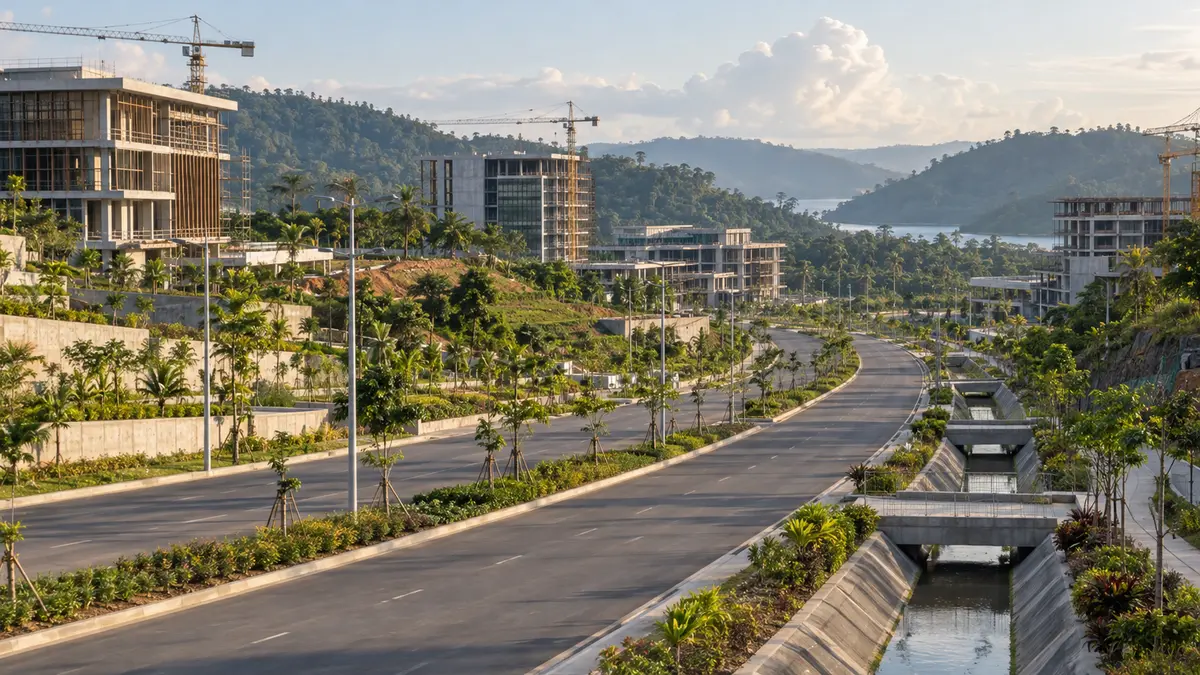
On December 20, 2024, Nusantara investment deputy Agung Wicaksono announced five projects for early-2025 groundbreakings in Indonesia’s future capital. Their combined value approached Rp6.5 trillion: Rp3.9 trillion for housing, Rp1 trillion for a five-star hotel, Rp1.4 trillion for offices, around Rp150 billion for a university and about Rp20 billion for culinary retail. Domestic and foreign investors were involved. The president’s office still had to decide the date for the ninth groundbreaking phase. The authority’s December 19 airport update forecast January completion and a February proposal for full operations.
The investment pipeline
The investment pipeline had been described through several stages during the year. On August 8, acting authority head Basuki Hadimuljono reported 220 investors committed to Nusantara, of whom 45 had already broken ground. The investment acceleration task force was evaluating the feasibility of another sixty investors. Two foreign investors, from China and Japan, were expected to enter the property sector, including housing, hotels and offices. Hadimuljono said the presidentially established task force was intended to accelerate investment in the city, distinguishing the wider pool of commitments from projects with construction ceremonies.
Four days later, President Joko Widodo gave a sectoral account at Nusantara’s first plenary cabinet meeting. On August 12, he put investment received at Rp56.2 trillion, excluding the state budget. Fifty-five investors had conducted groundbreakings: six in education, three in health, ten in retail and logistics, and eight in hotels. The remaining groups comprised two in energy and transport, fourteen in offices and banking, nine in housing and green areas, and three in media and technology. Widodo also identified green and digital economic development as priorities for the city’s governance.
Basic infrastructure
Road access had its own construction schedule. On January 19, the public works ministry targeted July completion for the first phase of the Nusantara toll road. The 13.4-kilometre Karangjoang–KKT Kariangau section was 48% complete; the 7.3-kilometre KKT Kariangau–Simpang Tempadung section stood at 57%; and the 6.7-kilometre section to Balang Island Bridge had reached 67%. Hadimuljono said the network would connect Balikpapan with the government core area. His projected journey shortened from 95 kilometres and two hours fifteen minutes to 57 kilometres and forty-five minutes once the connection was available.
Electricity planning included a staged solar project. In a January 16 statement, Energy Minister Arifin Tasrif described a 50-megawatt plant on one hundred hectares in Sepaku. Ten megawatts were scheduled for commercial operation in February, with forty more planned for midyear. The scheme included a 50-megawatt substation and transmission cable. Tasrif connected it with the objective of obtaining 80% of Nusantara’s energy supply from new and renewable sources by 2045. The report also noted PLN’s installed electric-vehicle charging stations and a separately agreed natural-gas supply scheme for the new capital.
Communications infrastructure was assigned to Telkom Indonesia. On March 14, Communications Minister Budi Arie Setiadi said the company was developing connectivity supported by the SATRIA-1 satellite and a fibre-optic backbone. Its responsibilities also covered a data centre, Internet of Things applications and electronic administration. The ministry’s telecommunications-access agency, BAKTI, was to provide backup if connectivity was disrupted and support the Nusantara Command Center. Setiadi described the arrangements as ready to ensure stable signals as institutions approached relocation.
Water distribution
By August, water supply was being discussed at the level of individual government plots. On August 1, Hadimuljono said drinking water had been channelled to the State Secretariat area, including the Presidential and Garuda palaces. Preparation involved flow tests from the Sepaku intake to a reservoir sixteen kilometres away, then to Coordinating Ministry plots twenty-two kilometres away. He requested further testing by inspection company Sucofindo at each plot around August 10–11.The minister reported readiness for Independence Day events.
Waste management combined infrastructure development with a household programme. On February 19, environment deputy Myrna Asnawati Safitri set a target to recycle or upcycle 60% of Nusantara’s waste, with residual material intended for energy or new products. An integrated processing facility was under construction. Safitri also described the My School has Minimal Waste programme, intended to teach pupils about reducing waste and encourage discussion at home. The report linked the facility with source sorting and the public works ministry’s basic-infrastructure programme for 2022–2024, alongside the authority’s educational approach to managing waste.
Homes and public services
Residential readiness involved furnishing as well as construction. On September 11, Hadimuljono said fourteen towers for civil servants and security personnel were fully furnished and ready to receive residents. The wider programme comprised forty-seven towers. Each unit had three bedrooms and ninety-eight square metres; the twelve-storey towers reserved two floors for shared facilities and ten for housing. The government was adjusting occupancy arrangements after Widodo instructed that married civil servants receive individual accommodation. The ministry was also working with partners on connections to retail, delivery and banking services supporting the residential buildings.
Healthcare preparations began with existing services. On February 24, basic-services director Suwito reported eleven community health centres and two regional public hospitals in Nusantara. Sepaku hospital was being prepared to move from Class D to Class C, while Samboja was being upgraded toward Class B. The authority planned staffing through interns, independent specialists and health-polytechnic personnel. Four additional hospitals were under construction, and three further community centres were planned. Suwito hoped the new hospitals would operate before August 17; the provincial health office was coordinating staff and facilities with surrounding local governments.
Education campuses
University construction joined the education programme in June. On June 4, Widodo launched work on Gunadarma University’s international doctoral campus, described in the report as Nusantara’s first university building. Earlier that day he had also launched construction of Al Azhar Summarecon elementary, junior-high and high-school facilities. The president said the doctoral programme would involve cooperation with overseas universities. The authority’s education roadmap envisaged world-class education by 2045 through a digital, flexible learning approach. Widodo connected the facilities with his objective of improving human resources in East Kalimantan and the wider region.
A separate school project entered construction on September 25. Widodo attended the groundbreaking for the Australian Independent School campus, planned on 7,900 square metres with capacity for 750 pupils from preschool through high school. The proposed facilities included several sports courts, a semi-Olympic swimming pool and an auditorium seating 250. Initial investment was reported at Rp150 billion. The president said the campus was intended to serve Nusantara residents from different backgrounds and support his education objectives.
Hotel and retail development reached different stages at the same September event. On September 13, Widodo opened the Nusantara Swissotel and launched construction of the Nusantara Duty-Free Mall. The five-star hotel had 191 rooms. He credited Agung Sedayu Group with completing it in nine months and described the challenge of creating a busy urban ecosystem with hospitals, schools, hotels and shops. The president expected the mall and road infrastructure to attract more activity. He also discussed civil-servant transfers while emphasizing the city’s need for people, connecting the facilities with that stated urban-development objective.
Environmental facilities
The environmental programme included a completed nursery. On June 4, Widodo inaugurated Mentawir after approximately eighteen months of development. He reported capacity for fifteen million seedlings for forest rehabilitation, with a germplasm centre incorporating a biobank and seed bank. The seedlings were intended for replanting former mining sites and other rehabilitation work around Nusantara. The president listed Kalimantan species including sungkai, shorea, camphor, tengkawang, ironwood and yellow balau, alongside guava intended to provide animal food. He described nursery provision as a necessary part of his government’s programme for planting trees and greening the area.
A government-building milestone concerned the palace’s exterior rather than residential services. On July 22, the public works ministry reported installation of the final, 4,650th ornament section on the Garuda-shaped outer cover of the Presidential Palace. Sculptor Nyoman Nuarta, commissioned to design the work, said the completed ornament weighed 1,398.3 tonnes, stood seventy-seven metres high and spanned more than 177 metres. Brass and corrosion-resistant steel sections had been produced at his Bandung workshop. Installation had begun in September 2023. The ministry described the final exterior section as the palace’s topping-out milestone ahead of Independence Day.
Local participation
Local participation was addressed through vocational training. On July 25, community-empowerment director Conrita Ermanto reported courses for 418 people from North Penajam Paser and Kutai Kartanegara.
- Semarang provided customer-service training
- Medan offered welding, cabinet making, food processing, surveying and computer-document work
- Samarinda covered excavator operation, baking, batik and sewing.
Security training had been conducted for 160 local residents. Ermanto said weaving and carving courses were also being prepared for indigenous communities. The authority and manpower ministry presented the programme as preparation for opportunities associated with Nusantara and the arrival of residents from elsewhere.
Food businesses
Food businesses received a more specific service programme. In a May 8 release, Suwito described ready-to-eat meal safety training organized with the health ministry and provincial, Balikpapan and North Penajam Paser authorities. Participants could obtain certificates for business-permit applications, and compliant canteens were to receive identifying stickers. Health-ministry official Rahpien Yuswani said the environment and food-production processes of businesses operating in Nusantara had been inspected. He described plans to formulate quality standards. The programme combined instruction, certification and inspection, with Suwito attributing its purpose to safe food provision for residents of the new city.
By August, the authority was reporting a wider small-business assistance cohort. In an August 4 account of the previous day’s civil-service festival, social-empowerment deputy Alimudin said 796 local micro, small and medium enterprises had received support. Almost 70% were in food businesses. He said assistance was adjusted to residents’ needs and potential, rather than imposed from above, and focused on skills, knowledge and local economic opportunities. Alimudin also described special training for customary communities. He presented the support as preparation for the transformation associated with Nusantara and for participation in its future market.
Investment conditions
The investment framework also changed during the year. On July 12, ANTARA reported Presidential Regulation No. 75, promulgated the previous day to accelerate Nusantara’s development. The authority would designate pioneer businesses that had expressed interest and signed letters of intent. Participating pioneers using non-budget funding were required to begin projects within five years of the 2023 capital law’s enactment. Asset-management charges could be reduced to zero or paid in instalments. The report described incentives for basic, social and commercial facilities, with land-right arrangements subject to specified criteria and evaluation stages under the regulation.
Tax measures were discussed separately on August 2. Finance Minister Sri Mulyani Indrawati said Regulation No. 28 of 2024 provided income-tax, value-added-tax, luxury-sales-tax and customs facilities for Nusantara. The announced measures included domestic-investor tax holidays, support for office relocation, and deductions related to research, vocational activities and public facilities. Strategic goods and services identified for VAT treatment included new buildings, locally registered electric vehicles, rentals, construction and waste processing. Indrawati described the policy as support for an economic centre; fiscal-policy officials linked it with attracting private investment and limiting pressure on the state budget.
Mobility trials
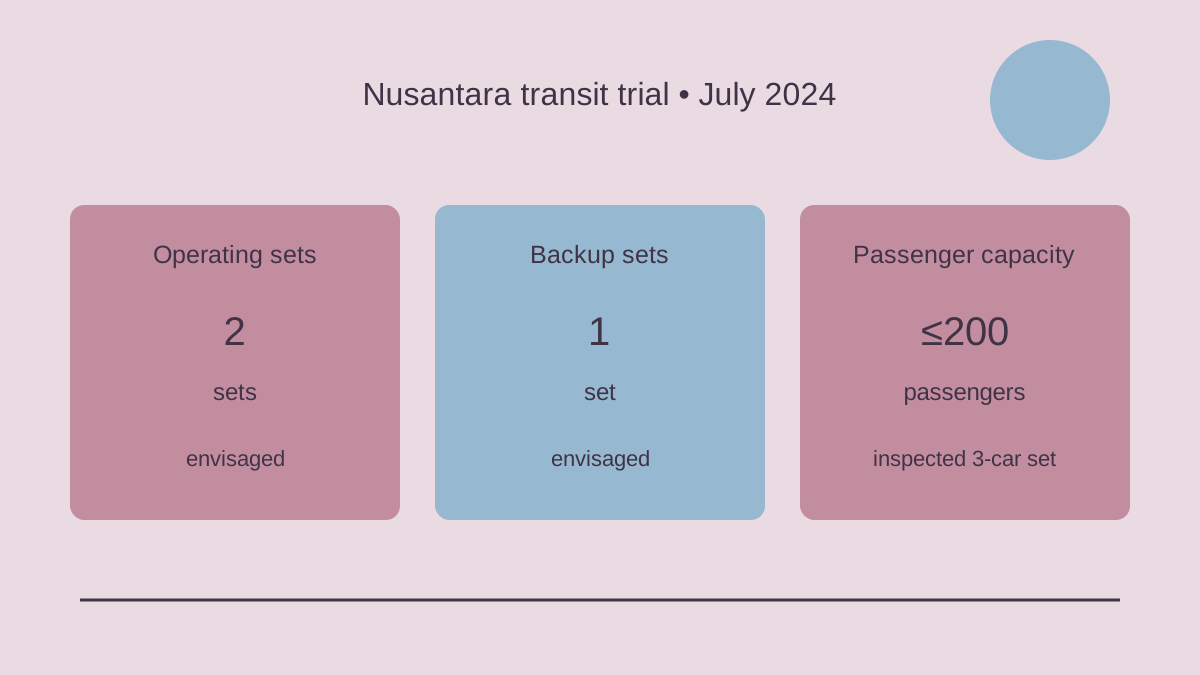
Public-transport planning included an Autonomous Rail Transit trial. On July 31, Transportation Minister Budi Karya Sumadi said three sets were envisaged: two for operation and one as backup. One had arrived, with another expected on August 1. The planned route followed the National, West and East axes, and testing was scheduled for August 5. Sumadi inspected three carriages with capacity for up to two hundred passengers. He hoped domestic businesses would cooperate in purchasing vehicles from China and described a service-purchase arrangement for 2025, under which fiscal capacity would support the proposed service.
The trial’s supporting infrastructure received a presidential instruction in October. ANTARA reported on October 23 that the instruction signed on October 18 called for ministries and institutions to coordinate the Autonomous Rail Transit trial, including its operating concept and safety. It covered depots, equipment rooms, stations, stops and charging facilities, along with electrical, mechanical, signalling, telecommunications and substation infrastructure. Funding was to come from the state budget and other lawful, non-binding sources.
Air mobility
Air-mobility research was another transport initiative. On February 8, the authority reported site surveys at Sepinggan airport in Balikpapan and APT Pranoto airport in Samarinda for a proof of concept. The Korean Aerospace Research Institute and Hyundai participated alongside Indonesian authorities. Digital-ecosystem director Tonny Agus Setiono emphasized assessment, certification and operational-feasibility studies before policy recommendations. The proposed tests included electric-car bookings for first and last miles and autonomous air mobility. Deputy Mohammed Ali Berawi targeted a trial before Independence Day, while Hyundai said it would select a location following assessment and coordination with stakeholders.
Airport conversion
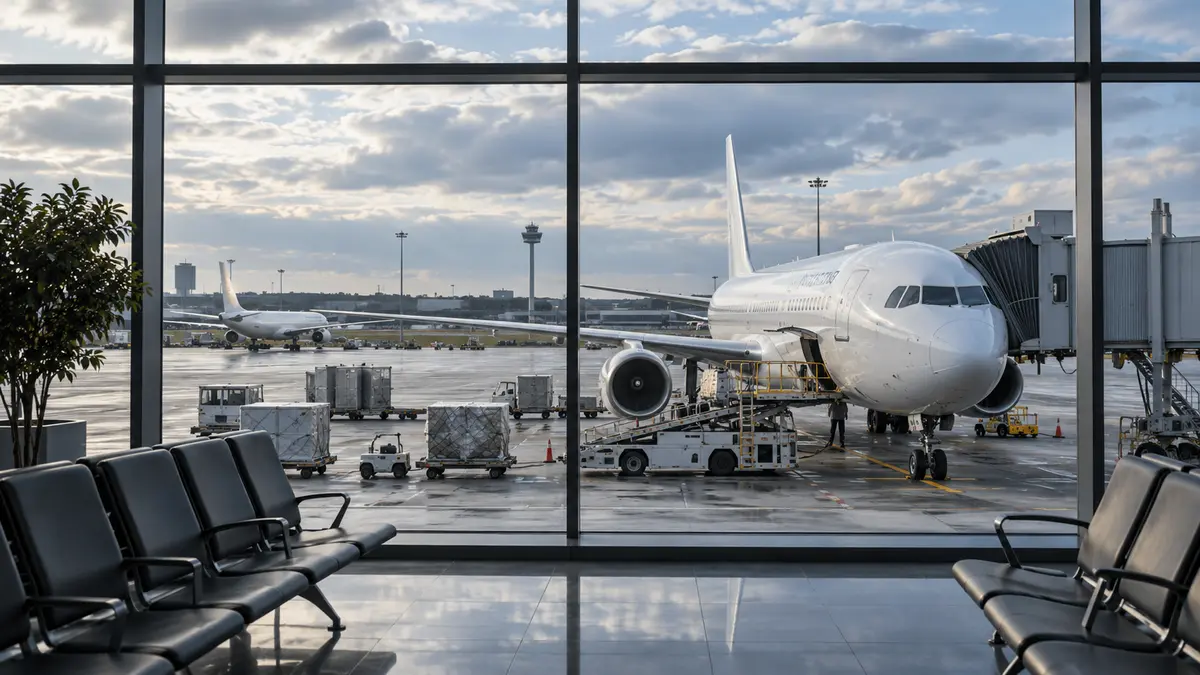
The airport serving Nusantara had a separate change of use proposed in September. On September 24, after his first landing there aboard an RJ-85, Widodo ordered a transition from a government VVIP airport to a commercial facility. He said a new presidential regulation would be signed and discussed potential Hajj and Umrah flights. His initial capacity estimate was two hundred thousand passengers by December, with a long-term goal of seven million annually. Sumadi expected construction, including a three-kilometre runway, to finish by December 31.
Sports facilities
Sports facilities also appeared in the September development agenda. On September 19, football-association chair Erick Thohir announced an intended October 11 opening for the Nusantara training centre. He described a 34.5-hectare site with eight fields, accommodation for 138 people, and physiotherapy, fitness and healthcare facilities. FIFA had provided a US$5.6 million grant through its Forward programme. Thohir also cited Rp127.1 billion in government support for 2024, covering equipment and operation as well as other association programmes. The centre was intended for national men’s and women’s teams of different ages, alongside the association’s training activities.


Leave a comment