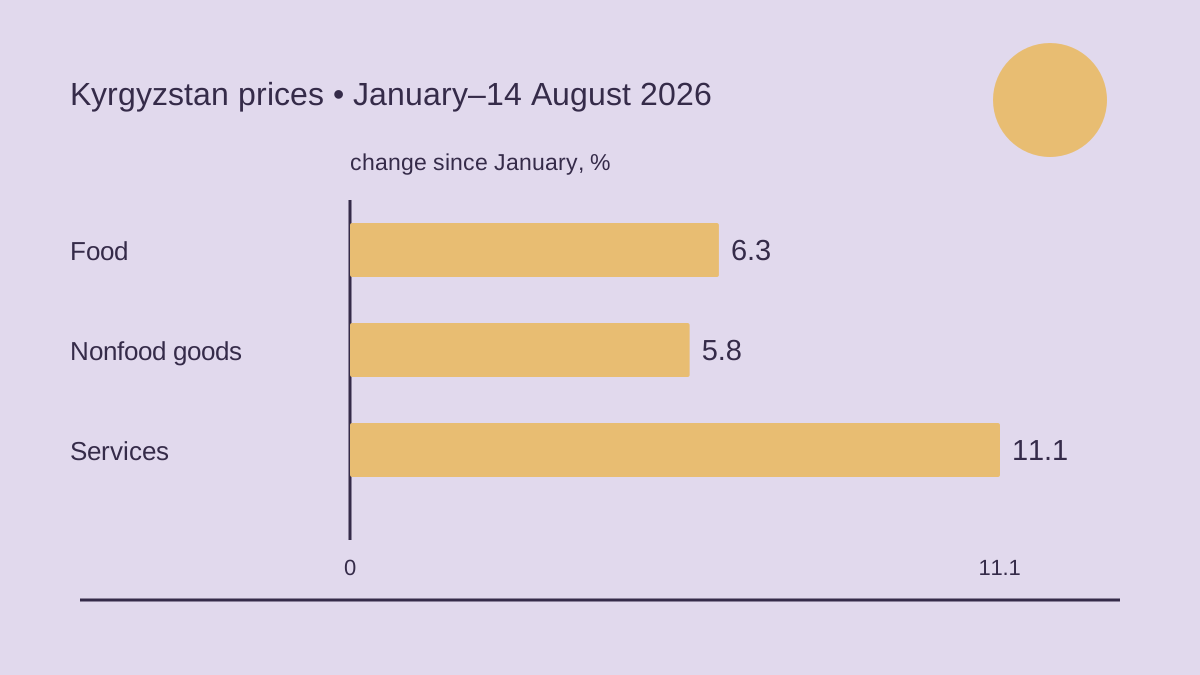
Kyrgyzstan’s National Bank held 12% from August 25, 2026, Interfax reported. August 14 inflation was 7.3% since January and 11.7% annually. Food rose 6.3% since January, nonfood goods 5.8%, services 11.1%. January–July real GDP grew 11.1%. The bank cited imported fuel and food pressures, and domestic service-price factors. It reported short-term rates, including BIR, inside its corridor near the policy rate. Its next meeting was scheduled for October 26.
The 14% hold in 2022
The bank’s July 25, 2022 decision maintained a 14% rate from July 26. Annual inflation stood at 13.6% on July 15, compared with June’s 13.1%. First-half GDP growth was 6.3%, or 3.9% excluding enterprises developing Kumtor. The release also reported that newly accepted som term deposits during February–May grew 30.4%, about five billion som, against the same period in 2021. Separately, the som deposit base in May exceeded its May 2021 level by more than 22%.
On August 29, 2022, the board again retained 14%, with the decision taking effect the following day. Annual inflation reached 15.4% on August 19; the release gave July inflation as 13.8%. The bank highlighted the absence of seasonal summer deflation. GDP had grown 7.7% over the first seven months, or 4.7% excluding Kumtor enterprises. Industry, services and agriculture recorded the strongest output growth. The bank linked recovering domestic demand to lending activity and remittances, and forecast slower inflation in the first half of 2023.
The October 31, 2022 meeting left the rate at 14% from November 1. Annual inflation was 14.9% on October 21, below September’s 15.5%. The bank characterized current price growth as mainly nonmonetary, citing global food and energy markets alongside the economy’s import dependence. January–September real GDP growth reached 7.2%; the release identified a low comparison base as one influence. Industry, agriculture and services showed the largest increases. Looking ahead, the bank said recovering domestic demand, including government spending on wages and social payments, would continue contributing to inflation dynamics.
The first reduction in this sequence came on November 28, 2022: the bank cut the rate by 100 basis points to 13%, effective November 29. Annual inflation stood at 14.5% on November 18, against the October figure of 15.4% cited in that release. The bank said global food, energy and other commodity prices remained high despite successive declines. Its assessment linked domestic demand to government expenditure and remittances. It expected inflation to slow in 2023 and called for coordinated fiscal and monetary policy, alongside measures addressing nonmonetary inflation factors.
A year of decisions at 13%
The January 30, 2023 meeting retained 13% from January 31. The release reported full-year 2022 annual inflation of 14.7%, alongside preliminary real GDP growth of 7%. Preliminary bank loan-portfolio growth was about 12% over 2022. The bank described a substantial increase in excess banking-system liquidity, with tactical monetary decisions being taken in that setting. It expected stabilization in global food and energy markets to help inflation slow in the second half of 2023. Announced increases in administered prices and tariffs remained an additional domestic risk in its outlook.
At the February 27, 2023 meeting, the bank again held 13%, effective February 28. Prices were up 2.8% since January and 15.9% over a year on February 17. The bank attributed the current inflation pattern to seasonal fruit and vegetable increases and continuing secondary effects of earlier inflation factors. It also identified volatile global commodity prices and administered-price increases as risks. January real GDP growth was 4.8%, with industry, services and agriculture recording the greatest output increases. The release described adequate banking-system liquidity in the national currency and relatively stable money and foreign-exchange markets.
The April 24, 2023 decision maintained 13% from April 25. The April 14 inflation reading was 3.2% since the start of the year and 10.5% annually, compared with 14.7% in December 2022. The bank reported slower price growth for some food products and credited earlier monetary measures with contributing to disinflation. January–March real GDP increased 4.6%, with industry and services supplying the largest contribution. Its outlook still identified increases in administered prices and tariffs as domestic inflation risks, while describing global financial-market volatility and geopolitical uncertainty as important external conditions.
The May 29, 2023 decision left the rate at 13% from May 30. On May 19, inflation was 4.2% since January and 11.2% annually. That annual reading was higher than the April snapshot. January–April real GDP growth reached 4.4%, led principally by services. The bank associated domestic demand with rising real wages and consumer lending. It said current monetary conditions preserved the appeal of national-currency deposits and encouraged saving. In its forward assessment, expanding demand and increases in tariffs and excise duties remained inflationary influences, alongside the external price environment.
Food inflation slows while tariffs remain a risk
The July 31, 2023 meeting retained 13% from August 1. Annual inflation stood at 10.3% on July 21. Food inflation had slowed to 6.9% annually from 15.8% in December 2022. First-half GDP growth was 3.9%, with services making the largest contribution. The bank linked declining world food prices to domestic price developments, while saying administered-price increases and expanding demand slowed the reduction in inflation. It described the accumulated effect of earlier monetary measures as moderating potential risks and reiterated a medium-term inflation objective of 5–7%.
On August 28, 2023, the bank retained 13%, effective August 29. The August 18 reading showed annual inflation of 9.4% and a 5.3% price increase since January. The bank identified seasonal cheapening of fruit, vegetables, oils and fats as contributing to lower food inflation. January–July GDP growth was 2.9%, or 4.3% excluding Kumtor enterprises. The bank associated public and private consumption with fiscal policy and growing consumer lending. It also reported an expanding bank funding base and high som liquidity, while describing tariff policy as one influence keeping inflation expectations persistent.
The October 30, 2023 meeting kept the rate at 13% from October 31. Annual inflation reached 9.2% on October 20, while prices had risen 6.7% since January. January–September real GDP growth was 4.2%, or 5.9% excluding Kumtor. The bank said consumer activity in services was the main source of expanding economic activity, with fiscal measures and consumer lending supporting demand. Its assessment described slowing food inflation but continuing influences from administered prices and tariffs on other components. It considered tariff indexation an influence sustaining inflation expectations and maintained its medium-term 5–7% objective.
The November 27, 2023 decision again maintained 13%, effective November 28. Annual inflation was 8% on November 17, a decline of 6.7 percentage points from the start-year figure reported by the bank. Annual food inflation was 3.9%, compared with 15.8% at the beginning of 2023. The bank referred to temporary state regulation of some prices in its account of food disinflation. January–October GDP growth reached 4.5%, or 6.5% excluding Kumtor. It reported adequate bank liquidity in both som and foreign currency, with short-term money-market rates remaining within its interest-rate corridor.
The route to the 2024 cuts
The January 29, 2024 meeting maintained 13% from January 30. Annual inflation was 5.9% on January 19, following 7.3% in December 2023. The bank nevertheless reported double-digit core inflation. Its preliminary 2023 banking figures showed deposits up 27.3% to about 431.3 billion som and the loan portfolio up 26.3% to 257.8 billion som. The release reported 2023 real GDP growth of 6.2%. In explaining the hold, the bank cited core inflation and the external and domestic environment, while keeping a medium-term inflation objective of 5–7%.
The February 26, 2024 decision again held 13%, effective February 27. Annual inflation was 5% on February 16. The bank said food-price growth was slowing faster than nonfood and service prices, and identified public-transport tariff changes and elevated demand among influences on inflation. January real GDP increased 7.4%, with industry, services and construction contributing. The release described fiscal consolidation as restraining price dynamics. It also reported high excess som liquidity and stable interbank and foreign-exchange markets. The bank sought further slowing in nonfood, services and core inflation, which remained above its target.
On April 29, 2024, the bank reduced the rate by 200 basis points to 11%, effective April 30. Annual inflation was 5.2% on April 19, compared with December’s 7.3%. Annual food inflation had slowed to 1.1% from 3.4% in December 2023. January–March real GDP growth reached 8.8%, with services, construction and manufacturing contributing. The bank credited monetary policy conducted since 2022 with stabilizing price dynamics and reducing inflation expectations. It reported short-term rates inside its corridor, but retained a cautious approach to further easing because of external risks and prospective changes in state tariff policy.
The May 27, 2024 meeting delivered another 200-basis-point cut, bringing the rate to 9% from May 28. Annual inflation stood at 4.4% on May 17. January–April real GDP growth was 7.4%; the bank highlighted construction investment and retail and wholesale activity in services. It said short-term money-market rates were declining after the previous rate change, while excess som liquidity remained high. The bank also described intervention to smooth sharp currency movements under the floating exchange-rate regime. Its expectation that year-end inflation would fall within 5–7% formed part of the case for easing.
Liquidity after the reductions
The July 29, 2024 meeting retained 9% from July 30. Annual inflation was 4.2% on July 19: food prices rose 0.6% annually, nonfood goods 7.4% and services 6.8%. First-half real GDP growth reached 8.1%, and the release reported lending growth of 9% over that half-year. Following easing from late April, short-term interbank rates were near the corridor’s lower boundary. The bank said foreign-currency supply had exceeded demand since April, associating that balance with the currency’s appreciation. It still identified global commodity volatility and planned tariff revisions as risks.
The August 26, 2024 decision maintained 9% from August 27. Annual inflation was 3.6% on August 16. The bank described seasonal cheapening of food, particularly vegetables, fruit and dairy products, with monthly deflation. January–July real GDP growth reached 8.7%. Its account linked expanding demand to consumer lending and higher real incomes, and identified lending for consumption, trade, construction and transport. The bank described exchange-rate formation through market supply and demand, with occasional intervention to smooth abrupt changes. Its forecast still placed year-end annual inflation within the 5–7% target range.
The October 28, 2024 meeting held 9%, effective October 29. Annual inflation stood at 4.6% on October 18, below the bank’s medium-term target range. Annual price growth was 2.4% for food, 4.1% for nonfood goods and 8.4% for services. The bank reported recent acceleration in paid-service prices despite slower nonfood inflation. January–September real GDP grew 8.4%, with services and construction contributing strongly. The bank associated demand with lending, remittances and real wages, while reporting short-term interbank borrowing rates inside its corridor. Its year-end forecast continued to put inflation within 5–7%.
The November 25, 2024 decision retained 9% from November 26. Annual inflation was 5.2% on November 15; January–October real GDP grew 9.6%. The bank reported reduced excess liquidity in October–November, with short-term rates near the corridor’s lower boundary. Preliminary ten-month banking figures showed loan portfolios up 22% and deposits up 31.7%. Separately, nine-month dollarization figures were 43.9% for deposits and 19.9% for loans, down 1.8 and 2.1 percentage points respectively since January. The release also reported year-to-date net foreign-currency sales by the bank of USD113 million.
From the 9% hold to renewed tightening
The January 27, 2025 meeting maintained 9% from January 28. Annual inflation was 6.3% in December 2024 and 6.5% on January 17. The release reported 2024 GDP growth of 9%, with services and construction the most active sectors. The bank attributed demand to higher real incomes, remittances and consumer credit. It said excess banking-system liquidity was being actively regulated and described interbank activity as moderate. Its decision preserved the rate set after the spring reductions, while its assessment continued to identify external uncertainty and domestic demand among conditions shaping price dynamics.
The February 24, 2025 decision retained 9% from February 25. On February 14, prices were up 1.5% since January and 6.9% annually. January real GDP growth reached 10.6%. The release also provided banking-system totals for the preceding calendar year: the 2024 loan portfolio grew 32.2% to 340.7 billion som, while deposits increased 37.3% to 592.4 billion som.
At the April 28, 2025 meeting, the bank kept 9%, effective April 29. Inflation was 1.96% since January and 6.9% annually on April 18. January–March real GDP growth stood at 13.1%. The bank’s risk assessment cited planned tariff revisions, strong domestic demand, volatile commodity markets and changes in trade conditions. It expected inflation to be within 5–7% by the end of 2025.
The May 26, 2025 decision again held 9%, effective May 27. Inflation reached 2.9% since January and 7.7% annually on May 16. The bank attributed price developments partly to electricity-tariff revisions and seasonal fruit and vegetable prices. January–April real GDP increased 11.7%. Preliminary banking figures for those four months showed credit growth of 15.6% and deposit growth of 16.1%. The bank reported that interbank activity consisted mainly of swaps, with short-term rates inside its corridor. Its expectation of year-end inflation within 5–7% remained a forecast accompanying these reported economic and banking conditions.
The July increase
The July 28, 2025 meeting raised the rate by 25 basis points to 9.25%, effective July 29. Inflation was 4.6% since January and 8.7% annually on July 18. First-half real GDP growth reached 11.7%. The bank identified seasonal influences, a low comparison base and electricity-tariff adjustments among factors affecting prices. It also cited global commodity volatility and inflation in trading partners. Its account described monetary operations regulating excess liquidity in the national currency. The July decision increased the rate from the level maintained through the first four meetings of 2025.
The August 25, 2025 meeting maintained 9.25% from August 26. On August 15, inflation stood at 5% since January and 9.4% annually. January–July real GDP growth was 11.5%. The bank associated price pressure with external food-price volatility, domestic demand, seasonal factors and electricity tariffs. It described income growth, remittances and consumer lending as support for demand. This hold followed July’s quarter-percentage-point increase.
On October 27, 2025, the bank raised the rate by 75 basis points to 10%, effective October 28. Inflation was 6.2% since January and 8.4% annually on October 17. January–September real GDP grew 10%. The bank described inflation influence as shifting from food toward nonfood goods and services. It cited constraints on external energy supply and higher costs in some services alongside persistent consumer demand. Its explanation for tightening emphasized uncertainty in the external environment, including commodity-price volatility and changes in global trade. It maintained the medium-term objective of inflation within 5–7%.
The interbank benchmark and bank balances
The November 24, 2025 meeting raised the rate by 100 basis points to 11% from November 25. Annual inflation was 8.9% on November 14. The release recorded that BIR had been introduced in September and was near the corridor’s lower boundary amid excess liquidity. Preliminary nine-month figures showed loan portfolios up 35.2% and deposits up 35.7%. Deposit dollarization was 35%, down 7.9 percentage points since January; loan dollarization was 17.8%, down 2.3 points.
The return to 12% in 2026
The January 26, 2026 meeting held 11% from January 27. Annual inflation was 9.4% on January 16, matching the December 2025 figure in the release. The bank reported 2025 real GDP growth of 11.1%, with construction and services driving expansion. It said excess liquidity was being sterilized and BIR was near the corridor’s lower boundary. Its assessment associated investment with increased budget financing, and consumption with real incomes, remittances and consumer credit. The bank maintained relatively tight conditions with a medium-term objective of returning inflation to 5–7%.
On February 23, 2026, the bank raised the rate by 100 basis points to 12%, effective February 24. February 13 inflation was 1.8% since January and 9.6% annually; January real GDP grew 9%. Preliminary 2025 deposits rose 46.2% to 865.9 billion som, while loan portfolios increased 48.8% to 507 billion som. BIR, the Bishkek Interbank Rate, remained near the corridor’s lower boundary. The bank explained tightening through its assessment of fiscal stimulus, the output gap and consumer demand. It described currency intervention as exclusively intended to smooth sharp exchange-rate swings.
The April 27, 2026 meeting held 12%, effective April 28. Inflation was 3.9% since January and 11.3% annually on April 17. January–March real GDP grew 10.1%. The bank associated external inflation pressure with global food and commodity prices, Middle East tensions, trading-partner inflation and logistics costs. It attributed domestic demand to wages and remittances, while identifying services, industry and construction as the principal contributors to economic growth.
- Annual food-price increase: 10.8%.
- Annual nonfood-price increase: 9.2%.
- Annual tobacco and alcohol increase: 8.9%.
- Annual services-price increase: 17.2%.
Sterilization and price pressures
The May 25, 2026 decision maintained 12% from May 26. On May 15, inflation was 4.7% since January and 10.9% annually. January–April real GDP growth reached 12.4%. The bank identified food and services as the main inflation contributors. It cited planned electricity and utility tariff increases, hotel and restaurant costs associated with fiscalization reforms, and strong domestic demand alongside external drivers. It described actively sterilizing excess bank liquidity and maintaining stable foreign-exchange conditions. Its objective remained inflation of 5–7% over the medium term, rather than the current annual reading.
The July 27, 2026 meeting retained 12% from July 28. Inflation was 6.5% since January and 11.3% annually on July 17. First-half real GDP growth reached 11.9%. The bank said it had changed tactical policy steps from May and strengthened regulation of money volumes in the economy. Short-term money-market rates were now near the policy rate, while excess bank liquidity continued to be regulated. It identified global food-price volatility and risks to petroleum supplies through the Strait of Hormuz among external pressures, and hotel and restaurant fiscalization among influences on service prices.



Leave a comment