
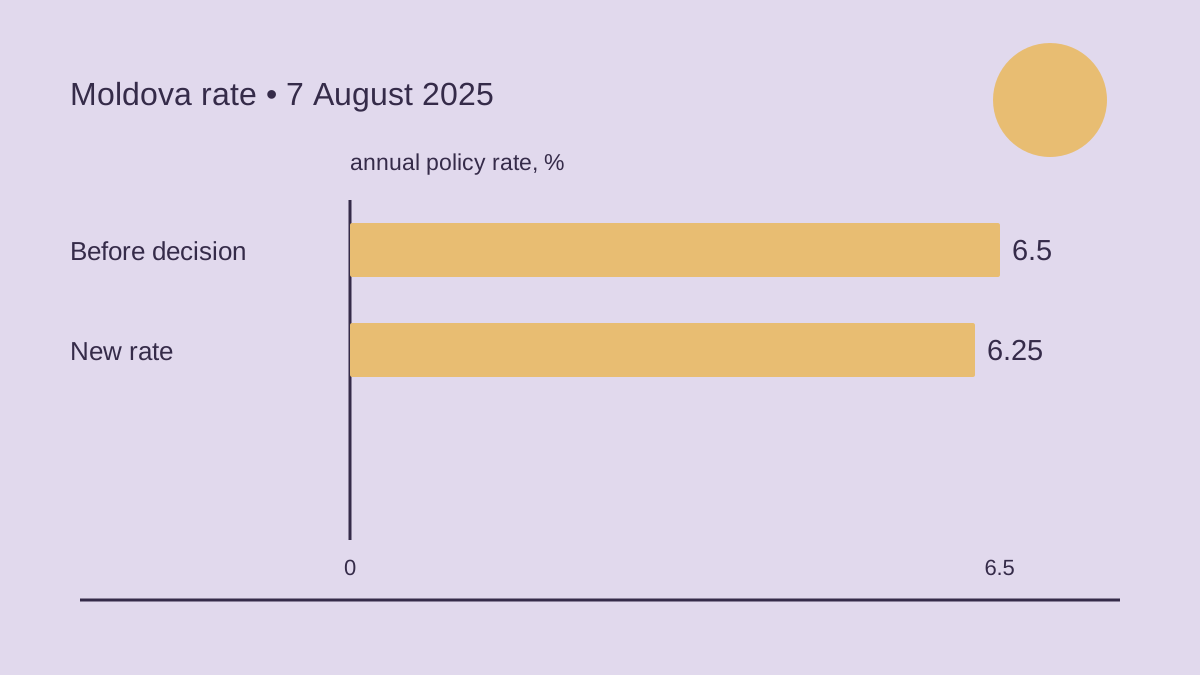
Moldova’s central bank cut its policy rate by 0.25 percentage points to 6.25% on 7 August 2025, declaring its restrictive cycle over, Interfax reported. Yet second-quarter new lei loans averaged 8.99% and deposits 4.91%, both higher than in the preceding quarter. June annual inflation was 8.2%. The bank expected easing to reach borrowers gradually. Its earlier decisions show why the policy rate, bank rates and reserve requirements need to be read together.
2022: tightening and the first reversal
The tightening cycle combined interest rates and reserve requirements from the outset. At an extraordinary meeting on 13 January 2022, the National Bank of Moldova raised its policy rate by two percentage points to 8.50%. It also increased the lei and non-convertible-currency reserve ratio to 28%, applying from 16 February. The bank linked its response to imported food and energy costs, alongside domestic demand. New lei lending had grown 46.7% year on year in December 2021, adding to the pressure it sought to contain.
Another two-point increase on 15 February took the policy rate to 10.50%, with overnight lending and deposit rates of 12.50% and 8.50%. January annual inflation had reached 16.6%. Food contributed 7.6 percentage points to that total, rather than recording a 7.6% price increase. The bank also reported that new lei loans rose 55.3% year on year in January. It therefore described more expensive credit and more attractive saving as instruments for moderating demand, while keeping the convertible-currency reserve ratio at 30%.
On 15 March, the rate rose to 12.50% as February inflation reached 18.5%. The bank described worsening supply-chain conditions and the war’s effects on import costs, remittances and refugee demand. The banking figures already showed a response: February weighted average rates on new lei loans and deposits were 9.22% and 4.97%, up 0.13 and 0.11 percentage points from January. Nevertheless, new lei lending still grew 49.7% year on year. The statement retained a commitment to inject sufficient liquidity if banking conditions required it.
The 5 May decision lifted the policy rate to 15.50% and increased reserve requirements from 16 May to 30% for lei and non-convertible currencies and 33% for convertible currencies. The first-quarter banking data explained why the bank still saw demand pressure. New lei credit volumes were 37.1% above a year earlier, while new deposits fell 8.6%. Weighted average lending and deposit rates were 9.34% and 5.05%. The bank presented the combined measures as a way to favour saving and moderate credit, amid higher tariffs and import costs.
A further increase on 3 June brought the rate to 18.50%. Reserve tightening was staggered: the lei ratio would rise to 32% from 16 June and 34% from 16 July; the convertible-currency ratio would become 36% and then 39%. Annual inflation had accelerated from 22.2% in March to 27.1% in April. The bank identified imported energy and food prices and delayed tariff adjustments as important influences. It also stressed coordination with fiscal policy, rather than attributing control over every supply shock to the interest-rate instrument.
By 4 August, the policy rate reached 21.50%. The bank scheduled further reserve increases, taking the lei ratio to 37% in August and 40% in September, and the convertible-currency ratio to 42% and 45%. June annual inflation stood at 31.8%, while first-quarter real GDP growth had slowed to 1.1%. The bank judged that these measures could complete the tightening cycle if no major unexpected inflationary shocks occurred. That was a conditional assessment: its forecast still anticipated declining activity and substantial uncertainty over energy prices and tariffs.
The 13 September meeting held the rate at 21.50%, allowing earlier restrictions to continue passing through the economy. Annual inflation was still rising, reaching 34.3% in August, even though the bank noted monthly price growth below one percent. The distinction matters: slower monthly increases had not yet brought the annual rate down. The statement reported rising rates on new domestic-currency loans and deposits and weaker demand pressure. It nevertheless retained warnings about energy costs and said easing would depend on sufficiently well-founded projections, rather than a fixed timetable.
The November meeting again retained 21.50%. September annual inflation was 34.0%, and the bank now expected the annual rate to peak in the fourth quarter before declining. Its activity assessment recorded a 0.9% year-on-year contraction in real GDP in the second quarter. Excess banking liquidity stood at 4.3 billion lei in the third quarter, down 0.3 billion from the preceding quarter. Reported increases in interest rates concerned outstanding loan and deposit balances, a different measure from the rates on new business used elsewhere in the cycle.
The first reversal came on 5 December, when the policy rate fell to 20.00%. The lei reserve ratio would decline from 40% to 37% from 16 December and to 34% from 16 January 2023; the convertible-currency ratio stayed at 45%. The bank estimated that the lei reductions would release about 3.2 billion lei of liquidity. October annual inflation had reached 34.6%, but new lending was already weakening: volumes in the first three weeks of November were 16.9% below a year earlier, with a weighted average rate of 14.21%.
2023: cuts reached banks at different speeds
The 7 February 2023 decision reduced the policy rate to 17.00%, as December annual inflation had declined to 30.2%. The bank’s fourth-quarter figures showed how earlier tightening was still affecting finance: weighted average new lei lending and term-deposit rates were 14.14% and 13.23%. New term deposits rose 90.4% year on year, while new loans fell 14.4%. Against that backdrop, the bank described the cut as support for domestic demand. Its forecast placed inflation’s return to the target range in the second quarter of 2024.
A majority vote on 20 March lowered the policy rate to 14.00%. February annual inflation had fallen to 25.9%, but banking rates were moving unevenly. The weighted average rate on new lei deposits dropped to 11.10%, 1.94 percentage points below January, while the lending rate edged up 0.08 points to 14.34%. Thus, the initial easing did not produce simultaneous declines in both measures. The bank also reported a 10.6% year-on-year contraction in fourth-quarter 2022 real GDP, with weaker household consumption and investment accompanying the inflation slowdown.
The next cut, on 11 May, took the rate to 10.00%. April annual inflation was 18.1%, with food prices rising 16.4% and household services 33.2% year on year. For the first quarter, the bank reported a new-loan rate of 14.30%, still slightly above the preceding quarter, alongside a lower deposit rate of 11.48%. Excess liquidity had reached 11.7 billion lei. The updated forecast brought the expected return to the inflation range forward to the fourth quarter of 2023, while identifying weak demand and tariff reductions as disinflationary influences.
On 20 June, the policy rate fell another four percentage points to 6.00%. May banking data now showed lower rates on both sides: new lei loans averaged 13.36%, and new term deposits 8.36%, down 0.27 and 0.19 percentage points from April. New loan volumes rose 9.3% month on month. Annual inflation remained high at 16.3%, although fuel prices were 3.4% below a year earlier. First-quarter real GDP had contracted 2.4%. The bank associated easing with cheaper credit and demand support, while retaining concern over tariffs and agricultural production.
Liquidity and falling inflation
The August meeting retained 6.00%, giving previous cuts time to reach the economy. June annual inflation had fallen to 13.2%, and the bank expected entry into the target range in October. Second-quarter weighted average rates on new lei loans and term deposits were 13.18% and 7.29%; excess liquidity stood at 14.4 billion lei. The statement attributed the rate declines to the cumulative easing begun in December. It still described demand as below potential and warned that weather conditions, energy supply and tariff decisions could alter the projected inflation path.
September brought another hold at 6.00% and a more explicit discussion of the next decision. The bank said a possible November cut would depend on information about winter financial support, utility tariffs, lending and budgets. August annual inflation was 9.7%, slightly above forecast because of fuel prices. New lei lending and deposit rates had declined to 11.33% and 4.52%. Yet second-quarter GDP was 2.2% below a year earlier, and household consumption and fixed investment had contracted. The statement therefore paired further easing possibilities with a call for monetary and fiscal coordination.
The 7 November decision reduced the policy rate to 4.75% and scheduled reserve cuts from 16 December: from 34% to 33% for lei and non-convertible currencies, and from 45% to 43% for convertible currencies. Third-quarter new lei loans had grown 52.8% year on year while new deposits fell 34.6%. Their weighted average rates were 11.38% and 4.61%. September inflation was 8.6%; the bank saw signs of an October return to the target range. It nevertheless retained warnings about energy prices and the statistical treatment of winter compensation.
By the 14 December meeting, November annual inflation was 5.5%, within the target range. The policy rate remained 4.75%, while operational banking figures put November new lei lending at 10.58% and deposits at 4.30%. These rates were respectively 3.62 and 9.31 percentage points below November 2022. The bank reported higher new lending volumes and lower deposits alongside those changes. Its assessment still described weak domestic demand, and the forecast risks included utility compensation and delayed domestic effects of external costs. Reaching the range had therefore not removed the need for continuing monitoring.
2024: rates and reserve requirements
The February 2024 cut took the policy rate to 4.25%, with reserve ratios held at 33% and 43%. December annual inflation had fallen to 4.2%, while the bank reported fourth-quarter new lei lending and deposit rates of 10.50% and 4.23%. Excess liquidity was 9.4 billion lei. Its assessment linked disinflation to earlier restrictions, currency appreciation and lower regional food and energy prices. Third-quarter GDP had grown 2.6% year on year, helped by the harvest, but consumption and investment had declined. The bank therefore continued to describe domestic demand as weak.
A further cut on 21 March reduced the rate to 3.75%. February inflation was 4.3%, within the target range for a fifth consecutive month. New lei deposit and lending rates had fallen to 3.81% and 9.63%, and new lending volumes were 45.3% above February 2023. The bank described continued easing as support for consumption and investment. Its activity assessment remained restrained: fourth-quarter 2023 GDP had grown only 0.2%, while remittances to individuals fell in December and January. The improvement in credit conditions therefore coexisted with weak sources of household demand.
On 7 May, the policy rate reached 3.60%. Reserve reductions would follow in June and July, taking the lei ratio to 31% and then 29%, and the convertible-currency ratio to 41% and 39%. First-quarter new lei lending and deposit rates were 9.66% and 3.91%, while new loan volumes rose 28.7% year on year. Excess liquidity reached 12.3 billion lei. March annual inflation was 3.9%. The bank pointed to disinflationary demand, cheaper international food and lower utility tariffs, while treating the rate and reserve measures as further support for credit conditions.
The June meeting retained 3.60% even though May annual inflation had fallen to 3.3%, below the target range’s lower boundary. The bank linked the inflation decline partly to a gas-tariff reduction effective from 3 May and delayed budget spending. April new lei lending and deposit rates were 9.19% and 3.23%. First-quarter real GDP had grown 1.9% year on year, with higher household consumption and fixed investment, but lower public consumption. The bank retained an assessment of weak demand and warned that the tariff change could alter the timing of inflation relative to forecast.
By the August meeting, reserve ratios had reached 29% and 39%, while the policy rate stayed at 3.60%. June inflation was 3.8%, back inside the target range. Second-quarter weighted average new lei loan and deposit rates were 9.08% and 3.24%, and new credit volumes rose 51.4% year on year. The bank forecast that cumulative rate and reserve easing would increase banking liquidity by year-end, supporting household and business lending and budget financing. It nevertheless identified the dry summer’s possible effect on food prices as a risk to the subsequent inflation path.
The September hold came with August annual inflation at 5.1%, close to the central target but rising from the preceding month. New lei loans averaged 8.68%, down 0.14 percentage points from July, while deposit rates rose 0.19 points to 3.18%. The bank also reported second-quarter GDP growth of 2.4% year on year, with household consumption up 3.7% and fixed investment 6.9%. Its forecast discussion retained commodity-price and harvest uncertainties. Even within the inflation range, the monthly banking figures therefore showed that lending and deposit rates could move in different directions.
Reserve cuts at an unchanged rate
The 5 November meeting kept the policy rate unchanged but cut reserve requirements from 16 November to 27% for lei and non-convertible currencies and 36% for convertible currencies. The bank explicitly connected this instrument to lower borrowing costs and additional liquidity. Third-quarter new lei loan and deposit rates were 8.63% and 3.12%; new credit volumes rose 43.3% year on year. September inflation was 5.2%. The statement still forecast inflation within the range, while recording dry-weather pressure on food prices and uncertainty over agricultural production and regulated tariffs.
December extended reserve easing over two application periods. The lei ratio would become 25% from 16 December and 22% from 16 January 2025; the convertible-currency ratio would become 34% and 31%. The policy rate remained 3.60%. October inflation was 5.3%, and the bank warned that recent tariff increases could lift inflation above forecast over the next three to four months. Weekly data put the new lei lending rate at 8.24% in the third week of November. The statement therefore combined further liquidity support with an emerging warning about near-term price pressure.
2025: tariff shocks and renewed restraint
The new year interrupted the easing sequence. At an unscheduled meeting on 10 January, the bank raised the rate to 5.60%, citing December and January increases in gas, heating and electricity tariffs. It sought to contain second-round effects and anchor expectations, rather than reverse the tariff adjustments themselves. The statement put December annual inflation at approximately 7%. It also reported third-quarter 2024 GDP contraction of 1.9% year on year. In the third week of December, new lei lending averaged 8.03%, while term deposits averaged 3.39%, showing the starting point before renewed tightening.
The 5 February meeting added 0.9 percentage points, taking the rate to 6.50%. The bank again emphasised second-round tariff effects and said its forthcoming forecast would incorporate the European Union’s announced energy-support package. Fourth-quarter 2024 new lei loan and deposit rates had been 8.26% and 3.16%, down 2.24 and 1.07 percentage points from a year earlier. New lending volumes had grown 48.8% year on year, across household and business uses. Those figures described the previous easing phase; the bank was now adjusting policy to a different inflation outlook.
March kept the policy rate at 6.50% and the reserve ratios at 22% and 31%. February annual inflation had eased to 8.6%, still above the target range. Weekly banking figures showed a new lei lending rate of 8.83% and a term-deposit rate of 4.59% in the first week of March. The bank noted continuing transmission of earlier decisions alongside money-market influences. Its activity assessment recorded fourth-quarter GDP contraction of 1.3% and preliminary full-year 2024 growth of only 0.1%. Keeping rates steady therefore occurred alongside weak activity and inflation above the desired range.
The May hold followed March annual inflation of 8.8%. The bank reported first-quarter weighted average new lei loan and deposit rates of 8.47% and 4.14%, respectively 0.21 and 0.98 percentage points above the final quarter of 2024. It linked those increases to the restrictive measures and money- and foreign-exchange-market conditions, and described a slight moderation of lending. Meanwhile, January–February exports were 14.8% below a year earlier and imports 16.0% higher. The bank connected part of the trade imbalance to drought-affected agricultural exports and increased electricity imports.
The June meeting again held 6.50%, but said an end to the restrictive cycle had become a reasonable possibility. May annual inflation was 7.9%. First-quarter GDP had contracted 1.2% year on year, despite higher household consumption and fixed investment. In the first week of June, new lei lending averaged 9.17% and term deposits 4.14%. The bank’s statement therefore left a mixed picture: inflation was moderating, activity remained subdued and borrowing costs were still adjusting to the earlier increases. The prospective reversal depended on updated conditions rather than an automatic response to one inflation reading.
- 16 February 2022: lei reserve ratio becomes 28%.
- 16 July 2024: lei reserve ratio becomes 29%.
- 16 January 2025: lei reserve ratio becomes 22%.






Leave a comment