
Reuters reports that the Philippines cut its policy rate to 4.25% on February 19, 2026, after growth weakened. The decision opens a question running through the earlier published assessments: how much support can cheaper money provide when inflation risks, credit transmission and confidence pull in different directions?
Recovery support and the turn to tightening
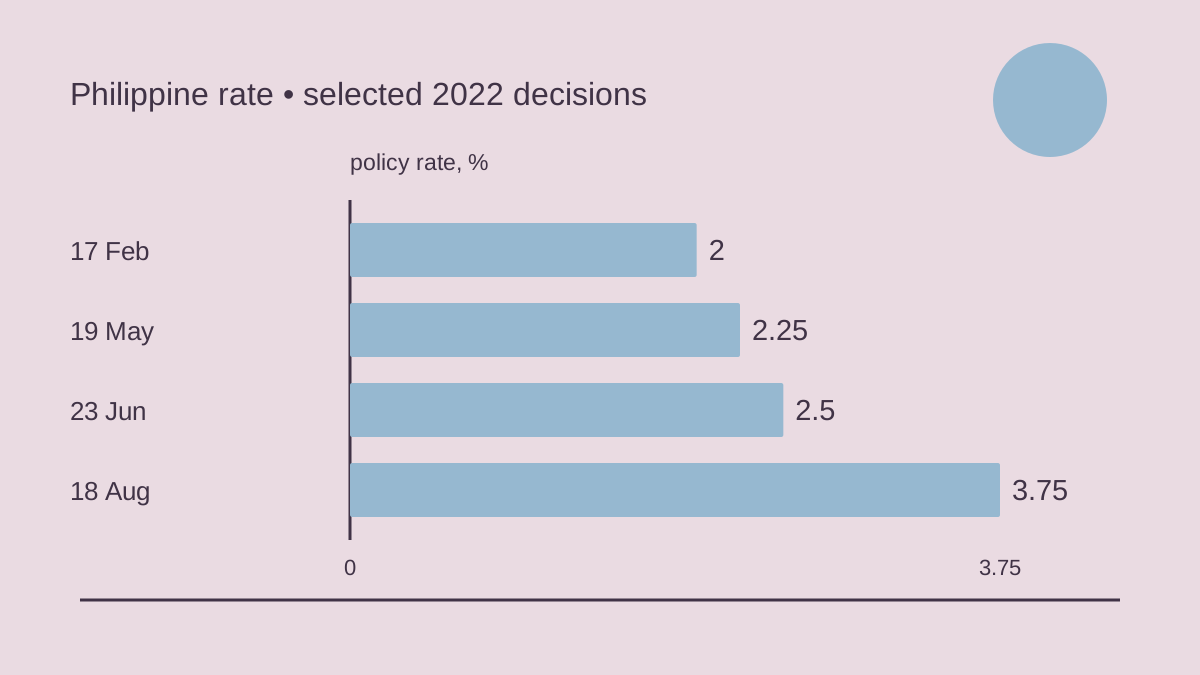
The February 17, 2022 assessment began from a recovery still needing support. The central bank held its reverse repurchase rate at 2%, with overnight deposit and lending rates at 1.5% and 2.5%. January inflation had eased to 3%, while the baseline forecasts put annual inflation at 3.7% in 2022 and 3.3% in 2023. Food shortages and oil volatility remained concerns, but manageable projected prices and uncertainty over growth justified accommodation. Bank lending was recovering as restrictions eased; prudential relief was intended to sustain access to finance for households and vulnerable sectors.
By March 24, the price outlook had deteriorated without producing an immediate rate increase. The board again held the main rate at 2%, although its baseline inflation forecast rose to 4.3% for 2022 and 3.6% for 2023. Higher commodity assumptions and peso depreciation reflected the disruption following Russia’s invasion. February headline inflation remained at 3%, helped by improving food supply, but energy costs were spreading into transport and utilities. The bank sought to preserve recovery momentum while retaining readiness to respond if broader pressures threatened to unsettle inflation expectations.
The May 19 decision linked a first rate increase with withdrawal of exceptional pandemic measures. The main rate rose by 25 basis points to 2.25%. The board also announced the winding down of provisional government advances and conversion of its government-securities purchasing window into a regular liquidity facility. April headline inflation had reached 4.9%, and the baseline forecast for 2023 moved to 3.9%, near the target range’s upper edge. Higher expectations and regional wage increases signalled second-round effects. Recovery therefore gave the bank room to normalize support while acting against more persistent inflation.
A further quarter-point increase on June 23 took the rate to 2.5%. May inflation had climbed to 5.4%, while baseline forecasts now showed 5% for 2022 and 4.2% for 2023, both above the 2–4% target band. The approved jeepney fare increase, higher commodity assumptions and peso depreciation contributed to the revision. The board identified a combination of external price pressures and limited domestic spare capacity that could intensify second-round effects. It nevertheless described the adjustment as gradual and data-guided, preserving flexibility over the scale and timing of subsequent monetary action.
On August 18, the board raised the rate by 50 basis points to 3.75%, citing broader price pressure rather than a single commodity shock. July headline inflation was 6.4%, core measures were increasing, and more items in the consumer basket exceeded the inflation target. The baseline forecast for 2022 rose to 5.4%, even as projections for the following two years declined. Firm demand, improved employment and adequate credit gave scope to act. Lending net of central-bank repurchase placements had expanded by 12% in June, indicating continuing credit recovery despite recent tightening.
Broadening pressures and currency risk
September’s decision showed why a small headline improvement was insufficient. August headline inflation edged down to 6.3%, but core inflation rose to 4.6% from 3.9% in July. The board increased the main rate by another 50 basis points to 4.25% on September 22. Peso depreciation and approved nationwide fare changes lifted the near-term forecast, while wage and transport adjustments showed how earlier shocks could become embedded. Demand and credit remained sufficiently firm to accommodate tightening. The accompanying assessment continued to urge food-supply interventions, recognizing that monetary restraint needed support from measures addressing persistent supply constraints.
Persistent inflation and the first policy pause
The November 17 increase was larger: 75 basis points, bringing the main rate to 5%. October headline inflation had reached 7.7%, with core inflation at 5.9%. Economists’ expectations for 2022 and 2023 exceeded the target band’s upper edge, increasing the risk that temporary shocks would acquire persistence. Strong third-quarter growth of 7.6%, supported by household spending and exports, gave the board confidence that demand could absorb a sizeable adjustment. The bank also sought protection against exchange-rate fluctuations that could further entrench price pressure, while government supply measures remained part of its assessment.
On December 15, another 50-basis-point rise took the rate to 5.5%. November headline inflation was 8%, and core inflation had climbed to 6.5%. The board’s forecast anticipated a December peak and a return to the target band during the third quarter of 2023; those were expectations, not established outcomes. Higher food inflation and approved water-rate adjustments raised the 2023 forecast to 4.5%. Lower oil assumptions, peso appreciation and weaker projected growth reduced the 2024 forecast to 2.8%. Monetary tightening continued alongside calls for measures to alleviate shortages and improve farm productivity.
The February 16, 2023 assessment brought a further 50-basis-point increase to 6%. January headline inflation had accelerated to 8.7%, and core inflation reached 7.4%. Higher rent, utility and food prices, together with stronger growth, lifted the baseline forecast to 6.1% for 2023. The board saw both persistent supply constraints and emerging demand pressure. It prioritized anchoring expectations and limiting additional second-round effects, judging that the economy could retain momentum under restrictive conditions. Continued tightening also offered a buffer against spillovers as major central banks, particularly in the United States, raised rates.
A smaller increase on March 23 took the rate to 6.25%, without signalling that the inflation problem had ended. February headline inflation eased marginally to 8.6%, but core inflation rose to 7.8%. The board explicitly warned that the headline decline did not yet establish broad disinflation. It sought positive real interest rates to temper second-round effects and kept expectations under close scrutiny. The assessment also considered financial-sector distress in the United States, while describing domestic banks as sound and stable. That distinction allowed a measured rate increase without treating overseas instability as a domestic banking crisis.
The May 18 pause held the rate at 6.25% while preserving a restrictive stance. April headline inflation had slowed to 6.6%, but core inflation was still 7.9%. The baseline forecasts fell to 5.5% for 2023 and 2.8% for 2024. Although first-quarter growth remained robust at 6.4%, demand indicators suggested moderation as earlier increases worked through the economy. The board considered a pause useful for assessing that response. Food constraints, weather risks and possible fare and wage adjustments nevertheless required vigilance, so the decision left readiness to respond to renewed inflation threats intact.
The June 22 hold kept the rate at 6.25% as both headline and core inflation eased further. May readings were 6.1% and 7.7%, respectively. The board’s baseline projections suggested a gradual return to the target, with inflation averaging 5.4% in 2023, 2.9% in 2024 and 3.2% in 2025. Slower lending and tighter global conditions strengthened the case for monitoring possible financial imbalances. The pause therefore served two purposes: observing the response of prices and demand to accumulated tightening, and maintaining vigilance against food shortages, weather effects and further changes in fares and wages.
Supply shocks prolong the restrictive stance
The August 17 assessment gave greater weight to the weakening recovery while holding the rate at 6.25%. Second-quarter growth had slowed to 4.3%; household consumption decelerated, investment growth was nil and government spending contracted. July headline inflation fell to 4.7%, with core inflation at 6.7%. Yet forecasts rose because of higher oil prices, wage adjustments and peso depreciation. The board expected pent-up demand to wane and previous tightening to exert its full effect. Programmed fiscal spending could support momentum, but persistent supply risks prevented slower activity from becoming an automatic argument for a rate cut.
By September 21, the indicators were moving in different directions. August headline inflation rose to 5.3%, while core inflation declined to 6.1%. The board maintained the 6.25% rate and still projected a fourth-quarter return to the target band, explicitly conditional on no further supply shocks. Food and transport prices drove the headline rebound; oil costs and peso depreciation raised forecasts. Previous rate increases were weighing on credit, with lending net of central-bank repurchase placements growing by 7.7% in July. The hold retained a readiness to resume tightening if new pressures threatened expectations or generated additional second-round effects.
The October 26 increase interrupted the pause, lifting the rate by 25 basis points to 6.5%. September headline inflation had accelerated to 6.1%, even though core inflation eased to 5.9%. The board judged urgent action necessary to stop supply pressures from generating further second-round effects and dislodging expectations. Its risk-adjusted forecast for 2024 was 4.7%, above the target band; the preceding September baseline was 3.5%, a different forecast measure. Fare increases, wages and electricity risks featured prominently. The bank nevertheless continued watching waning demand and the transmission of earlier tightening into credit and activity.
The November 16 hold left the rate at 6.5%, with the bank seeking evidence of sustained disinflation before relaxing restraint. October headline inflation fell to 4.9%, and core inflation eased to 5.3%. The risk-adjusted forecast for 2024 declined to 4.4%, remaining above the target band. Better rice supply during the harvest improved the immediate picture, but transport charges, electricity, wages and El Niño still threatened the outlook. Third-quarter growth rebounded to 5.9%, supporting the view that medium-term prospects remained intact. The board continued monitoring the impact of higher rates as they worked through the economy.
December’s assessment maintained the same restrictive rate despite another improvement in prices. November headline inflation fell to 4.1%, with core inflation at 4.7%. Lower observed inflation, declining global oil prices and peso appreciation reduced the risk-adjusted forecast for 2024 to 4.2%; it still exceeded the target band’s upper edge. The board held the rate at 6.5% on December 14 until expectations became firmly anchored and inflation returned to target. Improving real wages and easier price pressure supported growth prospects, while earlier policy adjustments and weather conditions continued to weigh on the outlook for domestic output.
The published February 2024 assessment showed that lower aggregate inflation could coexist with substantial pressure in a key staple. January headline inflation had fallen to 2.8%, and core inflation to 3.8%, but rice inflation reached 22.6%. The board retained the 6.5% rate, weighing improved conditions against transport, electricity, food and weather risks. Its risk-adjusted projections stood at 3.9% for 2024 and 3.5% for 2025. Bank lending was still growing at a single-digit pace, which the assessment linked to tight monetary policy. Food-supply measures therefore remained important alongside the ongoing transmission of interest-rate restraint.
On April 8, the board again held the rate at 6.5%. March headline inflation rose to 3.7%, led by food, while core inflation declined to 3.4%, consistent with easing demand pressure. The risk-adjusted forecasts were 4% for 2024 and 3.5% for 2025. This combination supported patience: projected inflation remained within the band, yet supply risks still leaned upward. The bank expected positive real rates to slow activity in the second half of the year. Lending continued expanding at single-digit rates, and non-monetary measures addressing food supply were considered crucial to temper further price impulses.
The May 16 hold at 6.5% followed first-quarter growth of 5.7%, with domestic demand and export orders supporting manufacturing and services. April headline inflation increased slightly to 3.8%, while rice inflation remained elevated despite a slower rate of increase. The board wanted inflation firmly inside the target range before changing its stance. Risk-adjusted forecasts of 3.8% for 2024 and 3.7% for 2025 coexisted with concerns about food constraints, electricity costs, transport and toll charges. Loan growth was gaining momentum, but the assessment still expected tighter financial conditions to moderate activity later in the year.
Rice policy changes the outlook
Rice policy changed the June 27 assessment even as the rate remained at 6.5%. Reduced import tariffs shifted the balance of inflation risks downward, helping lower the risk-adjusted forecasts to 3.1% for both 2024 and 2025. Food items other than rice, transport and electricity still carried upward risks. The board said sustained improvement could permit a less restrictive stance, while external uncertainty demanded caution. Lending was gathering momentum. The lower electricity bill also reflected staggered collection of generation costs, illustrating why a monthly price improvement needed interpretation rather than an assumption of permanent relief.
Rate cuts, confidence and incomplete transmission
By October 16, easing was under way, and the board cut the rate by 25 basis points to 6%. September headline inflation had fallen to 1.9%, with core inflation at 2.4%. Moderating supply pressure, base effects, rice imports and lower fuel prices improved the picture. Risk-adjusted forecasts remained within the target band, despite possible electricity and wage increases. The assessment expected the easing cycle begun in August and the announced reserve-requirement reduction to support activity. Lending net of central-bank repurchase placements expanded by 10.7% in August, reflecting sustained demand for finance from households and businesses.
The April 10, 2025 cut brought the main rate down by 25 basis points to 5.5%, against a more manageable inflation outlook and greater growth risks. March headline inflation was 1.8%, with core inflation at 2.2%. Lower food and global oil prices reduced baseline projections, while a more difficult external environment threatened activity. The board described monetary settings as still relatively tight and committed to deciding further easing meeting by meeting. Low inflation, improving real wages and labor conditions could support demand, but the assessment avoided turning that potential support into a predetermined sequence of rate reductions.
The October 9 reduction to 4.75% showed the importance of confidence alongside prices. The bank forecast inflation at 1.7% in 2025 and saw softer growth prospects as business sentiment weakened. Governance concerns could delay infrastructure spending, while global uncertainty could restrain investment. Broader financial conditions had eased and lending rates, especially for consumer loans, had declined, but transmission of earlier cuts remained incomplete. Credit demand was considered stable and lending standards steady. Together, those observations suggested both room for monetary support and reasons why lower policy rates alone could not guarantee a stronger near-term demand response.
- Assess delayed tightening before further adjustment.
- Watch food supply alongside aggregate inflation.
- Track transmission alongside confidence.






Leave a comment