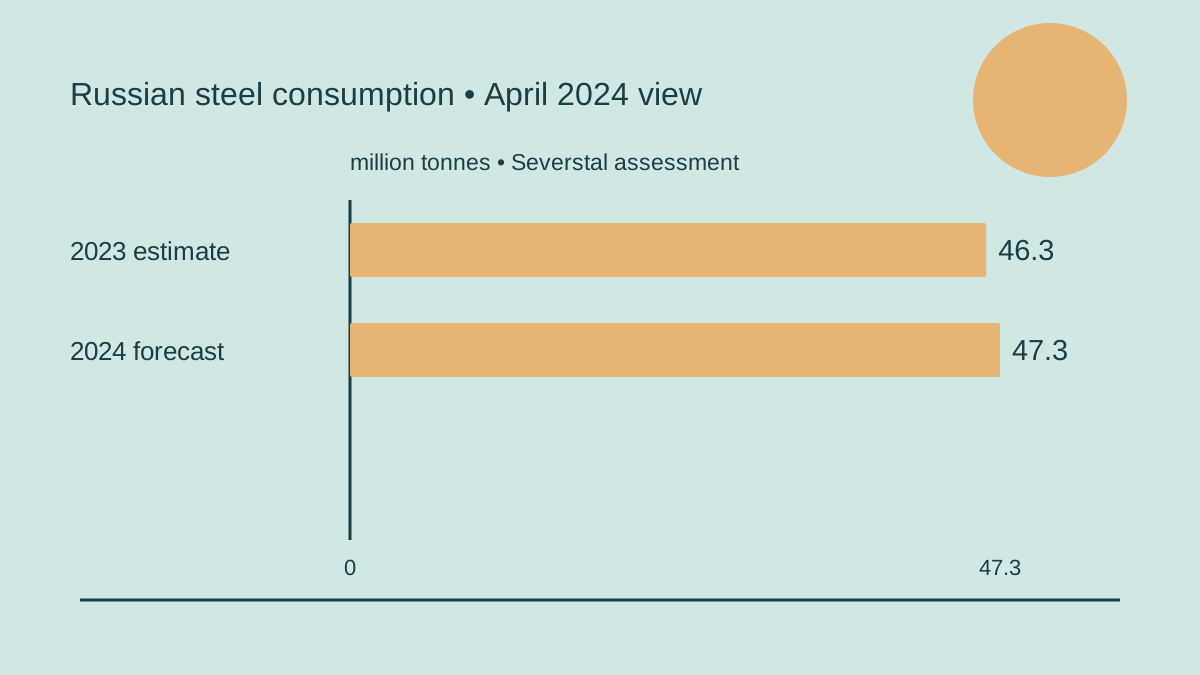
Severstal retained its forecast for steel consumption in Russia to increase 1–2% in 2024, to 47.3 million tonnes, Interfax reported on 17 April. The company had first presented that outlook in December. It estimated 2023 consumption at 46.3 million tonnes, up 7%.
- The April statement retained an annual expectation; it did not report a completed 2024 increase or a new forecast revision.
Severstal’s preceding operating year
In its 2 February 2024 report, Interfax recorded Severstal’s 2023 steel production at 11.3 million tonnes, up 5%, while steel-product sales fell 2% to 10.733 million tonnes. High-value-added product sales increased 11% to 5.266 million tonnes. Revenue rose 7% to RUB 728.3 billion and EBITDA increased 22% to RUB 262.2 billion, giving a 36% margin. These figures concern one company’s production, sales and finances. They provide historical operating context for its market assessment, rather than measuring national steel consumption or validating the company’s forecast for the following year.
Production is a different measure
The World Steel Association’s release dated 25 January 2024 estimated Russian crude-steel production in 2023 at 75.8 million tonnes, up 5.6%. Its December estimate was six million tonnes, up 4.3% year on year. Across the 71 countries reporting December data, production totalled 135.7 million tonnes, down 5.3%. Separately, the association put full-year global production at 1,888.2 million tonnes. The monthly reporting-country total and the annual global total cover different periods and populations. Crude-steel output is also distinct from the consumption measure used in Severstal’s April forecast.
An earlier worldwide demand outlook
On 9 April 2024, the association forecast global steel demand of 1,793 million tonnes in 2024, up 1.7%, followed by 1,815 million tonnes in 2025, up 1.2%. It described pressure on housing from high financing costs and monetary tightening, alongside difficult conditions for manufacturing. Public infrastructure investment and factory construction provided stronger areas of demand. It expected the automotive recovery seen in 2023 to weaken in 2024. These were the association’s expectations, carrying risks from persistent inflation and geopolitical developments. They were neither completed outcomes nor a substitute for Severstal’s separate Russian market estimate.





Leave a comment