
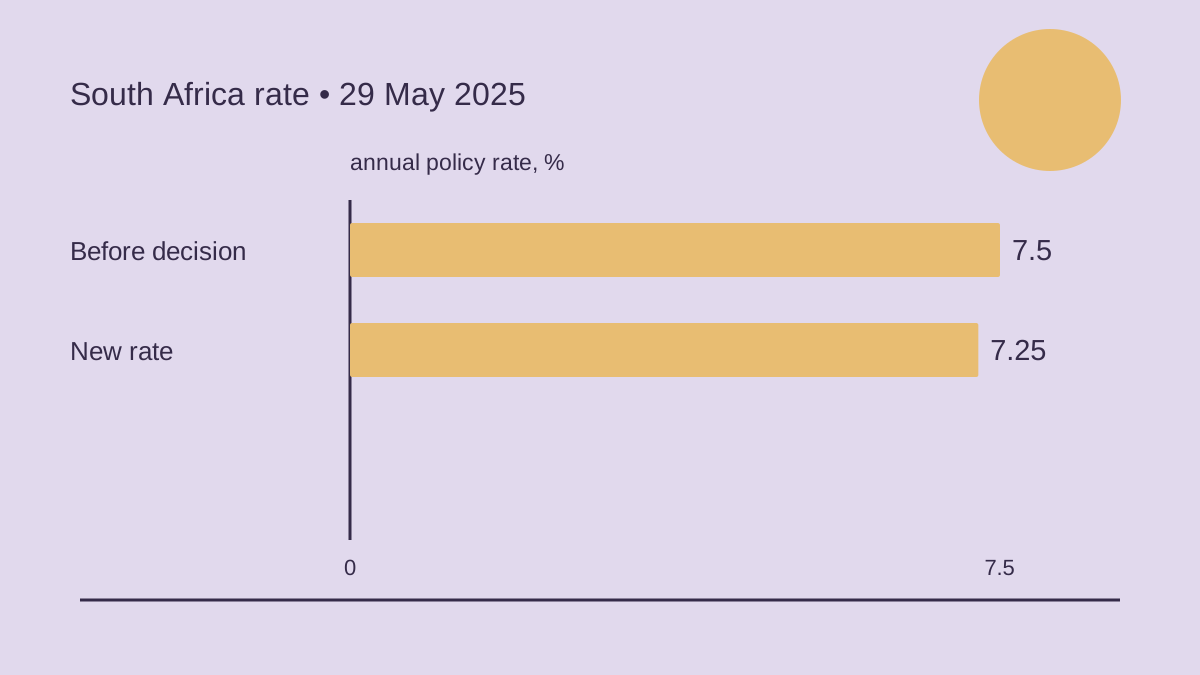
South Africa’s Reserve Bank cut its rate by 25 basis points to 7.25% on May 29, 2025, Reuters reported. Deputy governor Rashad Cassim called rates broadly neutral rather than restrictive, acknowledging measurement imperfections and tariff uncertainty. He rejected a predetermined cycle. Research head Chris Loewald linked stronger growth to faster reforms and robust private investment. The bank expected energy, transport, water and work-visa reforms to bear fruit. It lowered its 2025 growth forecast from 1.7% to 1.2%. Decade-average annual growth was below 1%.
Recovery begins with rates at 3.5%
On September 17, 2020, the Reserve Bank held its rate at 3.5%. Three committee members supported holding; two preferred another quarter-point cut. Its annual GDP forecast was a contraction of 8.2%, followed by growth of 3.9% in 2021 and 2.6% in 2022. The bank reported improving activity after lockdown restrictions eased, alongside sharply weaker investment. It expected inflation to average 3.3% in 2020. It also described a steep government-bond yield curve, linking financing risks to higher public borrowing needs despite domestic investors’ increased purchases of sovereign bonds.
The November 19 decision again kept the rate at 3.5%, with the same three-to-two division. The bank revised its forecast for the annual contraction to 8.0% and projected growth of 3.5% in 2021. High commodity export prices and generally low oil prices supported the terms of trade, according to its statement. Nevertheless, falling public and private investment weakened recovery prospects. The bank put its inflation forecasts at 3.2% for 2020 and 3.9% for 2021, while identifying electricity tariffs and other administered prices as concerns despite the absence of evident demand pressures.
Vaccination prospects and weak investment
On January 21, 2021, the committee maintained 3.5%; three members favoured holding and two a quarter-point reduction. Inflation had averaged 3.3% in 2020, its lowest annual rate since 2004. The bank forecast 4.0% inflation and 3.6% GDP growth for 2021. It expected vaccine distribution to support global recovery, but warned that uneven access could slow it. For South Africa, energy constraints, weak investment and uncertainty about vaccine rollout were downside growth risks. Stronger exports and favourable commodity prices supported activity, although the bank expected a slow return to pre-pandemic output.
By March 25, the bank had lifted its forecast for 2021 growth to 3.8%, but the committee unanimously retained the 3.5% rate. Its statement identified substantial electricity interruptions and weaker consumption after December as impediments to recovery. Higher oil prices increased the import bill, offsetting some gains from favourable export prices. The bank forecast headline inflation of 4.3% in 2021, with petrol inflation at 12.7%. It judged overall inflation risks balanced: rand appreciation moderated price pressure, while electricity tariffs remained a risk. Public and private investment weakness continued to constrain its growth outlook.
The May 20 meeting also unanimously held 3.5%. Stronger sectoral performance and better terms of trade prompted the bank to raise its 2021 growth forecast to 4.2%. Commodity prices had reached new highs, supporting income despite dearer oil. The statement expected household spending to benefit from relaxed restrictions and low interest rates, while investment remained constrained. Its inflation forecast fell slightly to 4.2% for 2021; core inflation was projected at 3.0%. The bank nevertheless assessed inflation risks as tilted upward, citing producer prices, possible currency weakness, wage demands and administered prices.
Unrest offsets stronger activity
The July 22 statement combined stronger early activity with a new domestic shock. The bank judged that recent unrest had offset the better first-quarter performance, leaving its annual growth forecast at 4.2%. It warned of lasting damage to investor confidence and job creation. The committee unanimously retained 3.5%, describing policy as highly accommodative. Headline inflation was forecast at 4.3% in 2021, while core inflation was revised down to 2.9%. Disruptions to transport networks and rising producer prices increased short-term inflation risks, according to the bank; household income and asset prices still supported spending.
On September 23, the committee unanimously held 3.5% again. The bank raised its 2021 growth forecast to 5.3%, reflecting stronger activity, but lowered its 2022 projection to 1.7%. Its statement also incorporated Statistics South Africa’s revisions to GDP levels and warned of persistent employment weakness after the pandemic and unrest. High export prices were expected to fade, and energy limitations continued to constrain investment. Headline inflation was projected at 4.4% in 2021. With surveyed expectations largely unchanged, the bank still expected inflation near the target midpoint over its forecast horizon despite upside risks.
The first increase in the recovery
On November 18, the committee increased the rate by 25 basis points to 3.75%, effective the following day. Three members supported the increase and two preferred holding. The bank lowered its 2021 growth forecast to 5.2%, citing the effects of July’s unrest and other disruptions. Its inflation projection for 2022 rose to 4.3%, and risks were assessed to the upside. Oil, food, electricity and possible wage pressures featured in that assessment. The bank said the stance remained accommodative, while its model suggested gradual normalisation; that projected path was guidance rather than a commitment.
Fuel prices change the inflation outlook
The January 27, 2022 decision raised the rate by 25 basis points to 4%, effective January 28. Four members favoured the increase; one preferred holding. The bank’s forecast for 2022 inflation rose to 4.9%, from November’s 4.3%, largely reflecting a higher fuel-price outlook. It projected fuel inflation of 13.7%, compared with 4.6% previously. Its growth forecast remained 1.7% for 2022, with electricity constraints and low investment limiting potential output. The bank assessed inflation risks to the upside and warned that faster global monetary normalisation could create volatility in capital flows and currencies.
The March 24 meeting raised the rate another 25 basis points, to 4.25%, effective March 25. Three members supported that increase; two preferred 50 basis points. The bank described the war as a threat to production, trade and commodity supply. Its 2022 inflation forecast rose to 5.8%, driven principally by food and fuel. At the same time, higher commodity export prices supported a revised growth forecast of 2.0%. The statement projected a current-account surplus around 3% of GDP for 2022, reflecting the balance between dearer exports and imports.
On May 19, the committee increased the rate by 50 basis points to 4.75%, effective May 20. Four members supported 50 basis points and one preferred 25. The bank lowered its 2022 growth forecast to 1.7%, citing flooding in KwaZulu-Natal and electricity interruptions. It expected household income, asset values and private investment to provide support, while public investment remained weak. Its headline inflation forecast reached 5.9% for 2022, and food inflation was projected at 6.6%. The bank anticipated inflation temporarily exceeding the target range and identified commodity prices, currency weakness and wages as risks.
Larger increases as inflation accelerates
The July 21 decision increased the rate by 75 basis points to 5.5%, effective July 22. Three members preferred that step, one 100 basis points and one 50. The bank raised its 2022 inflation forecast to 6.5%, with fuel inflation projected at 38.9% and food inflation at 7.4%. It expected headline inflation to remain above the target range until the second quarter of 2023. Its growth projection for 2022 rose to 2.0%, but the forecasts for 2023 and 2024 fell to 1.3% and 1.5%, amid weaker global prospects and domestic supply constraints.
On September 22, the committee raised the rate by another 75 basis points to 6.25%, effective September 23. Three members supported the announced step; two wanted 100 basis points. The bank said the rate was now closer to its pre-pandemic level. It cut the 2022 growth forecast to 1.9%, citing flooding and more extensive electricity interruptions. Household spending and private investment remained supportive, although public investment was weak. Its annual inflation forecast stayed at 6.5%. The bank expected a much smaller current-account surplus, 0.2% of GDP, as commodity export prices retreated from earlier peaks.
The November 24 increase took the rate to 7%, adding 75 basis points from November 25. Three members preferred that increase and two favoured 50 basis points. The bank described the rate as above its level before the pandemic. It reduced its 2022 growth forecast to 1.8% and its 2023 forecast to 1.1%, incorporating more electricity interruptions and lower commodity prices. Its inflation projection for 2022 rose to 6.7%; local food-price inflation was expected at 8.8%. The bank attributed part of that food-price revision to the weaker exchange rate despite declining global food inflation.
Electricity constraints accompany further tightening
On March 30, 2023, the committee raised the rate by 50 basis points to 7.75%, effective March 31. Three members supported the step and two preferred 25 basis points. The bank lowered its 2023 growth forecast to 0.2%, describing severely impaired supply performance from electricity and logistics constraints. It estimated those constraints would deduct two percentage points from growth that year. Its inflation forecast rose to 6.0%, with food inflation projected at 9.9%. The bank linked higher local food-price pressure partly to the delayed impact of currency weakness, despite falling global food prices.
The May 25 meeting unanimously increased the rate by another 50 basis points to 8.25%, effective May 26. The bank described this stance as restrictive. It revised its 2023 inflation forecast to 6.2% and expected a sustained return to the target midpoint in the second quarter of 2025. Food inflation was forecast at 10.8%, with currency weakness contributing to the revision. The bank projected 0.3% GDP growth in 2023. Private investment partly reflected efforts to overcome energy and transport constraints. The bank also identified diesel consumption during electricity interruptions as a cost pressure.
A pause with inflation risks still elevated
On July 20, the committee held 8.25%. Three members preferred holding and two favoured a further quarter-point increase. The bank lowered its 2023 inflation forecast to 6.0%, citing better food and core-inflation outcomes. Its growth projection edged up to 0.4%, although electricity and logistics remained constraints. Household debt-service costs had increased to 8.4% of disposable income. The bank also reported higher surveyed inflation expectations: 6.5% for 2023, compared with 6.3% in the preceding survey. It considered policy restrictive and said future decisions would respond to data and the balance of risks.
The September 21 meeting again held 8.25%, with three members supporting that decision and two preferring a quarter-point increase. The bank raised its 2023 growth forecast to 0.7% and revised projected investment growth upward to 7.7%. It noted resilience in spending despite ongoing electricity and logistics problems. Its headline inflation forecast fell to 5.9%, helped by lower services inflation, including public transport. Surveyed inflation expectations eased to 6.1% for 2023. Nevertheless, the bank identified oil, electricity, food and possible drier weather as risks, while a sustained return to the target midpoint remained forecast for 2025.
On November 23, the committee unanimously retained 8.25%. The bank raised its growth projections to 0.8% for 2023, 1.2% for 2024 and 1.3% for 2025, partly expecting less load-shedding. It simultaneously identified ports and rail as serious constraints on activity. Its headline inflation forecast eased to 5.8% in 2023, but it highlighted volatile domestic food prices and the risks from currency weakness. Credit growth had slowed, while remaining positive. The bank continued to describe monetary policy as restrictive and inflation expectations as elevated, despite the improvement in its baseline inflation forecast.
The restrictive stance continues into 2024
On January 25, 2024, the committee unanimously held the rate at 8.25%. The bank still considered policy restrictive. It lowered its estimate of 2023 growth to 0.6%, from 0.8%, while retaining forecasts of 1.2% for 2024 and 1.3% for 2025. Electricity shortages and port and rail problems continued to constrain activity. Household consumption and investment had weakened, while government spending sustained demand. Average headline inflation in 2023 had been 6.0%, with core inflation at 4.9%. The bank forecast headline inflation of 5.0% in 2024, followed by 4.6% in 2025 and 4.5% in 2026.
The March 27 decision unanimously retained 8.25%. By then, the bank reported actual 2023 GDP growth of 0.6% and continued to forecast 1.2% for 2024, rising to 1.6% by 2026. It estimated electricity shortages had reduced 2023 growth by 1.5 percentage points, with a smaller drag projected for 2024. February headline inflation was 5.6% and core inflation 5.0%. The bank attributed faster services inflation partly to medical-aid costs. It now expected inflation to reach the target midpoint at the end of 2025. Dry, hot weather, food prices and currency weakness remained among its identified risks.
On May 30, the committee again unanimously held 8.25%. The bank noted that scheduled electricity cuts had not occurred since March 26 and reduced the assumed disruption in its projections. Its 2024 growth forecast remained 1.2%, despite weak indicators for the first quarter; it expected a better second quarter. The inflation forecast now reached the 4.5% midpoint in the second quarter of 2025, earlier than projected in March. Food and core-inflation forecasts improved marginally. The bank considered inflation risks broadly balanced but remained concerned about elevated expectations, particularly among businesses and trade unions.
The committee begins to divide over cuts
The July 18 meeting retained 8.25%, but its voting split changed: four members preferred holding and two wanted a 25-basis-point cut. May headline inflation had been 5.2%, unchanged from April. The bank lowered its annual 2024 forecast to 4.9%, from 5.1%. Surveyed expectations also declined across respondent categories, although the two-year figure of 4.9% remained above the 4.5% objective. The bank reported a 0.1% contraction in first-quarter output. It expected more reliable electricity supply and improvements in logistics to support recovery, while identifying services prices and higher electricity inflation as continuing upside risks.
On September 19, the committee unanimously chose a 25-basis-point cut to 8.0%, effective September 20, after considering a hold and a larger cut. August headline inflation had fallen to 4.4%, below the target midpoint. The bank forecast inflation below 4.5% through 2026, helped by a stronger rand and lower oil prices. It also noted four consecutive quarters of contracting investment and said recovery in that component was necessary. Surveyed expectations for 2025 and 2026 were both 4.8%. Its model pointed towards a neutral rate slightly above 7% in 2025, as guidance rather than a commitment.
Lower inflation accompanies further easing
On January 30, 2025, four committee members supported a 25-basis-point cut, effective January 31, while two preferred holding. The bank reported average 2024 inflation of 4.4% and a December reading of 3.0%. December food inflation was 1.7%, goods inflation 1.9% and services inflation 4.2%. Investment remained weak, and mining and manufacturing output were below their pre-pandemic levels. The bank said lower inflation and withdrawals under the Two-Pot pension system supported household spending. It expected first-half 2025 inflation in the lower half of the 3–6% target range, before stabilising around the midpoint.
The March 20 committee held the rate at 7.5%: four members favoured holding and two preferred another quarter-point cut. The bank reported actual 2024 growth of 0.6% and reduced its 2025 forecast from 1.8% to 1.7%, citing supply fragilities and subdued demand. The inflation projections included proposed value-added-tax increases, alongside lower starting inflation and a smaller electricity-price increase than previously assumed. Surveyed expectations for 2025 fell to 4.3%, while the two-year measure rose to 4.7%. The bank continued to describe its modelled rate path as guidance.
- Its headline inflation forecast fell to 3.6% for 2025 and 4.5% for 2026.






Leave a comment