
The November 2024 decision
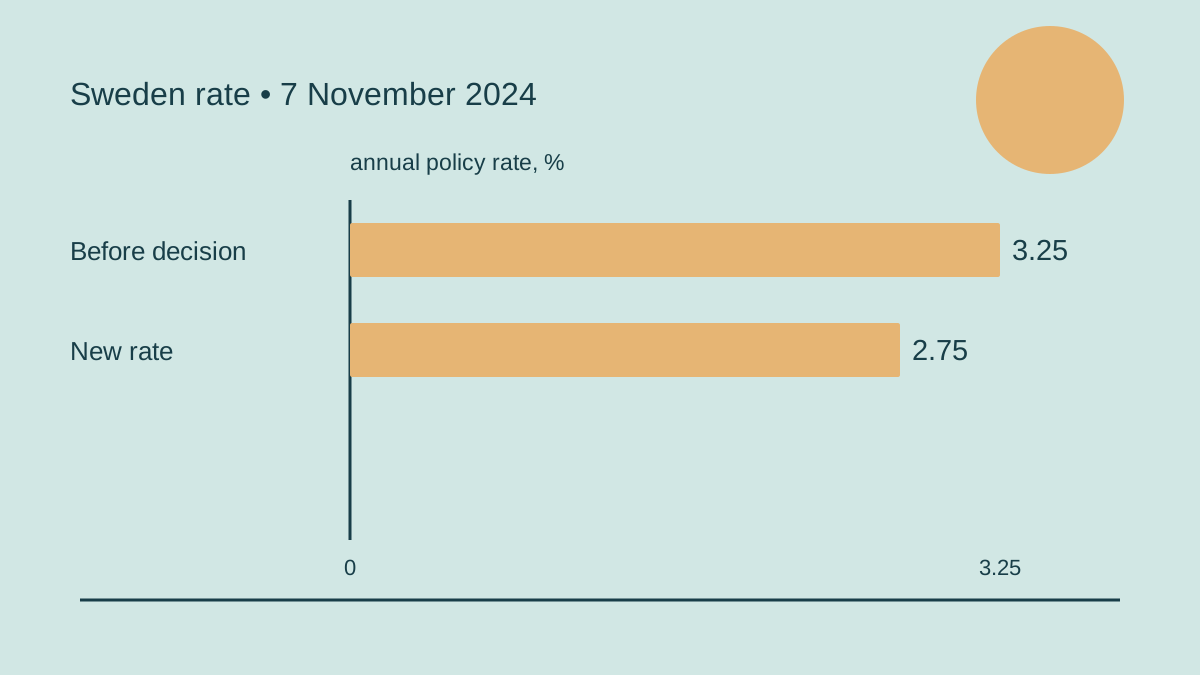
On 7 November 2024, Reuters reported that Sweden’s central bank cut its rate from 3.25% to 2.75%, matching its poll’s expectations. This was the fourth cut since May. Inflation had fallen below the 2% target while the economy showed little recovery. The bank said uncertainty was greater than at recent meetings, and changed conditions could warrant higher or lower rates.
- Further December easing remained conditional.
- Cuts in the first half of 2025 also depended on the outlook.
2020
12 February 2020
February 2020 held the repo rate at zero, with the bank expecting little change over almost the entire forecast period. It anticipated modest growth followed by a gradual pickup as external demand stabilized and investment and consumption strengthened. A mild winter and lower oil prices were expected to suppress inflation temporarily; underlying measures had been fairly stable just below 2%. The bank maintained government-bond purchases totalling SEK 45 billion between July 2019 and December 2020. Its guidance remained conditional: weaker activity could justify a rate cut or other expansionary measures.
16 March 2020
March’s extraordinary meeting kept the repo rate at zero while changing liquidity support. The bank planned up to SEK 300 billion of additional securities purchases during 2020, potentially including government, municipal and mortgage bonds. It reduced the overnight lending margin from 0.75 to 0.20 percentage points above the repo rate. Banks could obtain unlimited weekly collateralized three-month loans at that margin, with more flexible collateral rules. The bank aimed to prevent deteriorating credit supply from aggravating the pandemic downturn and said corporate-bond purchases could also be considered if further measures became necessary.
28 April 2020
April again held zero and continued government and mortgage bond purchases through September within the SEK 300 billion framework. The bank judged a rate cut inappropriate at that stage because restrictions and infection concerns were driving the downturn, rather than ordinary demand conditions. A later cut remained possible if effective during recovery. It had also offered up to SEK 500 billion in bank loans for onward lending to companies. Given exceptional uncertainty, the bank presented two economic scenarios instead of one detailed forecast, while expecting low rates and abundant liquidity to remain necessary.
1 July 2020
July kept zero but expanded the purchase framework from SEK 300 billion to SEK 500 billion through June 2021. Corporate-bond purchases were due to begin in September, with SEK 10 billion offered through the programme’s deadline. The bank cut its standing-loan margin to 0.1 percentage points above the repo rate. Extraordinary weekly loans moved to the repo rate with three- and six-month terms, while onward business lending could extend from two to four years. Recovery signs had appeared, but unemployment and weak inflation still called for substantial monetary support, according to the bank.
22 September 2020
September retained zero and continued asset purchases and liquidity across the existing programmes. The economy had begun recovering somewhat faster than expected after spring’s acute crisis, but the labour market remained weak and the return journey was lengthy. Recent inflation had exceeded forecasts slightly, yet low inflation was still expected for 2020 and a lasting return to 2% would take time. The bank considered financial-market stability dependent on central-bank support. It kept open the option of a further rate cut, particularly if confidence in the inflation target came under threat.
26 November 2020
November held zero while expanding purchases from SEK 500 billion to as much as SEK 700 billion through December 2021. A second infection wave and tighter restrictions had weakened the near-term outlook, especially for services. The bank expected inflation to attain 2% lastingly only in 2023. It planned faster purchases in early 2021 and included treasury bills and government and municipal green bonds. Corporate issuers had to meet international sustainability norms. Two board members opposed the size of the expansion and treasury-bill inclusion, while supporting the other decisions, including the unchanged rate.
2021
10 February 2021
February 2021 maintained zero and continued purchases within the SEK 700 billion envelope. The economy had weathered the second infection wave better than the first, though service industries remained under pressure. Vaccinations were expected to improve conditions for demand once restrictions eased, but uncertainty persisted. The bank still projected lasting near-target inflation only in 2023. It decided the second-quarter asset allocation, expected the envelope to be fully used by year-end and envisaged maintaining holdings at least through 2022. Liquidity programmes remained available, with further rate cuts possible if confidence in the target weakened.
27 April 2021
April kept zero as the outlook became brighter than in February. World trade and industrial production had rebounded rapidly, while restrictions still constrained parts of services. The bank expected activity to approach more normal levels towards year-end, with a strengthening labour market eventually supporting inflation. Persistent price pressure remained low. It decided the third-quarter purchase allocation within SEK 700 billion and expected holdings to be maintained at least until the end of 2022. The rate was projected to remain zero throughout the forecast period, with extensive fiscal and monetary support still needed.
1 July 2021
July again held zero, forecasting that level throughout the projection period. Recovery was progressing, but labour conditions remained weaker than normal and inflationary pressure was moderate. Rising commodity, input and transport costs were assessed as having a moderate, temporary effect on consumer prices. The bank authorized SEK 68.5 billion of fourth-quarter bond purchases. The purchase pace would taper while still using the SEK 700 billion envelope fully in 2021; holdings were expected to be maintained during 2022. Less expansionary policy could become appropriate if inflation threatened to overshoot significantly and persistently.
21 September 2021
September maintained zero and projected it through the third quarter of 2024. Growth and inflation had exceeded July’s forecasts, but the bank attributed much of the price surprise to electricity and expected the overshoot to be temporary. Underlying inflation was lower. Purchases continued, with holdings forecast to remain broadly unchanged in 2022. Low demand for crisis facilities led the bank to close pandemic lending programmes and announce restoration of collateral requirements at the turn of the year. Both further easing and less expansionary policy remained possible, depending on changes in inflation prospects.
25 November 2021
November retained zero but forecast the first increase in late 2024. October inflation was 3.1%, largely reflecting energy prices. The bank expected inflation to fall in 2022 as energy-price increases slowed and bottlenecks resolved, while continuing support was needed for lasting cost pressure consistent with the target. The pandemic purchase programme would expire on 31 December 2021. It authorized SEK 37 billion of first-quarter 2022 bond purchases to offset maturities, projecting broadly unchanged holdings during 2022 followed by gradual declines. The expected later rate increase accompanied that outlook rather than an immediate change.
2022
10 February 2022
February 2022 held zero and still forecast the first increase in the second half of 2024, slightly earlier than November’s assessment. The bank then attributed high domestic inflation entirely to energy; inflation excluding energy was near 2%. It projected CPIF inflation just above 1% at year-end before returning close to 2% from mid-2023. Second-quarter bond purchases of SEK 37 billion would replace maturities. Three board members favoured faster purchase tapering, including ending treasury-bill purchases after the first quarter. Their reservations concerned asset purchases, while the published decision retained the zero rate.
28 April 2022
April raised the repo rate from zero to 0.25%, replacing the earlier distant-hike outlook with immediate tightening. March CPIF inflation was 6.1%, and price increases had broadened beyond energy into goods, food and services. The bank forecast two or three further increases during 2022 and a rate somewhat below 2% after three years. It halved planned second-half bond purchases to SEK 37 billion and stopped treasury-bill purchases. International commodity and shipping costs could not be directly controlled by policy, but the bank aimed to prevent high inflation becoming embedded in domestic price and wage setting.
30 June 2022
June increased the rate from 0.25% to 0.75% and revised the forecast upwards to near 2% at the start of 2023. The bank described rising company costs, strong demand enabling pass-through and unusually large price increases relative to costs. Inflation was expected to remain above 7% for the rest of 2022. It reduced second-half bond purchases again, from the previously planned SEK 37 billion to SEK 18.5 billion, accelerating the decline in holdings. It remained prepared to raise rates faster if needed, while forecasting inflation near 2% from 2024.
20 September 2022
September raised the rate by one percentage point to 1.75%, after August CPIF inflation reached 9%, its highest level since 1991. Inflation exceeded June’s forecast, with international costs and relatively strong domestic activity both contributing to pressure. The bank projected further increases over the following six months. Purchases would continue under June’s decision but were expected to cease at year-end; holdings would then decline through maturities and halve over the forecast period. The bank argued that stronger immediate action would reduce the risk of prolonged high inflation and greater tightening later.
24 November 2022
November increased the rate by 0.75 percentage points to 2.5%. October CPIF inflation of 9.3% was slightly below September’s forecast only because energy prices were lower than expected. Inflation excluding energy was unexpectedly high, indicating stronger underlying pressure. The bank therefore tightened more than previously anticipated and expected another increase early in 2023, taking the rate just below 3%. It would allow securities holdings to decline through maturities from the start of 2023. Decisions remained adaptable to incoming information, with the objective of stabilizing inflation around 2% within a reasonable period.
2023
9 February 2023
February 2023 raised the rate from 2.5% to 3% and indicated further spring tightening. December inflation had exceeded expectations at just over 10%, with inflation excluding energy also high and rising. The bank said a weak krona complicated a lasting return to target. From April, it would sell nominal government bonds worth SEK 3 billion and real government bonds worth SEK 0.5 billion monthly, with terms adjustable if markets proved unfavourable. It also offered certificates matching the banking system’s entire liquidity surplus. Non-government bonds were not scheduled for sale.
26 April 2023
April raised the rate to 3.5% as lower energy prices explained the decline in headline inflation, while inflation excluding energy exceeded expectations. Two-year collective wage agreements reduced uncertainty about company costs and the risk of a wage-price spiral. The bank forecast another quarter-point rise in June or September, with room for smaller steps after rapid earlier tightening. Two members favoured a quarter-point increase rather than the adopted half-point move, citing anchored expectations, moderate wages and weak domestic demand. Their proposed path still allowed further increases, including larger steps if price pressure persisted.
29 June 2023
June raised the rate to 3.75% and projected at least one more increase during 2023. May CPIF inflation was 6.7%, slightly below forecast because energy prices fell more sharply than expected. Inflation excluding energy was declining slowly, with unexpectedly fast service-price increases and currency weakness sustaining pressure. The bank increased planned government-bond sales from SEK 3.5 billion to SEK 5 billion monthly from September, following strong demand for sales begun in April. It described rate increases as the principal, most effective additional tightening tool, while bond sales should remain predictable and gradual.
21 September 2023
September increased the rate to 4% and left further increases possible in its forecast. Energy and food price growth had slowed substantially, but service prices were still rising quickly. The bank considered the krona unjustifiably weak and said it was keeping inflation elevated. Previous rate increases and lower energy prices had helped headline inflation decline, yet pressure remained too high for a sufficiently rapid, stable return to target. Monetary policy was expected to remain contractionary for a lengthy period, with new data and their implications for activity and inflation determining the next steps.
23 November 2023
November paused at 4% as inflation declined broadly in line with the bank’s assessment. Consumer prices were increasing more slowly, companies planned smaller price rises and the labour market was weakening from a strong starting point. Fast service-price growth and currency weakness nevertheless remained risks. The bank forecast a possible further increase early in 2024 and prolonged contractionary policy, retaining readiness to act if inflation prospects worsened. It was also considering faster government-bond sales, with a decision possible at January’s meeting. The rate decision itself maintained the existing level rather than executing that possible increase.
2024
1 February 2024
February 2024 retained 4% but brought possible easing forward. Inflation excluding energy had been lower than expected in November and December, expectations were near target and wages were rising moderately. The bank saw less risk of entrenched high inflation and did not rule out a first-half cut if prospects remained favourable. Supply shocks, company pricing and currency weakness still required caution. Separately, total monthly government-bond sales would rise from SEK 5 billion to SEK 6.5 billion, led by larger nominal-bond sales. The accompanying policy update contained no new forecasts.
27 March 2024
March again held 4%, with a cut in May or June considered likely if inflation prospects stayed favourable. Inflation was approaching 2%, expectations were anchored and wage increases moderate. However, the bank wanted further confirmation of stabilization after the earlier inflation surge and altered company pricing behaviour. Weak activity and falling inflation were reducing the need for contractionary policy, while pressure remained somewhat elevated. New supply disturbances, further currency weakness or persistent pricing changes could cause setbacks. The bank therefore described gradual cuts and adjustment to new information, rather than an unconditional easing schedule.
8 May 2024
May cut the rate from 4% to 3.75%. March CPIF inflation of 2.2%, and inflation excluding energy of 2.9%, were below the bank’s latest forecast. Anchored expectations and moderate wages supported its view that inflation would remain near target, while economic activity was weak. Two more cuts were expected in the second half of 2024 if the outlook held. The bank stressed uncertainty in both directions as inflation fell from unusually high levels, with currency and external risks requiring caution. The decision would apply from 15 May; further easing remained conditional.
27 June 2024
June held 3.75%, maintaining the gradual approach communicated in May. Headline inflation was near 2%, but the latest outcome excluding energy, at 3%, was slightly above expectations despite earlier readings below forecasts. Long-term expectations and moderate wages supported confidence in the target. Weaker activity and a slightly stronger krona led the bank to lower its projected rate path somewhat. It envisaged two or three second-half cuts if inflation prospects held. External inflation, geopolitical uncertainty, currency movements and the domestic recovery could still leave rates either above or below the forecast.
20 August 2024
August reduced the rate to 3.5%, in line with June’s forecast. Producer prices and companies’ pricing plans increasingly suggested pressure compatible with 2% inflation, while long-term expectations remained anchored and wages moderate. The risk of inflation becoming too high again had declined significantly, according to the bank. Growth prospects at home and abroad were weaker than in June’s report. It therefore envisaged two or three more cuts during 2024 if the inflation outlook persisted, somewhat faster than previously assessed. The short policy update offered a new assessment without publishing a new set of forecasts.
25 September 2024
September cut the rate to 3.25% and signalled faster easing than previously communicated. Inflationary pressure was now judged compatible with roughly 2%, while recovery was proceeding more slowly than expected. The bank considered stronger activity necessary for inflation to stabilize close to target. Conditional cuts were envisaged at the remaining November and December meetings, with a half-point move possible at one of them. The forecast also indicated one or two cuts in the first half of 2025. Domestic recovery, geopolitical uncertainty and the exchange rate could still alter inflation and the appropriate policy stance.






Leave a comment