
The United Kingdom recorded 0.2% monthly GDP growth in January 2024, Reuters reported on 13 March. Services and construction increased, while production fell. Output nevertheless declined over the three months to January. A positive month followed two contracting quarters; it did not establish the result for the first quarter of 2024.
Earlier rebounds and the services divide
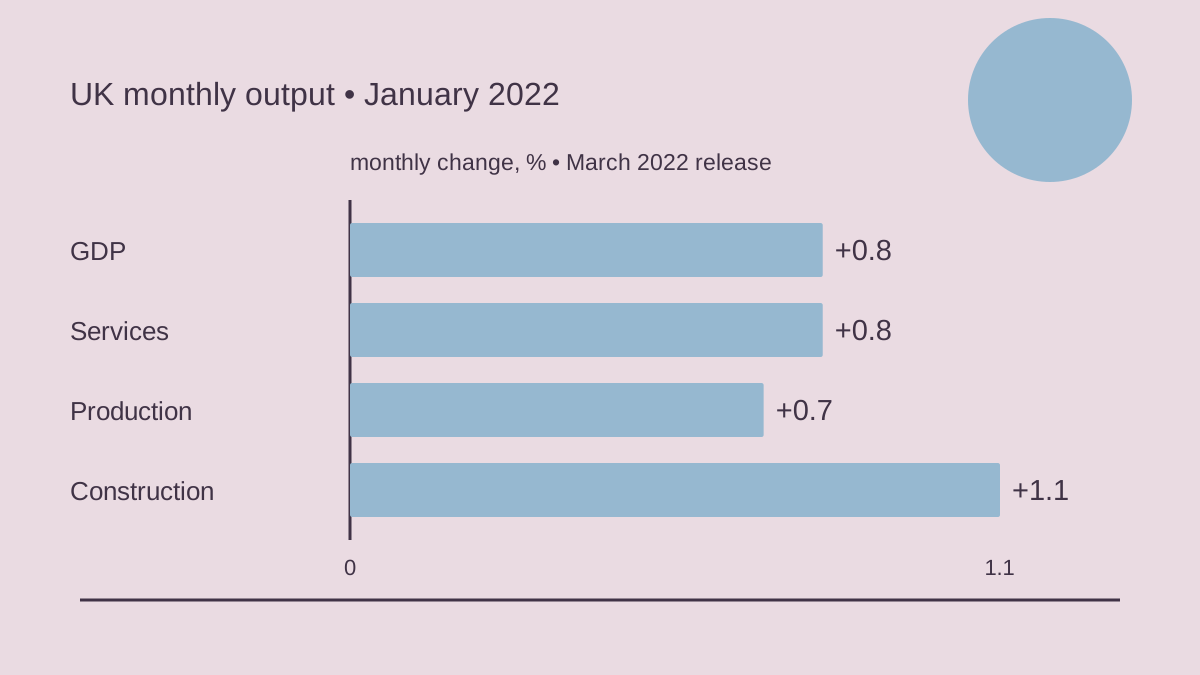
The January 2022 bulletin, published on 11 March 2022, presented a considerably stronger monthly rebound: GDP increased 0.8%, following a December decline of 0.2%. Services grew 0.8%, production 0.7% and construction 1.1%. Yet the services recovery was uneven. Consumer-facing output rose 1.7% during the month, including a 6.8% increase in food and beverage services, but remained 6.8% below February 2020. Other services stood 3.4% above that baseline. Overall GDP was 0.8% above its pre-pandemic level, and the three-month increase was 1.1%. The recovery coexisted with a gap in consumer services.
By the February 2022 release, dated 11 April, monthly GDP growth had slowed to 0.1%. Services increased 0.2%, whereas production fell 0.6% and construction 0.1%. Within services, travel agencies and tour operators grew 33.1% and accommodation 23%, contrasting with unchanged output across non-consumer-facing services. Consumer services rose 0.7%, although their level remained 5.2% below February 2020. GDP overall stood 1.5% above that earlier level. The three-month economy grew 1%, with services contributing 0.7 percentage points. Strong increases in individual reopening-related activities thus sat alongside much smaller movement in the economy as a whole.
The March 2022 estimate, released on 12 May, changed the direction again. GDP fell 0.1%, and February was revised from 0.1% growth to no growth. Services declined 0.2%, with wholesale and retail trade and repair of motor vehicles and motorcycles falling 15.1%. Consumer-facing services contracted 1.8%; other services increased 0.2%. Production also declined 0.2%, while construction grew 1.7%. On the wider comparison, GDP still increased 0.8% over three months. Its level was 1.2% above February 2020, but consumer services remained 6.8% below. The monthly reversal did not erase the positive rolling-quarter estimate in that publication.
April 2022 brought a broader contraction in the bulletin published on 13 June. GDP fell 0.3%, following March's 0.1% decline. Services, production and construction all decreased, the first such combination since January 2021. Services fell 0.3%, including a 5.6% decline in human health and social work activities; ONS identified the reduction in Test and Trace activity. Production fell 0.6%, with manufacturing down 1%, and construction declined 0.4%. GDP remained 0.9% above February 2020. Over three months it increased only 0.2%, with construction contributing that increase while services and production were broadly flat.
The May 2022 release, published on 13 July, showed a return to growth across all three major sectors. GDP increased 0.5%, with April's contraction revised to 0.2%. Services grew 0.4%, production 0.9% and construction 1.5%. ONS reported increased GP appointments alongside a 2.1% rise in health activities, even as Test and Trace and vaccination activity decreased. Manufacturing grew 1.4%. Consumer-facing services, however, fell 0.1%, including a 0.5% retail decline. Three-month GDP growth reached 0.4%, and the annual increase was 3.5%. Growth across the broad sectors therefore did not mean that consumer-facing activities moved in the same direction.
Calendar effects complicated June 2022, as ONS explained in its 12 August release. The Platinum Jubilee and movement of the May bank holiday gave May an extra working day and June two fewer. GDP fell 0.6%; May's increase was revised to 0.4%. Services declined 0.5%, production 0.9% and construction 1.4%, ending seven consecutive construction increases. ONS highlighted reduced health activity and a 1.6% manufacturing fall. Consumer services were unchanged. Over three months, GDP fell 0.1%, principally reflecting a 0.4% services decline. The bulletin expressly advised considering the unusual calendar when interpreting seasonally adjusted movements.
Positive months within a weaker rolling quarter
The July 2022 bulletin, published on 12 September, recorded 0.2% GDP growth after June's 0.6% fall. Services increased 0.4%, with information and communication growing 1.5%. Production fell 0.3%, including a 3.4% decline in electricity and gas supply. Construction decreased 0.8%, with repair and maintenance down 2.6%. Consumer-facing services rose 0.6%. The wider three-month GDP measure was unchanged: services declined 0.2%, while production grew 0.6% and construction 1.4%. GDP was 1.1% above February 2020 in this estimate. The services-led rebound accompanied a flat rolling quarter and declines in the other major sectors.
In the August 2022 release, dated 12 October, GDP fell 0.3% and July's growth was revised to 0.1%. Production contracted 1.8%, including a 1.6% manufacturing decline. Services fell 0.1%; health and social work decreased 1.3% and arts, entertainment and recreation 5%, while professional activities grew 1.2%. Construction increased 0.4%, although repair and maintenance fell 2%. Consumer-facing services declined 1.8%. Three-month GDP fell 0.3%, with production down 1.5%, services down 0.1% and construction flat. GDP's estimated level matched February 2020. This publication also revised several earlier sector estimates, including the direction of July's construction movement.
September 2022's estimate, published on 11 November, showed a 0.6% GDP fall and a 0.2% contraction over three months. Services declined 0.8%, including falls of 3.2% in information and communication and 2% in wholesale and retail trade and vehicle repair. Consumer services fell 1.7%. Production increased 0.2% and construction 0.4%. ONS estimated that at least half of the monthly GDP decline reflected the additional bank holiday for Queen Elizabeth II's funeral. That one-off effect was not removed by seasonal adjustment. GDP stood 0.2% below February 2020; over three months, production fell 1.5%, services were flat and construction grew 0.6%.
The October 2022 release, dated 12 December, again separated a positive month from a negative three-month picture. Monthly GDP increased 0.5%, supported by 0.6% services growth and a 1.9% increase in wholesale and retail trade and vehicle repair. Consumer-facing services rose 1.2%, following September's 1.7% decline. Production was broadly unchanged: manufacturing growth was offset by decreases elsewhere. Construction increased 0.8%, its fourth consecutive monthly rise in that estimate. Over three months, however, GDP fell 0.3%; production declined 1.7% and services 0.1%, while construction grew 1.1%. ONS again flagged the funeral holiday when interpreting the September-to-October movement.
November 2022's bulletin, published on 13 January 2023, showed 0.1% monthly GDP growth but another 0.3% three-month contraction. Services rose 0.2%, with administrative and support activities and information and communication making the largest contributions. Consumer services increased 0.4%; ONS identified food and beverage services as the largest contributor in the month the World Cup began. Production fell 0.2%, with manufacturing weakness partly offset by mining and quarrying. Construction was flat. Over three months, services fell 0.1% and production 1.4%, while construction increased 0.3%. The annual GDP increase was only 0.2%, and output stood 0.3% below February 2020.
The December 2022 estimate, released on 10 February 2023, recorded a 0.5% monthly contraction. Services fell 0.8%, with health, education, arts and recreation, and transport among the main negative contributors. Consumer services decreased 1.2%. Production grew 0.3%, principally through electricity and gas supply, while construction was flat. Despite the negative month, three-month GDP was unchanged; services were also flat, production fell 0.2% and construction grew 0.3%. ONS estimated annual output GDP growth of 4.1% for 2022 after 7.4% in 2021. The December level remained 0.5% below February 2020, distinguishing the annual increase from the economy's position at year-end.
Sector offsets and revisions during 2023
The January 2023 bulletin, published on 10 March, offered an earlier example of a January rebound following a December fall. GDP grew 0.3%, while services increased 0.5%. Education, transport and storage, health, and arts and recreation supplied the largest contributions, rebounding after December declines. Consumer-facing services rose 0.3%. Production fell 0.3% and construction 1.7%. Three-month GDP nevertheless remained flat, as did services over that period; production increased 0.3% and construction fell 0.7%. ONS made no revisions to earlier data in this release. GDP's level remained 0.2% below February 2020, despite the positive monthly result.
February 2023's release, dated 13 April, showed no monthly GDP growth because construction offset declines elsewhere. Construction increased 2.4%, services fell 0.1% and production 0.2%. Education and public administration were the largest negative services contributors; ONS noted industrial action in both industries during February. Consumer services increased 0.4%, led by retail trade excluding vehicles. January GDP growth was revised to 0.4%, and its services increase to 0.7%. Over three months, GDP grew 0.1%, with services also up 0.1%, production down 0.1% and construction up 0.9%. GDP stood 0.3% above February 2020 in that release.
The March 2023 bulletin, released on 12 May, recorded a 0.3% GDP fall after an unchanged February estimate. Services declined 0.5% and consumer-facing services 0.8%. Production increased 0.7%, its strongest monthly growth since May 2021, and construction rose 0.2%. February's construction increase was revised to 2.6%. The three-month comparison remained positive, with GDP up 0.1%; services and production each grew 0.1%, and construction 0.7%. The annual GDP increase was 0.3%, while the level was 0.1% above February 2020. Growth in production and construction could therefore coexist with an overall monthly contraction when services moved negatively.
April 2023's estimate, published on 14 June, again showed services supporting a small rebound. GDP increased 0.2%, services 0.3% and consumer-facing services 1%. Production fell 0.3% and construction 0.6%. There were no revisions to earlier periods in this publication, preserving March's 0.3% GDP decline and 0.5% services fall. Over three months, GDP grew 0.1%; services declined 0.1%, production increased 0.2% and construction 1.6%. The annual GDP increase was 0.5%, and the level stood 0.3% above February 2020. The rolling-quarter sector pattern differed from April's monthly pattern, particularly for services and construction.
The May 2023 bulletin, published on 13 July, reported a 0.1% GDP decline after April's unrevised 0.2% increase. Production fell 0.6% and was the main negative contributor; construction decreased 0.2%, services were unchanged and consumer services fell 0.2%. GDP showed no growth over three months, with services also flat, production up 0.4% and construction up 0.2%. ONS recorded the extra bank holiday following King Charles III's coronation and flagged calendar differences in the annual comparison with May 2022. Annual GDP fell 0.4%. These dated holiday notes mattered when comparing months affected by different numbers of working days.
In June 2023's release, dated 11 August, GDP increased 0.5%, with all three major sectors contributing positively for the first time since October 2022. Production grew 1.8%, construction 1.6% and services 0.2%. Consumer-facing services increased 0.5%. ONS reported that a range of businesses cited May's additional bank holiday as a reason for higher June output. Three-month GDP grew 0.2%; services increased 0.1%, production 0.7% and construction 0.3%. The annual GDP rise was 0.9%, and the level was 0.8% above February 2020. ONS also flagged the differing 2022 Jubilee and 2023 coronation calendars in annual comparisons.
July 2023 reversed the monthly direction in the 13 September release: GDP fell 0.5%, services 0.5%, production 0.7% and construction 0.5%. All three sectors contributed negatively, the first such month since June 2022. Consumer services were unchanged. Over three months, however, GDP increased 0.2%, with production up 0.6% and services and construction each up 0.1%. ONS made no revisions to earlier data in this release under its regular policy. It separately explained that announced Blue Book revisions would enter subsequent releases. The bulletin therefore supplied a dated estimate before those changes, rather than an already revised historical series.
The August 2023 bulletin, published on 12 October, incorporated revisions to earlier monthly data, alongside its first August estimate. GDP grew 0.2%, following a revised July decline of 0.6%. Services increased 0.4% and were the only positive contributing major sector; production fell 0.7% and construction 0.5%. Consumer services decreased 0.6%. Over three months, GDP increased 0.3%, led by 1.2% production growth, with services up 0.1% and construction 0.9%. The annual GDP increase was 0.5%. These figures belonged to the new publication vintage, including changes consistent with the quarterly national accounts released on 29 September.
From rolling stagnation to two contracting quarters
September 2023's bulletin, dated 10 November, recorded 0.2% monthly GDP growth, but no growth over three months. Services increased 0.2%, led by professional, scientific and technical activities and health and social work. Production was unchanged and construction grew 0.4%. Consumer-facing services fell 0.2%. August's GDP increase was revised to 0.1%. In the three-month comparison, services fell 0.1%, production was flat and construction grew 0.1%. Annual GDP growth was 1.3%, but ONS noted the additional funeral bank holiday in September 2022 when interpreting that comparison. Monthly and annual growth accompanied a flat rolling quarter.
The October 2023 estimate, published on 13 December, showed 0.3% monthly GDP contraction and another flat three-month economy. All major sectors fell during October: services by 0.2%, production by 0.8% and construction by 0.5%. Information and communication drove the services decrease, while manufacturing declines were widespread. Over three months, services instead grew 0.1%, production declined 0.7% and construction 0.3%. ONS opened no earlier periods for revision in this release, so September's 0.2% GDP increase remained unchanged. Annual GDP rose 0.3%. The publication therefore showed weakness across October's broad sectors without yet showing an overall three-month decline.
November 2023's bulletin, released on 12 January 2024, illustrated why another positive month was insufficient to reverse the wider picture. GDP increased 0.3%, services 0.4% and production 0.3%; construction fell 0.2%. Over three months, GDP declined 0.2%. Services were flat across that period, but production decreased 1.5% and construction 0.6%. October's production contraction was revised to 1.3%, despite its overall GDP fall remaining 0.3%. The release incorporated earlier revisions consistent with December's quarterly national accounts. Annual November GDP increased 0.2%, while October's annual comparison was revised from growth to a 0.1% decline.
The December 2023 bulletin, published on 15 February 2024, established two consecutive quarterly contractions: 0.3% in the fourth quarter after 0.1% in the third. December GDP fell 0.1%, with services down 0.1%, production up 0.6% and construction down 0.5%. Across the fourth quarter, all three sectors declined. ONS revised November growth to 0.2% and October's fall to 0.5%, stressing that early estimates can move in either direction. The annual output measure increased 0.4%, distinct from the quarterly estimate's 0.1% annual growth using average GDP. This was the contraction against which January's rebound was subsequently reported.
- January 2024: monthly growth.
- Three months: contraction.
- First-quarter result: still unestablished.






Leave a comment